
No matching pages. Try "pallet", "mezzanine" or "cantilever".
No matching pages. Try "pallet", "mezzanine" or "cantilever".
Engineered with European high-tensile structural steel (S355/Q355D), precision cold-rolled profiles, and specialized low-temperature surface coatings designed to resist freeze-thaw condensation cycles from 0°C down to -35°C.
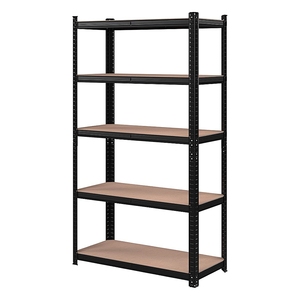
Industrial modular cold-rolled steel shelving with rapid boltless interlocking tabs. Perfect for refrigerated staging areas, mold and bin storage in sub-zero food processing environments.
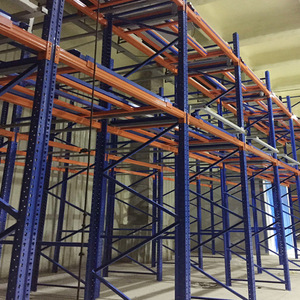
Semi-automated deep-lane pallet shuttle system engineered for deep-freeze storage (-30°C). Eliminates forklift drive-in traffic, maximizing thermal volume and SKU retention in Greek dairy and meat logistics.
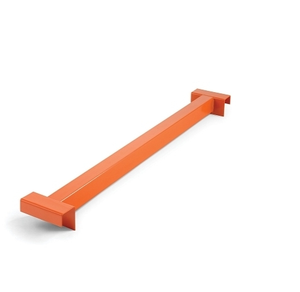
Galvanized structural steel cross support bars engineered to prevent weak-pallet sag and ensure seismic load redistribution across load-bearing beams under Eurocode 8 criteria.
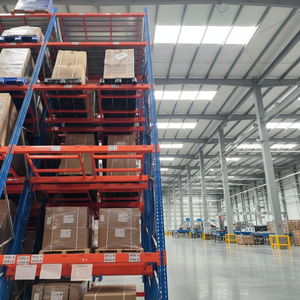
High-strength cold-rolled omega-profile uprights with high-visibility blue/orange electrostatic finish. Offers immediate selectivity for temperature-controlled pharma and fast-moving retail SKUs.
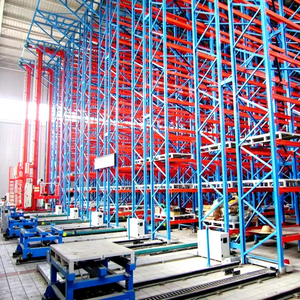
Turnkey high-bay automated warehouse solution with cold-rated stacker cranes and WMS integration. Maximizes vertical storage up to 40 meters, reducing refrigerated surface-area thermal loss.
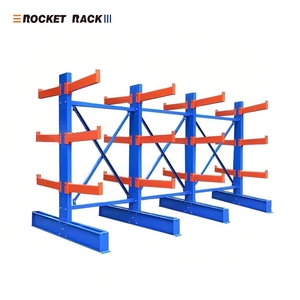
Unobstructed arm profiles engineered for heavy industrial cylinders, raw bar stocks, plastic tubing, and marine components. Custom manufactured for Greek industrial and portside ship-chandler depots.
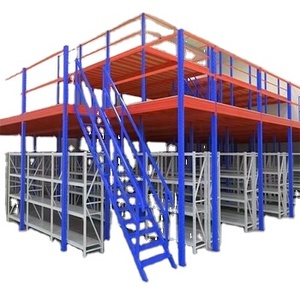
Rack-supported multi-tier mezzanine attic systems featuring integrated fire sprinkler routing, cold-galvanized non-slip steel decking, and heavy load industrial access stair towers.
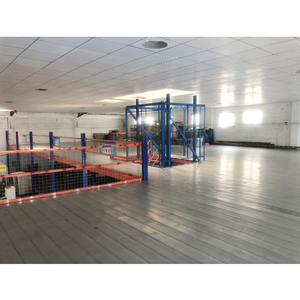
Heavy structural I-beam clear-span platforms creating full second-floor operational spaces inside refrigerated anterooms, sorting zones, and packaging facilities without floor slab disruptions.
Operating a refrigerated logistics facility in Greece presents a dual engineering challenge rarely encountered in Northern Europe: combining intense Mediterranean outdoor ambient temperatures (often exceeding +40°C in July and August) with sub-zero blast freezing requirements, all while strictly adhering to high-risk Southern European seismic design mandates.
Standard carbon steel undergoes a Ductile-to-Brittle Transition Temperature (DBTT) when operating below 0°C. Under sudden forklift mast impacts or dynamic seismic shaking at -25°C, ordinary commercial steels shatter catastrophically due to low Charpy V-notch impact toughness.
Our cold storage uprights and cross-beams are exclusively rolled from low-temperature certified steel (S355NL / Q355D/E), rigorously Charpy tested down to -20°C and -40°C with minimum impact absorption of 27 Joules. This guarantees exceptional plastic deformation capability under thermal and dynamic shock.
Greece is the most seismically active country in Europe, classified under high Peak Ground Acceleration (PGA) zones ranging from 0.16g to 0.36g (under the Greek Seismic Code EAK and Eurocode 8 / EN 16681).
Every cold storage rack we supply to Greek clients undergoes 3D finite-element dynamic response spectrum analysis. We calculate modal mass participation, base overturning moments, frame flexibility, and energy dissipation ductility factors (q-factors), incorporating heavy-duty ductile baseplates and chemical seismic anchor rods.
Cold rooms experience cyclic frost formation and severe condensation during defrosting cycles or when ambient air infiltrates loading docks. Water entrapped inside hollow rack columns triggers aggressive electrochemical corrosion.
We solve this with heavy-gauge hot-dip galvanization conforming to ISO 1461 (minimum 65–85 μm zinc thickness) or multi-stage continuous pre-galvanized Z275 steel. For selective uprights, we apply a thermosetting pure polyester powder coating over a zinc phosphate pre-treatment, completely sealing edges and punch holes.
Refrigeration energy in Greek cold storage represents 60% to 75% of total warehouse operating overheads. Traditional wide-aisle selective racking wastes up to 60% of the refrigerated cubic footprint on empty transit aisles, forcing chillers to cool unproductive air volumes.
By transitioning Greek cold chain facilities to automated Radio Shuttle systems or compact Drive-In layouts, the volumetric pallet storage density is boosted by 80% to 120%. Furthermore, our rack layouts are custom-engineered around the aerodynamic throw lines of your evaporator cooling units (blast chillers), avoiding cold-air dead zones and ensuring uniform temperature stratification throughout all pallet levels.
Designed with 1200mm–1800mm headspace to preserve cold air throw and return velocity.
Thermal isolation pads beneath steel baseplates prevent slab thermal bridging and frost heaving.
Selecting the optimal storage layout requires balancing SKU diversity, inventory rotation velocity (FIFO vs. LIFO), floor space cost, and mechanical handling equipment capabilities.
| Racking Architecture | Space Utilization | Stock Rotation | Cold Room Cost Efficiency | Equipment Requirement | Recommended Greek Application |
|---|---|---|---|---|---|
| Heavy Duty Radio Shuttle Racking | 85% – 90% (Maximum) | FIFO or LIFO Selectable | Highest ROI per m³ | Standard Counterbalance / Reach | Greek Dairy (Feta), Frozen Fish/Seafood, Ice Cream, Agrifood Exporters |
| Drive-In Pallet Racking | 75% – 82% (High) | LIFO Strict | Moderate / Good | Specialized Narrow Cold-Store Forklifts | Seasonal Harvest Fruits (Peaches, Kiwis), Beverage Cold Rooms |
| Adjustable Selective Pallet Racking | 40% – 50% (Standard) | 100% Direct Access (FIFO) | Low Density (High Energy/Pallet) | Standard Reach Truck | Pharmaceutical Cold Chain, Third-Party Logistics (3PL), Supermarket Multi-SKU |
| Automated Stacker Crane ASRS | 92% – 95% (Vertical) | Automated WMS Driven | Exceptional (30m+ High Bay) | Automated Stacker Cranes (Lights-Out) | Major Central Distribution Hubs in Aspropyrgos & Sindos Logistics Parks |
| Heavy Duty Structural Mezzanine | Multiplies Floor x2/x3 | Manual / Conveyor | Cuts Expansion Capital | Pallet Lifts, Conveyors, Manual Pickers | Chilled Meat Processing Anterooms, Pharmaceutical Staging, Cold Packing |
From the industrial logistics epicenters of Attica to the agricultural export hubs of Central Macedonia, each Greek economic corridor demands distinct cold storage engineering parameters tailored to local commodities and distribution dynamics.
The consolidation capital of Greece. High-turnaround 3PLs and national retail supermarket chains require mixed configurations: high-density Radio Shuttle lanes for fast-moving dairy and poultry, coupled with seismic-braced Selective Racks for hundreds of pharmaceutical and chilled grocery SKUs.
Mediterranean intermodal container shipping demands refrigerated cross-docking facilities right at the harbor gate. Marine humidity and salt fog dictate C4/C5-M corrosion protection and heavy-duty structural crossbars capable of withstanding rough maritime shipping containers.
Northern Greece's industrial heartland is the primary conduit for fresh agricultural exports (peaches, cherries, kiwis) and meat processing. Demands Controlled Atmosphere (CA) cold room racking and Drive-in/Shuttle systems optimized for heavy wooden fruit bins and plastic export crates.
Home to Greece's renowned aquaculture (sea bass and sea bream exports) and PDO Feta cheese creameries. Storage environments feature corrosive saltwater moisture and brine-washing protocols, requiring full hot-dip galvanizing and heavy-duty washdown drainage details.
The Greek cold chain sector is experiencing unprecedented transformation driven by European Union green logistics directives, rising electricity tariffs, and massive private equity investment in regional infrastructure.
Due to Greece's high solar irradiance and escalating grid power charges, new cold store developments in Boeotia and Corinth are pairing rooftop photovoltaic arrays with ultra-dense automated cold storage. High-density shuttle systems decrease the building footprint by 40%, optimizing roof area-to-volume ratios for maximum solar coverage.
Greece is solidifying its position as a pharmaceutical manufacturing and clinical export center in Southeast Europe. Cold storage facilities increasingly demand calibrated GDP (Good Distribution Practice) compliant racking systems featuring laser-leveled tolerances (EN 15620 Class 300) and multi-tier climate sensor integration.
Dozens of aging refrigerated warehouses in Attica built in the 1990s are undergoing structural retrofits. Warehouse managers are replacing outdated wooden and light-gauge systems with certified seismic-safe pallet racks to pass stringent European insurance audits and secure lower operational premiums.
Combining end-to-end structural design expertise, certified high-tensile steel manufacturing, and seamless direct export logistics to the Greek ports of Piraeus, Thessaloniki, and Patras.
We do not sell stock catalog items. Every project begins with your forklift specs, pallet load dynamics, ceiling clear heights, and evaporator locations. Our structural engineers provide complete 2D/3D CAD layouts, structural FEA calculation notes, and full seismic validation reports ready for Greek municipal building permits.
Our production strictly complies with EN 15512 (Steel static storage systems - Racking design), EN 15620 (Tolerances and clearances), and EN 16681 (Seismic design). Every steel batch is supplied with 3.1 Mill Test Certificates verifying yield strength, elongation, and sub-zero Charpy impact absorption.
We handle export crating, bundle strapping, and moisture-barrier container packing tailored for sea shipping to Piraeus and Thessaloniki. Our team supplies complete bill of lading documentation, EUR.1 / Certificate of Origin, and technical installation guides in English, with on-site supervisor dispatch available upon request.
Key technical, regulatory, and logistics answers for warehouse developers, plant managers, and procurement officers operating across Greece.
Our engineering design adheres to European standard EN 16681 (specifically established for pallet racking in seismic zones) in conjunction with Eurocode 8 (EN 1998) and the Greek National Annex. When calculating a racking system for Greece, our engineers input the specific seismic zone parameters (Zone I = 0.16g, Zone II = 0.24g, Zone III = 0.36g) based on the facility's postal region (e.g., Attica, Patras, Ionian Islands).
We model cross-aisle and down-aisle dynamic flexibility, baseplate rotational stiffness, and load connection ductility. The resulting system incorporates heavy-duty upright frames, heavy-gauge diagonal bracing, floor baseplates with increased surface area to distribute dynamic shear stresses, and ETA-certified seismic chemical anchors drilled into the warehouse concrete slab.
Standard commercial cold-rolled steel (such as regular Q235B or S235JR) undergoes a ductile-to-brittle transition when exposed to sub-zero temperatures. In cold storage environments ranging from -18°C to -30°C, the steel's internal crystalline structure loses its ability to yield plastically. If a forklift strikes an upright or if a minor seismic tremor occurs, brittle steel will crack or snap completely without warning rather than safely deflecting.
We resolve this critical safety risk by using structural steel grades specifically certified for sub-zero impact resistance (S355NL, Q355D/E), which have been Charpy V-notch tested down to -20°C and -40°C with an impact energy absorption exceeding 27 Joules. This guarantees that your cold room racking retains full structural ductility and impact resilience throughout decades of operation.
For fresh produce (such as peach and kiwi controlled-atmosphere cold rooms in Imathia) and seafood/aquaculture facilities (in Patras and the Aegean), we strongly recommend hot-dip galvanizing conforming to ISO 1461. Hot-dip galvanizing coats every interior and exterior surface with a 65–85 μm metallurgical zinc alloy layer that is virtually impervious to continuous humidity, condensation, and organic fruit acids.
For dry-frozen packaged foods and pharmaceutical cold rooms, our high-durability electrostatic thermosetting powder coating (applied over a multi-stage pre-treated and degreased surface) provides excellent protection, high visual contrast for forklift operators, and easy sanitization under strict HACCP sanitary protocols.
Standard electronic devices and lithium batteries lose charge rapidly in sub-zero environments. Our cold-store radio shuttles are purpose-built for harsh refrigerated environments down to -30°C. They feature enclosed, heated electronic control compartments, sealed IP65 sensor arrays to prevent condensation frost, and specialized low-temperature Lithium Iron Phosphate (LiFePO4) battery packs equipped with internal thermal insulation.
Furthermore, internal drive mechanisms use low-temperature synthetic lubricants that do not congeal or seize at -30°C. This allows Greek cold storage operations to run continuous 8-to-16 hour picking shifts with fast swappable battery modules without requiring the shuttle to leave the cold environment.
We export full container loads (20GP, 40HQ, and 40OT for extra-long upright profiles) directly to the Port of Piraeus (PIR) and the Port of Thessaloniki (SKG). Ocean freight transit times typically range between 22 to 32 days depending on the carrier line. Manufacturing lead time for customized cold store projects is generally 3 to 4 weeks following final CAD drawing approval.
All export consignments are packed with industrial steel banding, corner protectors, and moisture-resistant polyethylene vapor wrapping. We provide a full commercial export documentation package: Commercial Invoice, Detailed Packing List, Bill of Lading, Certificate of Origin, and 3.1 Structural Material Certificates to ensure fast customs clearance by your Greek customs broker.
To produce an exact, code-compliant proposal and seismic design quote, we ask you to provide: (1) Warehouse architectural drawings (DWG or PDF) indicating building clear height under cooling evaporators and roof beams; (2) Pallet specifications (Euro pallet 1200x800mm or ISO 1200x1000mm) including maximum loaded height and gross weight; (3) Operating temperature profile (ambient, chilled 0°C to +4°C, or deep-freeze -25°C); (4) Forklift model details with mast lift height and turning aisle width; and (5) The Greek municipality/location of the warehouse to identify seismic acceleration zones.
Connect directly with our structural engineering team. We provide complimentary CAD layout design, thermodynamic volumetric optimization, and seismic capacity calculations under Eurocode 8 tailored to your Greek warehouse project.