
No matching pages. Try "pallet", "mezzanine" or "cantilever".
No matching pages. Try "pallet", "mezzanine" or "cantilever".
High-tensile cold-rolled steel profiling ensuring maximum load safety factors.
Engineered for dense bulk pallets, automated shuttle carts, and heavy hardware.
Calculated moment connections and baseplates anchored for the Dead Sea Transform zone.
Marine-grade thermoset powder curing resistant to coastal salt air in Ashdod & Haifa.
Standardized, fully interchangeable teardrop hole-punch engineering built with precision cold-formed steel uprights, high-strength step beams, and positive gravity safety locks to guarantee rapid installation and uncompromised structural stability.
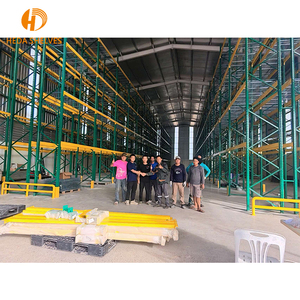
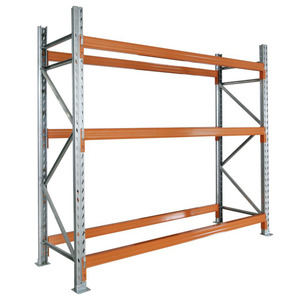
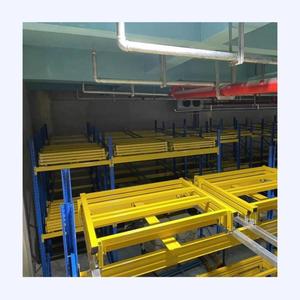
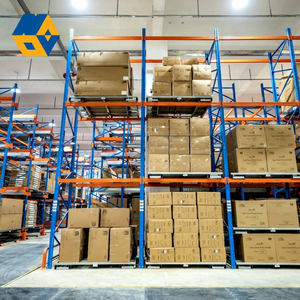
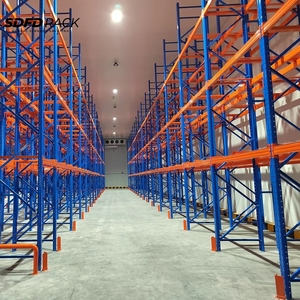
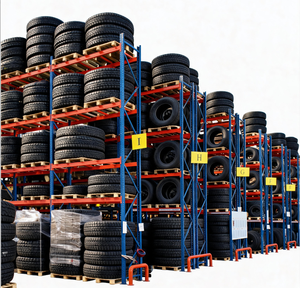
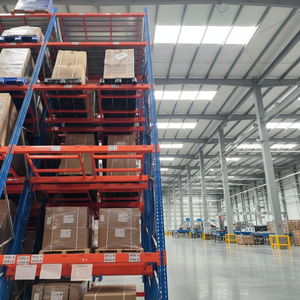
Teardrop pallet racking has become an international gold standard in modern warehouse intralogistics due to its ingenious self-locking connection geometry and unmatched versatility. Characterized by inverted teardrop-shaped punching positioned along the front face of vertical upright columns at standard 2-inch (50.8 mm) vertical increments, this mechanical interface allows warehouse operators to reconfigure beam elevations quickly without specialized tools.
Unlike rigid European slotted or bolted configurations that often require extensive fastener torque auditing, the teardrop interface utilizes tapered shelf pins on beam end-plates. Under gravity and pallet loading, the downward force pulls the beam connector pins into the narrow lower throat of the teardrop punch. This creates a wedging effect that amplifies joint rigidity and moment resistance as payload weight increases.
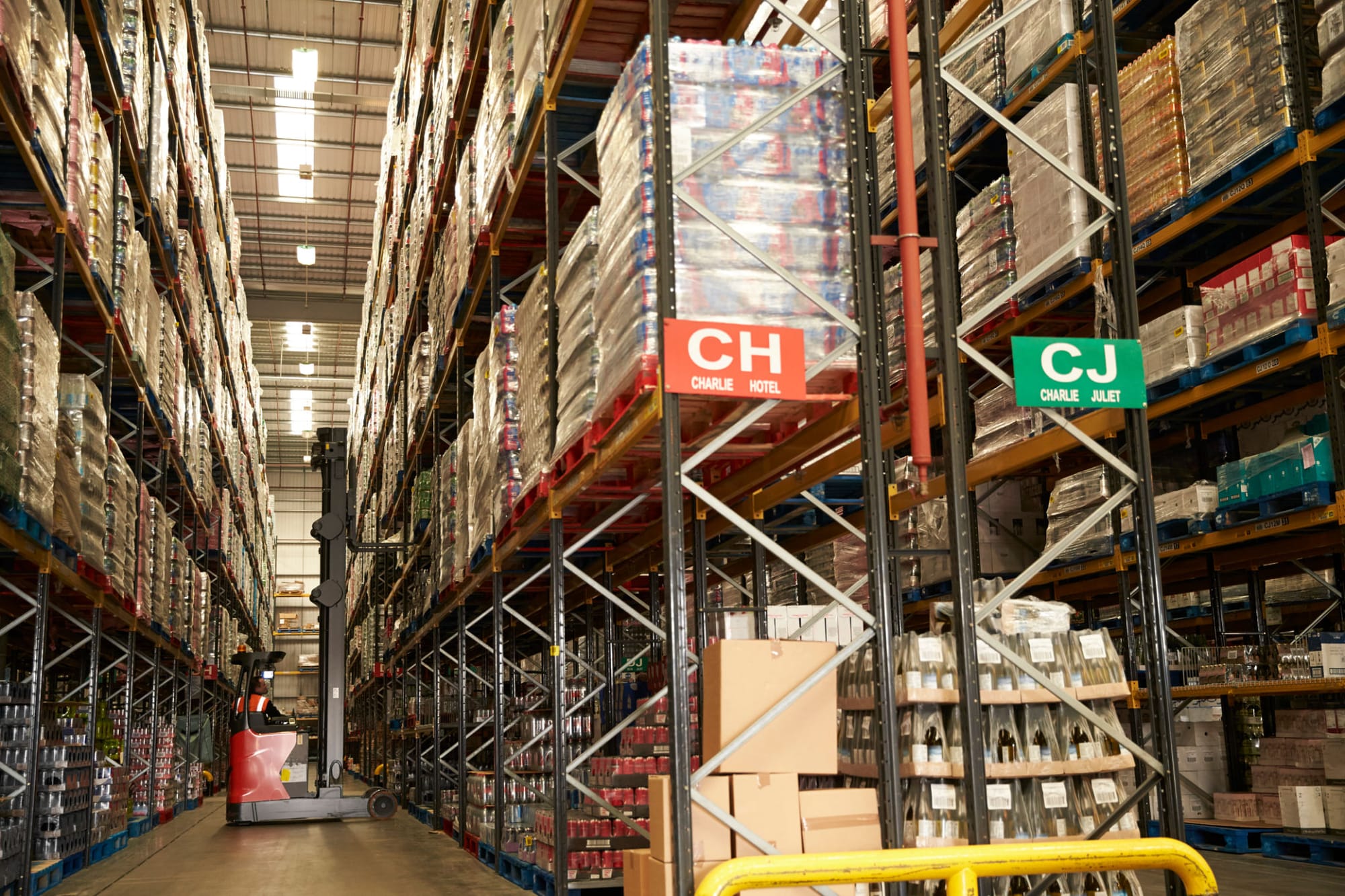
The structural reliability of our pallet racks relies entirely on virgin cold-rolled coil steel certified to international standards. For standard selective warehousing, prime Q235B steel ($F_y \ge 235 \text{ MPa}$, ultimate tensile strength $370\text{--}500 \text{ MPa}$) provides ductility, cold workability, and impact absorption. For ultra-dense configurations, drive-in systems, and high-bay setups exceeding 10 meters, we manufacture our upright profiles from certified high-tensile Q355B steel ($F_y \ge 355 \text{ MPa}$), equivalent to European S355JR and ASTM A572 Grade 50.
This higher yield strength allows us to reduce cross-sectional deadweight while significantly enhancing horizontal buckling resistance, vertical axial load ratings, and torsional stiffness across high seismic zones.
| Steel Grade & Property | Yield Strength ($F_y$) | Tensile Strength ($F_u$) | Elongation at Break | Optimal Israeli Application |
|---|---|---|---|---|
| Structural Grade Q235B | $\ge 235 \text{ N/mm}^2$ | $370\text{--}500 \text{ N/mm}^2$ | $\ge 26\%$ | Standard selective racks, retail display, 3PL buffer storage up to 7m height |
| High-Yield Grade Q355B | $\ge 355 \text{ N/mm}^2$ | $470\text{--}630 \text{ N/mm}^2$ | $\ge 21\%$ | High-bay VNA, automated push-back, radio shuttle, Dead Sea seismic zone |
| Hot-Dip Galvanized Coil | $\ge 250 \text{ N/mm}^2$ | $330\text{--}450 \text{ N/mm}^2$ | $\ge 20\%$ | Cold storage freezers (-25°C), open agricultural sheds, coastal marine air |
Israel's geographic position along the Dead Sea Transform (DST) fault system creates a distinctive seismic environment that warehouse engineers must address. Tectonic interactions between the African and Arabian plates mean logistics facilities in northern valleys, the Jordan Rift corridor, and parts of the central coastal plain face meaningful peak ground accelerations (PGA). Industrial racking behaves as a non-building structural system carrying immense live payloads, meaning un-engineered racks pose major collapse hazards during ground motions.
Our engineering team designs every teardrop installation destined for Israel in alignment with Israel Standard SI 413 (Design Provisions for Earthquake Resistance of Structures), harmonized with Eurocode 8 (EN 1998) and the Rack Manufacturers Institute's RMI MH16.1-2021 seismic specifications. We apply advanced modal response spectrum analysis to evaluate frame ductility, beam-to-column rotational rigidity, and baseplate uplift forces.
Standard 2mm base clips are replaced with 10mm to 16mm structural steel footplates featuring elongated dual-anchor punch slots that distribute dynamic shear forces evenly across the concrete slab.
Upright frame bracing adopts engineered bolted diagonal-and-horizontal web trusses with thick steel tubing, engineered to resist secondary $P$-$\Delta$ overturning moments without plastic deformation.
We supply verified Hilti or Fischer ETA-approved torque-controlled expansion or chemical adhesive anchor systems sized for cracked concrete foundations (C25/30 to C40/50 slab specs).
Prior to shipment, our engineering office provides stamped structural static and dynamic load calculation packages, guaranteeing smooth structural sign-offs with Israeli municipal engineers, Fire and Rescue Services (Israel Fire Authority), and insurance underwriters.
From the bustling logistics hubs of Central Israel to the portside container terminals and southern agricultural distribution belts, our teardrop racking solutions are configured to resolve distinct regional and industrial supply chain challenges.
With industrial land values at historic highs in Petah Tikva, Modi'in, Shoham, and Rishon LeZion, facilities demand maximum vertical cube utilization. Our teardrop systems configure into Very Narrow Aisle (VNA) systems reaching 14 meters, operated by turret trucks and automated picking platforms.
Modi'in & Central Logistics HubsFacilities adjacent to the Port of Ashdod and Port of Haifa handle high turnover container de-stuffing. These facilities require ultra-durable racks that withstand punishing counterbalance forklift cycles and resist coastal salt atmospheric corrosion (ISO 12944 C3/C4 environments) with treated powder coatings.
Port-Side Freight CorridorsLarge grocery and retail chains (such as Shufersal and Rami Levy) require modular flexibility to store both standard Israeli wooden pallets (1200 x 1000 mm) and imported Euro-pallets (1200 x 800 mm). Heavy-duty wire mesh decking and drop-in pallet support bars provide seamless hybrid loading.
National Grocery DistributionRefrigerated and frozen distribution centers throughout the Sharon, Galilee, and southern Negev regions rely on our high-density teardrop push-back and radio shuttle systems inside temperature-controlled chambers (-25°C), maximizing thermal cubic efficiency while minimizing refrigeration power draw.
Galilee & Southern Cold StorageThe Israeli warehousing sector is experiencing a rapid structural transformation. Over the past five years, high demand for consumer goods, rapid population growth, and high technology-driven commerce have driven substantial investment into industrial logistics assets. Warehouse design and racking procurement are evolving to reflect three prominent market forces:
Industrial land leasing rates in the central district have driven warehouse designs from standard 6-meter ceiling profiles to modern high-clearance buildings between 12 and 18 meters. Procurement managers are shifting away from light-duty shelving toward structural teardrop uprights capable of bearing cumulative bay loads exceeding 15 metric tons across 6 to 9 beam tiers.
With domestic labor shortages in industrial sectors, Israeli supply chain leaders are retrofitting traditional selective racks into hybrid semi-automated setups. Our teardrop uprights integrate seamlessly with radio shuttle rails, automated automated guided vehicles (AGVs), and carton flow picking accessories, creating versatile hybrid operations with minimal capital expenditure.
Global shipping interruptions and geopolitical shifts have prompted Israeli importers and manufacturers to pivot from lean "Just-in-Time" paradigms toward resilient buffer stock architectures. Maintaining 3 to 6 months of critical inventories has fueled demand for scalable, quickly expandable teardrop systems that can be rapidly modified or expanded as capacity needs change.
Choosing the correct racking configuration requires a careful balance between SKU selectivity, storage density, equipment capex, and operational throughput velocity. The matrix below contrasts standard teardrop selective systems against European slotted, drive-in, and push-back configurations under typical Israeli operational parameters.
| Performance Criteria | Teardrop Selective (Ours) | European Slotted Style | Drive-In Racking | Push-Back Cart System |
|---|---|---|---|---|
| Pallet Selectivity | 100% Direct Immediate Access | 100% Direct Access | Poor (Last-In, First-Out Only) | Moderate (LIFO per Lane) |
| Beam Pitch Adjustability | 50.8 mm (2.0") Increments | 50 mm or 75 mm | Fixed Rail Elevations | Fixed Level Elevations |
| Installation Velocity | High (Toolless Drop-in Locking) | Moderate (Tension Wedges) | Slow (Complex Bolted Rails) | Moderate (Cart Alignment) |
| Interchangeability | Universal American Compatibility | Proprietary to Manufacturer | Proprietary Components | Proprietary Cart Assembly |
| Floor Area Utilization | 35% - 42% (Aisle Dependent) | 35% - 42% | 65% - 75% (High Density) | 55% - 65% (Dynamic Density) |
| MHE Forklift Requirements | Standard Counterbalance / Reach | Standard Counterbalance / Reach | Narrow Mast Drive-in Trucks | Standard Reach Forklifts |
| Capital Investment per Pallet | Lowest Base Cost (High ROI) | Moderate to High | Moderate | High (Mechanical Hardware) |
As a specialized manufacturer with decades of cold-formed structural engineering expertise, we operate high-capacity production facilities dedicated to producing heavy-duty storage equipment. Unlike regional trading intermediaries, our manufacturing facility controls every stage of structural execution—from raw steel decoiling and automated hydraulic hole punching to continuous roll-forming and robotic welding.
Our automated production facilities maintain dimensional tolerances within $\pm 0.5 \text{ mm}$ across 12-meter upright upright sections, ensuring vertical column alignment during field erection. Every component delivered to your jobsite in Israel is manufactured to assemble seamlessly without on-site cutting, burning, or field welding.
Multi-stage precision cold-rolling lines shape thick-gauge steel profiles without inducing micro-fractures along critical bend radii.
Automated dual-torch robotic welding stations execute full-penetration seam welds joining step beams to high-tensile 3-lug and 4-lug end connectors.
Pre-treatment with automated zinc phosphating followed by electrostatic polyester-epoxy powder application cured at 200°C for impact and scratch resistance.
Direct technical answers addressing the logistical, structural, and regulatory questions asked by project engineers, procurement directors, and warehouse managers in Israel.
In Israel, warehouses commonly handle both the domestic standard 1200 x 1000 mm 4-way entry wooden pallet (predominant in grocery and FMCG networks) and the European 1200 x 800 mm Euro-pallet (imported manufactured goods). Our teardrop frames are commonly engineered in standard 1,000 mm or 1,100 mm frame depths.
To safely handle both pallet varieties without risk of dropping through the beam pairs, we supply heavy-duty galvanized wire mesh decking with under-welded channel supports or drop-in flanged pallet support bars. This allows operators to place 800 mm Euro-pallets, 1000 mm Israeli pallets, and non-standard skids anywhere on the same shelf levels safely.
Direct shipments to Israeli seaports (Ashdod and Haifa) are managed with full export compliance. We provide complete commercial documentation, including:
Yes. Our in-house structural engineering department generates full structural calculation reports based on finite element analysis (FEA). We evaluate the specific location's spectral acceleration coefficients, site soil classifications, building clear heights, and unit pallet loads.
Our calculation books cover axial frame capacities, horizontal seismic base shear forces, beam deflection criteria under full live load ($L/200$ deflection limits), and concrete anchor pull-out/shear resistance. These packages provide all required engineering verification for presentation to municipal engineering bureaus, the Standards Institution of Israel (SII), and corporate insurance carriers.
Maritime freight rates make container volume optimization critical. We utilize customized nesting patterns where upright columns are bundled with steel strapping and nested base-to-base on heavy dunnage runners. Step beams are bundled with interlocking flange tabs and edge protectors, ensuring that a standard 40-foot high-cube (40HQ) container achieves 25 to 27 metric tons of payload.
To eliminate moisture damage, sweat condensation, and corrosion during the 20- to 35-day ocean transit through equatorial and Mediterranean shipping routes, all bundles are wrapped in industrial water-repellent VCI (Vapor Corrosion Inhibitor) stretch films and packed with industrial container desiccant bags.
For industrial teardrop installations with upright heights exceeding 6 meters and bay capacities over 4,000 kg, we recommend a reinforced concrete slab with a minimum thickness of 150 mm to 200 mm and a characteristic compressive strength of at least C25/30 (ideally C30/37). The floor must be level within tolerances defined by EN 15620 or DIN 18202.
We specify and supply heavy-duty mechanical wedge anchors (M12 to M16) or chemical capsule anchor studs with embedment depths ranging from 90 mm to 140 mm, ensuring safe baseplate anchoring under both static shear and dynamic seismic uplift forces.
Coastal logistics parks located within 5 to 15 kilometers of the Mediterranean shoreline in Ashdod, Netanya, and Haifa face elevated airborne salinity and humidity. Our automated powder coating line applies an advanced 7-stage pre-treatment wash including zinc phosphating, followed by thermosetting polyester-epoxy hybrid powder baked at 200°C to an average dry film thickness of 80 to 90 microns.
This process delivers substantial scratch resistance and passes 500-hour neutral salt spray tests (ASTM B117) without blister propagation. For outdoor covered staging yards or high-humidity coastal facilities, we can also supply heavy-duty hot-dip galvanized components complying with ISO 1461.
Submit your warehouse floor layout, target pallet capacities, clear roof heights, and handling equipment specifications. Our senior engineering team will generate a compliant CAD racking layout and structural quote within 24 hours.