Heavy Pallet Bay

No matching pages. Try "pallet", "mezzanine" or "cantilever".
Explore our flagship CE-certified product range manufactured with precision-rolled profiles, interlocking structural beams, and electrostatically applied epoxy-powder finishes tailored to demanding warehouse environments.
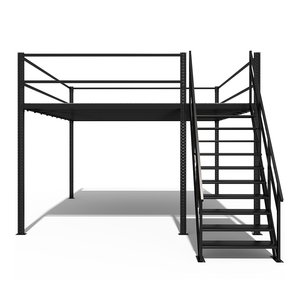
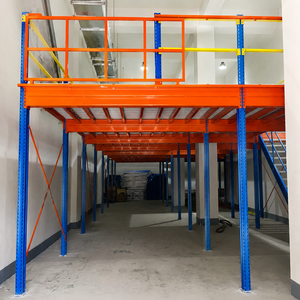
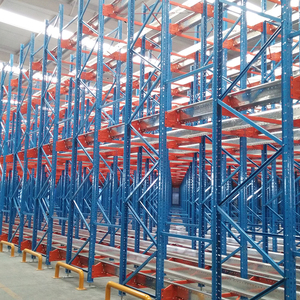
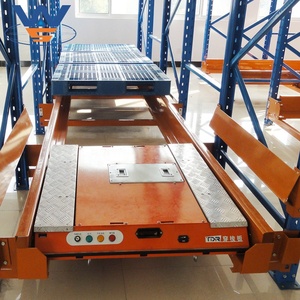
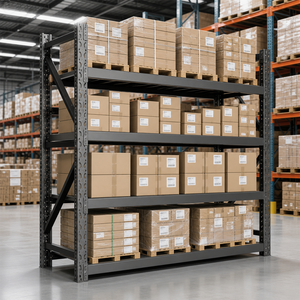
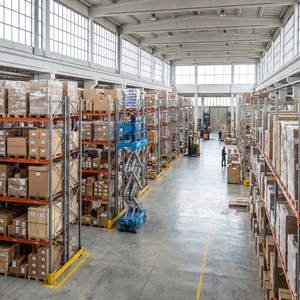
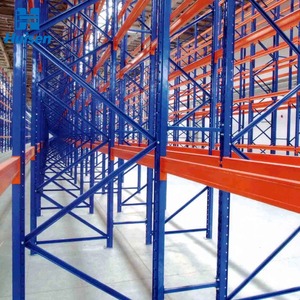
Within the logistics, manufacturing, and distribution infrastructure of the European Union, the Middle East, and North America, industrial steel storage shelving is classified as a critical load-bearing structural installation. Procurement of non-certified or substandard shelving creates substantial operational liability, heightened workplace catastrophe risks, and severe compliance violations. True CE Marking on steel storage structures confirms conformance with Regulation (EU) No 305/2011 (Construction Products Regulation or CPR) alongside rigorous execution standards under EN 1090-1 and the specific design procedures defined by EN 15512:2020.
Technical Design Benchmark: Unlike consumer light shelving, heavy-duty industrial shelving must verify ultimate limit states (ULS) and serviceability limit states (SLS). Per EN 15512:2020, beam deflection under full working load must not exceed L/200, upright perforations must account for distortional buckling, and upright-to-beam connectors must undergo cyclic moment testing to establish actual semi-rigid rotational stiffness (Cd).
Our industrial steel shelving and pallet racking components are cold-formed from high-yield structural steel coils. We selectively procure prime hot-rolled and continuous galvanized micro-alloyed sheets categorized under Q235B and Q355B (equivalent to EN 10025-2 S235JR and S355JR). The choice of metallurgical grade governs the ultimate tensile strength, which spans 370 to 510 MPa for S235 and 470 to 630 MPa for S355, alongside a guaranteed minimum elongation of 20% to prevent brittle structural failure under dynamic seismic or accidental handling impacts.
Upright column profiles are manufactured via continuous 18-to-24-station roll-forming lines. Through computerized roll-forming, the profile achieves up to 12 cold-worked work-hardening bends per channel. These longitudinal ribs significantly amplify the second moment of area (Ixx and Iyy) while optimizing the cross-sectional radius of gyration. This allows upright profiles to withstand severe axial compressive stress while minimizing steel deadweight, directly lowering international ocean freight expenses for high-volume purchasing contracts.
The stability of industrial steel shelving relies on the mechanical connection between the horizontal load-carrying beams and vertical upright frames. Our patented connector brackets are cold-stamped from 3.5mm to 4.0mm heavy gauge structural steel plates, featuring 3, 4, or 5 precision-tapered teeth. When seated into the upright's teardrop or hexagonal diamond punchings, the connection generates a wedging action under gravitational load. This design drastically minimizes joint loosening caused by cyclical material handling operations.
Every connector assembly includes an automated spring-lock or drop-in zinc-plated safety locking pin. This mechanism resists upward dislodgement forces exceeding 5.0 kN, completely preventing inadvertent beam detachment caused by forklift operator miscalculations or upward pallet snagging during retrieval routines.
Corrosion mitigation directly dictates the operational lifecycle and safety index of steel storage installations. We implement an automated continuous 7-stage surface preparation line prior to electrostatic powder deposition:
Compare load capacities, floor utilization factors, handling equipment requirements, and stock turnaround logic across industrial storage topologies.
| Racking System Classification | Pallet Selectivity | Cubic Space Utilization | Stock Rotation Logic | Standard Bay Payload | Handling Equipment Required |
|---|---|---|---|---|---|
| Selective Pallet Racking | 100% Immediate | 40% - 50% | FIFO / LIFO | Up to 4,500 kg | Counterbalance / Reach Truck |
| Double Deep Pallet Racking | 50% (Two-Deep Lane) | 60% - 65% | LIFO | Up to 3,500 kg | Pantograph Reach Truck |
| Radio Shuttle High-Density | Semi-Automated (Lane-Based) | 80% - 85% | FIFO & LIFO | 1,500 kg / Position | Standard Forklift + Radio Shuttle Car |
| Drive-In / Drive-Through | Bulk Lane Access | 70% - 75% | LIFO (Drive-In) | Up to 1,500 kg | Narrow Counterbalance Truck |
| Heavy Duty Mezzanine Floor | 100% Pedestrian Access | 200% - 300% (Vertical) | Free Access | 300 - 1,200 kg/m² | Manual Cart / Pallet Truck / Goods Lift |
| Cantilever Storage System | 100% Unobstructed Front | 55% - 65% | Any Rotation | 500 - 1,800 kg/Arm | Side Loader / Four-Directional Forklift |
| Boltless Industrial Shelving | 100% Manual Hand-Pick | Medium Hand-Picking | FIFO Manual | 300 - 800 kg/Shelf | Manual Order Pickers / Hand Operatives |
Global supply chain volatility, land acquisition inflation, and labor shortages are reshaping industrial shelving procurement. Review the key technological and engineering shifts dictating next-generation capital investment.
Static storage racks are rapidly evolving into hybrid structural frameworks engineered to support autonomous guided vehicles (AGVs), autonomous mobile robots (AMRs), and parent-child pallet shuttles. Tolerances are shifting from loose industrial norms to ultra-tight EN 15620 Class 300/400 deflection criteria.
Automation IntegrationMultinational buyers bound by Corporate Sustainability Reporting Directives (CSRD) and Scope 3 carbon mandates are prioritizing structural steel manufactured via scrap-fed Electric Arc Furnaces (EAF) rather than coal-fired blast furnaces, lowering embodied carbon by up to 60% per metric ton.
Decarbonized MetallurgyWith industrial real estate rates reaching unprecedented highs across key logistics hubs, procurement teams are abandoning standard 6-meter ceiling profiles. New developments demand 12 to 16-meter very narrow aisle (VNA) and rack-supported building (clad-rack) systems that double volumetric efficiency.
Cubic MaximizationEnterprise logistics hubs are installing embedded piezoresistive strain sensors and acoustic impact monitors onto critical upright column protectors. These IoT nodes log forklift collision shocks in real time, alerting facility managers via cloud dashboards to inspect frames before catastrophic buckling occurs.
Predictive Safety TechWe blend comprehensive structural calculation, automated continuous roll-forming production, and turnkey project lifecycle supervision to deliver high-capacity industrial shelving systems worldwide.
Every commercial quote begins with your pallets, your material handling fleet, and your warehouse CAD slab data—never from a rigid generic catalog. Our licensed structural engineers calculate live and dead loads, clear heights below sprinklers, and minimum turning radiuses to craft optimized CAD and 3D layouts.
Equipped with modern automatic roll-forming mills, robotic CNC punching units, and multi-axis welding cells, our plants produce over 4,000 metric tons of certified storage profiles every month. We provide complete mill certificates (MTC 3.1) and full raw material traceability from coil to finished pallet bay.
With verified projects successfully deployed across the United Arab Emirates, Europe, Southeast Asia, and the Americas, our engineering teams ensure seamless approval from local building authorities, Civil Defence entities, and international third-party inspection agencies such as SGS, TÜV, and Bureau Veritas.
We refuse to treat safety accessories as optional extras. Heavy-gauge wrap-around column protectors, heavy-duty floor anchor bolts, double-sided run spacers, beam security locks, and full end-of-aisle structural crash barriers are engineered into our baseline specifications to ensure lifetime resilience.
Following professional installation, our certified site crews verify frame plumbness within EN 15620 Class 400 limits and install permanent mechanical load notice signage on every aisle run. Signage details maximum permissible beam level loads, bay capacities, and safety operating margins per EN 15635.
Industrial warehousing environments evolve continuously. Our standardized punch pitches (50mm and 75mm) ensure complete backwards compatibility, enabling facility managers to order replacement beams, alter shelf levels, or extend bay lengths decades after initial installation.
Comprehensive answers addressing regulatory requirements, floor slab structural criteria, installation timelines, and international shipping protocols.
Under European Union directives and Construction Products Regulation (EU 305/2011), structural steel shelving and pallet racking are designed in strict accordance with EN 15512:2020 (Racking - Principles for structural design) and EN 1993-1-3 (Eurocode 3: Design of cold-formed thin gauge members). Fabrication quality management adheres to EN 1090-1 and EN 1090-2 (Execution of steel structures), requiring Factory Production Control (FPC) audit verification. Operational tolerances follow EN 15620, while inspection and maintenance guidelines conform to EN 15635.
For standard heavy-duty selective pallet racking with bay loads exceeding 12,000 kg, the concrete slab should possess a minimum compressive strength of C20/25 or C25/30 (25 to 30 MPa) with a minimum slab thickness of 150mm to 200mm, reinforced with steel mesh or structural fibers. Anchoring utilizes M12 to M16 heavy-duty mechanical expansion or chemical capsule anchors, requiring minimum embedment depths of 80mm to 120mm. Floor flatness tolerances must comply with DIN 18202 or EN 15620 Table 1/2 to avoid rack out-of-plumb vertical deviations.
Per EN 15512:2020 serviceability criteria, horizontal beam deflection (δ) under uniformly distributed load (UDL) must not exceed 1/200th of the clear beam span (δ ≤ L/200). For example, on a standard 2,700mm pallet beam span, maximum elastic deflection under full rated load must remain under 13.5mm. For automated shuttle or AS/RS applications, stricter deflection limits of L/300 or L/400 are engineered to prevent sensor misalignment.
Yes. In seismic-active regions, storage systems are engineered per EN 16681 (Steel static storage systems - Adjustable pallet racking systems - Principles for seismic design) or equivalent US RMI / ASCE 7 seismic codes. We adjust upright column wall thicknesses, add heavy horizontal/vertical spine bracing towers, implement reinforced seismic footplates, and increase safety reduction factors (γM) to prevent collapse during ground acceleration shocks.
Powder coating (70-90μm) provides an impact-resistant, cost-effective finish ideal for dry indoor warehouse storage, offering extensive color-coding options. Pre-galvanized steel (using mill-galvanized coil with 100-180 g/m² zinc) provides economical rust resistance suitable for light condensation areas, shelves, and decking panels. Hot-dip galvanization (ISO 1461, 55-85μm zinc post-fabrication) is the premier specification for outdoor yards, harsh chemical storage, and extreme cold rooms (-30°C), preventing internal tube corrosion across a 25+ year lifespan.
Standard manufacturing lead time spans 3 to 4 weeks from approved CAD engineering drawings and receipt of deposit. We optimize container stuffing utilizing specialized wooden packing cradles, protective polyethylene corner wraps, and heavy-duty steel banding. A standard 40ft High Cube (40HQ) container typically holds 22 to 26 metric tons of upright frames and beam bundles, maximizing freight economy.
Provide your warehouse dimensions, pallet profiles, and forklift parameters. Our senior structural design team will deliver complete CAD layout drawings, certified capacity load sheets, and a competitive manufacturing proposal within 24 business hours.