No matching pages. Try "pallet", "mezzanine" or "cantilever".
No matching pages. Try "pallet", "mezzanine" or "cantilever".
Explore our certified range of high-load industrial warehouse racks, structural cantilever arms, radio shuttle logistics corridors, and heavy-duty wire decking. Each unit is precision-welded with cold-rolled and hot-rolled structural profiles to optimize long-material handling.
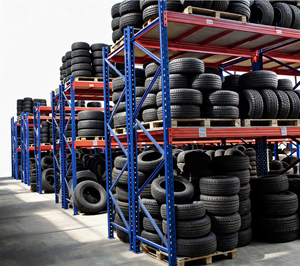
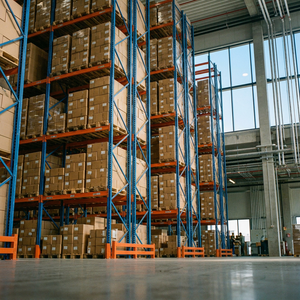
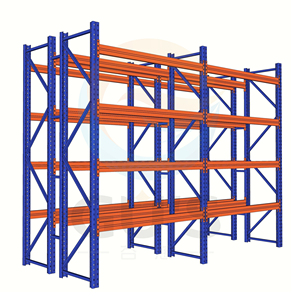
The efficient storage and handling of long profile inventories—including seamless carbon steel pipes, extruded aluminum tubing, hollow structural sections (HSS), copper piping, and drill collars—presents singular engineering challenges. Unlike conventional palletized freight, long structural stock exhibits high unit weight, flexible deflection along the horizontal axis, and complex moment load transfers. Sourcing heavy-duty pipe storage systems from an established China wholesale pipe storage racks supplier and exporter requires an in-depth understanding of structural mechanics, metallurgy standards, safety margins, and freight optimization protocols.
Industrial cantilever racking serves as the international benchmark for pipe, tube, and bar bundle handling. The fundamental design eliminates the front vertical column obstacle, offering unobstructed horizontal access. However, this configuration subjects the central vertical column to massive single-sided or asymmetric bending moments ($M_b$) combined with compressive axial forces ($P$).
Under European standard EN 15512 and Australian standard AS 4084, cantilever arm deflection is constrained strictly within $L/250$ to $L/300$, where $L$ represents the projected arm length. When engineering for high-density steel pipe yards, an upward inclination (camber) of 1.5° to 2.5° is deliberately designed into the arm-to-column connection collar. This engineered angle offsets gravitational deflection under maximum working capacity, preventing round inventory from migrating toward the outer edge. Heavy-gauge removable stop pins (end stops) ranging from 100mm to 300mm in height are welded or pinned at arm terminals as a secondary safeguard against uncontrolled roll-off.
Critical Engineering Rule for Heavy Pipe Racks: Cantilever upright base plates must transfer the cumulative overturning moment directly to the building foundation via heavy concrete wedge or chemical chemical resin anchors (e.g., M16 – M24 Hilti or Fischer capsules). Slab thickness ($t_s$) should rarely be less than 200mm with certified concrete compressive strength exceeding C25/30 or 4,000 PSI to resist punch shear and pull-out stress.
Material selection directly governs the weight-bearing ceiling and seismic performance of pipe racks exported from China. We categorize raw steel profiles into two primary classes depending on the storage height and individual arm payload:
Cold-Rolled Formed Profiles (Roll-Formed Q235B): Suitable for light to medium-duty pipe racking systems (500 kg to 1,200 kg per arm level). Uprights are precision roll-formed into continuous C-shaped or omega-perforated channels. Roll-formed systems offer economical freight nesting and flexible 50mm / 75mm slot adjustability for changing pipe diameters.
Hot-Rolled Structural H-Beams (IPE / HEA / Q355B Structural Steel): Compulsory for ultra-heavy pipe yards, oilfield tubular goods (OCTG), and multi-tier cantilever towers exceeding 6 meters in height. Columns fabricated from European standard IPE/HEA sections or Chinese standard hot-rolled I-beams deliver exceptional torsional rigidity. Arms engineered from heavy square hollow sections (HSS) or tapered H-beams can safely support point loads up to 4,500 kg per arm, withstanding repetitive forklift impact without catastrophic yield failure.
| System Category | Structural Profile | Yield Strength ($f_y$) | Payload / Arm (Level) | Corrosion Defense | Primary Industrial Use Case |
|---|---|---|---|---|---|
| Roll-Formed Cantilever | Omega / C-Section Q235B | ≥ 235 MPa | 300 – 1,200 kg | Electrostatic Epoxy (60μm) | Plumbing PVC, copper tubing, light retail pipes |
| Structural Heavy Cantilever | Hot-Rolled H-Beam Q355B | ≥ 355 MPa | 1,500 – 5,000 kg | Hot-Dip Galvanized / Epoxy | OCTG steel casing, structural HSS, heavy alloy rods |
| Roll-Out / Crank Arm Rack | Heavy Welded Box Tube | ≥ 355 MPa | 1,000 – 3,500 kg | Industrial Polyurethane | Overhead bridge crane picking, machining toolrooms |
| Automated Cassette AS/RS | Laser-Welded Steel Cassette | ≥ 235 – 355 MPa | 2,000 – 6,000 kg / Box | Dual Zinc + Polymer | Automated tube distribution centers, high-bay picking |
Because steel pipe stock is frequently stored in open-air yards, coastal logistic ports, and unconditioned industrial sheds, surface protection represents an indispensable sourcing variable. Export-grade pipe storage manufacturers in China deploy two distinct finishing regimens:
High-Yield Electrostatic Powder Coating: Structural components undergo automated pre-treatment including shot-blasting to standard Sa 2.5 to eliminate mill scale and rust, followed by zinc phosphate washing. A thermosetting pure polyester or epoxy powder layer is electrostatically applied and cured at 200°C for 25 minutes, providing an even 60–90 micron dry film thickness (DFT) with 500+ hours salt spray test validation (ASTM B117).
Hot-Dip Galvanization (HDG to ISO 1461 / ASTM A123): The absolute benchmark for outdoor open-yard storage. Fabricated columns, bases, and arms are submerged in a molten zinc bath at 450°C, creating metallurgically bonded zinc-iron alloy layers exceeding 85–100 microns. This finish resists rough handling, ultraviolet degradation, marine chloride fog, and acid precipitation for up to 30 years without structural maintenance.
Operating as an authoritative manufacturing partner, our Yueyang production hub and international project management team combine localized engineering design with tier-1 Chinese supply chain efficiencies.
Unlike generic trading resellers, every pipe storage proposal originates from detailed Finite Element Analysis (FEA) and building seismic load evaluations. We verify the physical interface between your material handling equipment—such as 4-way multidirectional reach trucks, side loaders, and overhead gantry cranes—and the storage frame footprint.
Our project engineering workflow integrates clear structural drawings, foundation anchor shear calculations, column impact protection bollards, and certified load capacity signage in strict compliance with EN 15635 and local municipal industrial codes.
Direct bulk allocation from Baosteel, Shougang, and HBIS guarantees verified mill test certificates (MTC), certified chemical composition, and mechanical tensile compliance.
Automated multi-axis CNC punching lines ensure consistent column connector hole pitches. Robotic welding stations execute continuous deep-penetration weld seams under AWS D1.1 standards.
Specialized bundled wood dunage, anti-scratch steel strapping, and custom container loading schemes maximize 40ft HQ cubic space while preventing in-transit bending.
From CAD layout design and structural load calculation reports to on-site assembly guides, component marking, and inspection checklists, you work with one accountable manufacturer.
Global supply chains are shifting rapidly toward automated handling, high-bay vertical consolidation, and digitized inventory traceability. B2B procurement leaders are specifying long-load racking based on several emerging technological advancements.
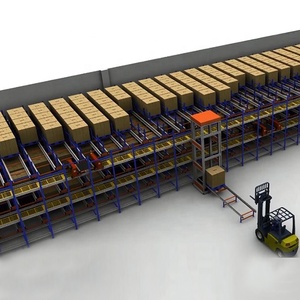
Traditional forklift-driven pipe aisles are yielding to computerized stacker cranes handling standardized steel cassettes. Warehouses achieve 30-meter high-density vertical storage, reducing physical land footprint by up to 70% while totally eliminating operator forklift collision risk.
Toolrooms and machine shops are prioritizing crank-operated or hydraulic roll-out cantilever racks. Operators can extend full 3-ton pipe bundles outward using a mechanical lever, allowing bridge cranes to execute 100% direct vertical picks without requiring deep aisle clearance.
Next-generation pipe racks increasingly incorporate strain gauges and wireless displacement sensors embedded directly on critical cantilever bases. Overload alerts, dynamic impact logs, and real-time deflection telemetry feed straight into the enterprise Warehouse Management System (WMS).
Tier-1 infrastructure procurement mandates Environmental Product Declarations (EPD) detailing Scope 1, 2, and 3 emissions. Chinese export manufacturers are expanding electric arc furnace (EAF) recycling lines to provide certified low-embodied-carbon structural storage frames.
Structural stability in long-goods pipe storage depends on holistic system resilience. Explore the engineering safeguards integrated into modern Chinese heavy-duty cantilever and pipe racking architectures.
Rigidly bolted cantilever arms transmit high torsional loads into the column spine during accidental forklift collisions. We implement high-shear forged pin-joint pivots with safety locking spring-pins. Under upward fork impact, the arm pivots upward harmlessly rather than shearing bolts or buckling the main upright column.
Long pipe runs generate significant longitudinal shear loads parallel to the aisle. Heavy tubular steel cross-bracing frameworks (X-bracing and horizontal tie-bars) constructed from high-yield structural tubing ensure the entire rack run acts as a unified rigid truss system under asymmetric loading.
Operating narrow-aisle side-loaders or heavy counterbalance trucks adjacent to cantilever uprights demands mechanical guidance. Continuous floor-mounted steel guide rails (L-section or heavy channel) and wrap-around column guards isolate the rack superstructure from direct kinetic tire and chassis impacts.
Detailed engineering and logistical answers addressing structural calculations, international standards, shipping configurations, and installation protocols.
To provide a certified layout and price quotation, our structural engineering department requires five primary inputs:
1. Pipe Inventory Profile: Minimum and maximum pipe length, outside diameter (OD), wall thickness, and weight per linear meter or individual bundle.
2. Storage Configuration: Single-sided cantilever (wall run) or double-sided freestanding central runs.
3. Clear Vertical Height: Available building clearance under roof purlins, HVAC ducting, and fire sprinkler systems.
4. Material Handling Equipment: Make, model, mast height, collapsed height, and required operational aisle width for your side-loader, multidirectional forklift, or overhead gantry crane.
5. Civil Floor Slab Data: Concrete slab thickness (mm), reinforcement mesh type, compressive strength rating, and warehouse seismic zone rating.
Arm spacing is determined by the bending stiffness and allowable deflection of the stored pipe material. As a universal engineering rule, the overhang of the pipe ends past the outermost arms should not exceed half the distance between the arms ($Overhang \le 0.5 \times Spacing$).
For rigid carbon steel pipes (API 5L, ASTM A53), an arm spacing of 1,500mm to 2,000mm is standard. For flexible PVC conduit, copper pipes, or small-diameter stainless steel tubing, spacing must be compressed to 1,000mm or augmented with continuous wire mesh decking or saddle steel troughs across the arms to prevent permanent sagging between support centers.
Our manufacturing facilities comply strictly with global industrial benchmarks depending on the destination market:
• Europe / Middle East / UAE: EN 15512 (Steel static storage systems - Racking design code), EN 15620 (Tolerances, deformations and clearances), and EN 15635 (Application and maintenance of storage equipment).
• United States & North America: ANSI MH16.1 / RMI (Rack Manufacturers Institute) specification for the design, testing, and utilization of industrial steel storage racks.
• Australia / New Zealand: AS 4084:2023 Steel storage racking.
• Factory Quality Control: ISO 9001:2015, CE Certification under EN 1090-1 Factory Production Control (FPC) for structural steel fabrication.
For indoor warehouses, climate-controlled logistic hubs, or retail hardware showrooms, electrostatic epoxy powder coating (60–90μm) is the optimal and most economical selection, offering high impact resistance, smooth aesthetics, and custom brand color schemes (e.g., Safety Orange RAL 2004 and Gentian Blue RAL 5010).
For open-air outdoor yards, coastal logistics zones, or unheated facilities subject to condensation and temperature cycling, hot-dip galvanization (ISO 1461) is strongly recommended. While the initial capital cost is approximately 18%–25% higher, HDG delivers a sacrificial metallurgical zinc-iron layer that protects against corrosion for decades without recoating.
Standard 40ft High Cube (HQ) shipping containers have an internal length limit of 11.8 meters and door entry height of 2.58 meters. To optimize freight economics:
1. Columns up to 11.5m: Packed horizontally as nested bundles protected with corrugated paper, foam corner protectors, and heavy steel banding, supported by heavy timber runners for crane fork discharge.
2. Columns over 12m: Fabricated with precision-machined heavy structural splice joints (splice plates with grade 8.8 or 10.9 structural bolts) verified by FEA to match the continuous moment capacity of the unbroken section.
3. Arms and Bracing: Palletized into dedicated steel crate frames to prevent shifting and streamline container offloading at destination ports.
Light-duty roll-formed pipe racks (under 2,000 kg total column load) typically require a reinforced concrete slab thickness of 150mm with a minimum strength of 3,000 PSI (C20/25).
Heavy-duty structural cantilever systems with tall columns (6m to 10m) and arm capacities exceeding 1,500 kg per level exert severe point loads and overturning moment forces. These systems demand a slab thickness of 200mm to 300mm with C25/30 or C30/37 reinforced concrete. For outdoor yard installations without an existing industrial slab, continuous strip foundations or dedicated reinforced concrete pier footings must be poured beneath each upright column line.
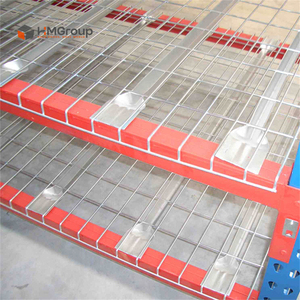
Yes. Cantilever arms can be fitted with custom accessories for non-pipe stock. Steel coil cradles (curved saddle beds) can be bolted directly across arm pairs to prevent circular sheet coils from rolling. Additionally, heavy drop-in steel deck panels, grating, or timber decks can span adjacent cantilever arms, transforming open arm bays into uninterrupted horizontal shelf planes capable of holding flat sheet packs, wooden crates, and irregular fabrication tooling.
Standard production turnaround for containerized custom pipe storage orders is typically 20 to 30 business days following approval of CAD fabrication drawings and anchor layout schemes. High-volume project contracts exceeding 500 metric tons are phased into rolling container shipments. Transit times vary from 12–18 days to Middle East / UAE ports (Jebel Ali), 22–30 days to European base ports (Rotterdam, Hamburg), and 18–25 days to US West Coast ports.
Under EN 15635, warehouses must execute weekly visual checks and documented annual technical audits by an independent competent rack inspector. Inspection checks focus on:
• Permanent Column Plumbness: Vertical out-of-plumb deviation must not exceed $H/500$ (where $H$ is total height).
• Arm Deflection & Permanent Set: Arms showing permanent downward bend under zero load must be decommissioned immediately.
• Anchor Bolt Integrity: Verification of anchor torque, checking for loose nuts or concrete hairline cracking around baseplates.
• Weld Inspection: Non-destructive visual and ultrasonic testing of column-to-base and arm collar welds to detect fatigue fissures.
Direct factory sourcing provides three decisive strategic benefits:
1. Capital Efficiency: Factory-direct pricing eliminates multi-tiered importer markups (typically 30% to 50% savings on large-scale installations).
2. Direct Structural Customization: Upright profiles, arm lengths, column gauge thicknesses, and paint finishes are custom-tailored to your exact inventory geometry rather than restricted to standardized stock catalog dimensions.
3. Complete Material Traceability: Direct access to mill test certificates, certified weld inspection records, and dedicated engineering support throughout the project lifecycle.
Consult with our structural design engineers today. Submit your warehouse CAD drawings, tube bundle profiles, and forklift parameters to receive a certified static layout, FEA deflection analysis, and direct export quotation.