
No matching pages. Try "pallet", "mezzanine" or "cantilever".
No matching pages. Try "pallet", "mezzanine" or "cantilever".
Manufactured with cold-drawn high-tensile steel wire (Q235B/Q355) and precision robotic MIG/spot welding. Selected across global logistics hubs for direct step-beam, box-beam, and architectural security integration.
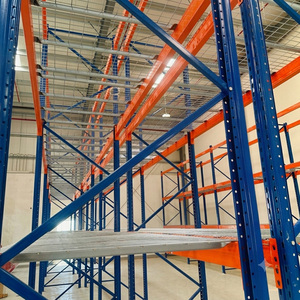
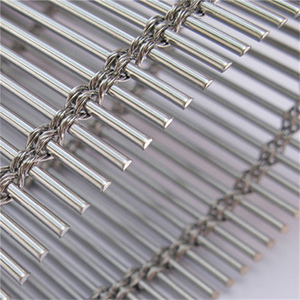
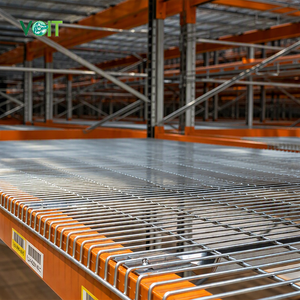
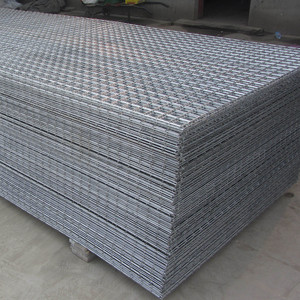
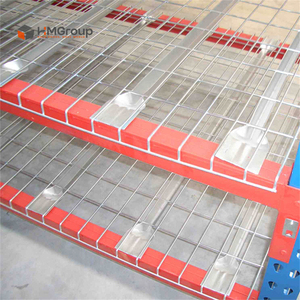
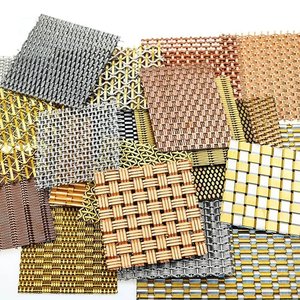
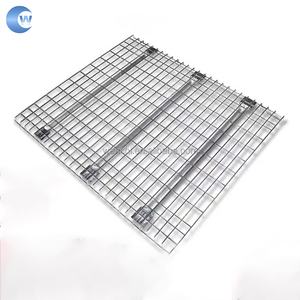
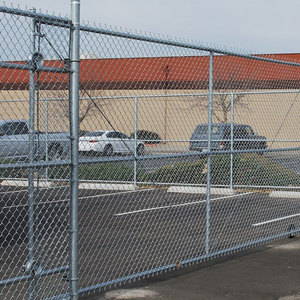
Unlike standard off-the-shelf distributor decking, OEM/ODM wire mesh decking manufactured for heavy-bay logistics must be calculated based on the beam profile, beam face width, and static dynamic live loads. A deflection ratio exceeding L/200 under full Uniformly Distributed Load (UDL) can trigger structural fatigue and beam binding, while improper waterfall geometry poses snag hazards for reach-truck tines.
Our engineering design cycle incorporates verified Finite Element Analysis (FEA) to determine wire pitch (50×50, 50×100, or 25×100 mm), cold-drawn gauge (3.5 mm to 6.5 mm), and channel structural thickness (1.2 mm to 2.5 mm). We supply three distinct beam integration channel geometries:
| Decking Structural Type | Channel Configuration | Max Uniform Load (UDL) | NFPA 13 Fire Rating | Deflection Limit | Best Fit Racking Profile |
|---|---|---|---|---|---|
| Standard Step Waterfall | 3 or 4 External U-Channels | 1,200 kg / 2,650 lbs | > 72% Open | ≤ L / 200 | Selective Step Beams (50mm / 75mm) |
| Heavy-Duty Flared Box Deck | Reinforced 2.0mm Flared Wings | 2,500 kg / 5,500 lbs | > 65% Open | ≤ L / 250 | Box Beams, Structural Roll-Formed |
| Inside Drop-In Flush Deck | Recessed Angle Brackets | 1,000 kg / 2,200 lbs | > 70% Open | ≤ L / 200 | Order Picking / Carton Flow Levels |
| Inverted Sanitary Channel | Upside-Down V/U-Channels | 1,500 kg / 3,300 lbs | > 70% Open | ≤ L / 220 | Cold Storage, Food & Pharma Warehousing |
| Solid Plywood / Steel Plate (Ref) | Solid Substrate | Varies (High Tare) | 0% Impenetrable | High Creep Deflection | Requires costly in-rack sprinkler lines |
Global supply chain disruptions, warehouse automation, and stricter insurance underwriters are fundamentally shifting the way EPC contractors, racking integrators, and procurement directors source wire decking.
Automated Storage and Retrieval Systems (ASRS) and Autonomous Mobile Robots (AMRs) require deck planarity within ±1.5mm. Future procurement mandates robot-friendly designs with zero-snag edges and flush-seated waterfalls to prevent sensor obstruction.
Industrial insurers (e.g., FM Global) are penalizing warehouses using timber or solid steel shelving. Modern procurement requires certified 50%+ open wire area to permit vertical water penetration from ceiling sprinklers, cutting in-rack piping costs by 40%.
Under the EU Carbon Border Adjustment Mechanism (CBAM) and global ESG audits, buyers increasingly select OEM suppliers using Electric Arc Furnace (EAF) carbon wire with verifiable recycled scrap content and non-toxic zinc passivations.
Traditional zinc electroplating is failing in high-humidity regional hubs. Sourcing is shifting rapidly toward hot-dip galvanizing (≥65μm) and electro-galvanized plus thermo-set polyester powder topcoats for extreme cold storage (-30°C) longevity.
How engineering refinements in cold wire drawing, automated resistance spot-welding, and modular stamping are redefining heavy load-bearing structural decking.
Adoption of micro-alloyed carbon steel wires that deliver 550+ MPa yield strength. This allows a reduction in gross steel tare weight by 12-15% while sustaining the exact same structural load rating, lowering trans-ocean freight overheads.
Fully automated German-engineered CNC wire-mesh welding matrices ensuring 100% penetration at every wire junction. This eliminates human welding inconsistency and guarantees high shear resistance (>75% of parent metal yield).
Next-generation wire decks feature pre-engineered snap-fit clip slots and integrated 4" rear wire mesh stop fences. This stops pallet overrun during forklift entry without demanding secondary bolt-on hardware.
OEM fabrication now incorporates laser-cut planar index plates welded directly to the front waterfall. These provide durable mounting faces for thermal barcode and UHF RFID tags, resisting forklift mast rubbing.
Originating from heavy structural warehouse design, GENEX engineers calculate loads, clear heights, and material handling dynamics rather than merely selling standard catalog numbers.
We do not guess warehouse compatibility. Our technical teams execute laser-measured site surveys, review material handling equipment (counterbalance, reach truck, VNA turret truck), and build custom CAD submittals confirming clear beam clearances and top-level sprinkler safe zones.
Every batch undergoes destructive proof testing, uniform load deflection verification, and weld shear testing under EN 15512 and ANSI MH26.2. Each pallet bundle is shipped with material mill certificates (MTC) and documented load notices guaranteeing compliance with local Civil Defence and municipal authorities.
From custom prototyping, tooling design, and automated robotic stamping to direct export packaging and site installation guidance, overseas clients work with one qualified engineering team. We remove the coordination friction between racking manufacturers and separate decking suppliers.
Authoritative guidance answering real technical, structural, and commercial questions raised by international logistics project managers and warehouse procurement specialists.
Uniformly Distributed Load (UDL) assumes the stored cargo weight is evenly spread across the entire surface of the wire mesh deck, transferring stresses uniformly into the structural support channels and the pallet rack beams. In contrast, a Point Load or Concentrated Load occurs when weight is localized on small footprints—such as container feet, pallet skids with narrow runners, or heavy machinery castings. Standard wire decks are rated strictly for UDL. If point loading is applied, the individual wire welds can shear and localized mesh sagging will occur. For point-load applications, our OEM division customizes the deck with heavy inverted steel plate pads, additional structural channels (up to 5 channels per panel), and 6.0mm heavy-gauge wire grids.
Under National Fire Protection Association (NFPA) 13 standards and FM Global warehouse property risk criteria, solid storage decks made of plywood, particle board, or solid steel act as horizontal fire umbrellas. They obstruct the downward flow of water from ceiling-mounted Early Suppression Fast Response (ESFR) sprinkler systems, forcing heat and toxic flue gases laterally across rack bays. To counteract solid shelving, fire codes mandate expensive in-rack sprinkler pipework between every beam level. Wire mesh decking provides an engineered open area of 50% to 75%, allowing immediate water penetration and early flame cooling while simultaneously enhancing visibility for forklift drivers and warehouse lighting distribution.
The choice is dictated by your pallet rack beam profile. If your warehouse utilizes roll-formed step beams (with an internal ledge typically measuring 7/8" deep and 1" to 1-1/2" wide), a Step Channel is ideal. Its 90-degree channel ends sit flush inside the step, ensuring a completely flat deck level and preventing any lateral slipping. If your installation utilizes structural channel beams, rectangular box beams, or structural roll-formed profiles without an inner step, you must specify a Flared Universal Channel. The flared ends feature flattened, outward-stamped flanges that rest directly upon the top flat face of the beam, secured by the front and rear waterfall lips.
Electro-Galvanized (Zinc Plated): The most economical, clean aesthetic finish for standard ambient temperature warehouses with controlled humidity. Provides 72–120 hours of salt spray resistance.
Hot-Dip Galvanized (HDG): Required for outdoor storage yards, coastal environments, high-salinity air, or sub-zero cold storage facilities (-30°C) where constant condensation occurs. The heavy metallurgical zinc bath layer (65–85 μm) delivers over 1,000 hours of ASTM B117 salt spray protection.
Powder Coated: Ideal for indoor retail showrooms, pharmaceutical picking zones, or color-coded zoning (e.g., hazardous materials in red, standard goods in grey). Delivers a smooth, non-snag finish that eliminates metal zinc flake shedding.
To engineer your custom wire mesh deck and provide verified load-deflection drawings, our engineering team requires:
1. Rack Frame Depth (Out-to-Out): e.g., 42", 48", 1000mm, or 1100mm.
2. Clear Beam Length & Step Profile: The distance between uprights and the dimensions of the beam step (depth × width).
3. Pallet Load & Weight: Target UDL per panel (e.g., 1,000 kg UDL across two decks per 2,700mm beam).
4. Cargo Handling Type: Standard wooden Euro/GMA pallets, plastic pallets, or hand-picked corrugated cartons.
5. Environmental Conditions: Ambient dry, refrigerated (+4°C), freezer (-25°C), or outdoor covered.
Yes. When used for case picking or split-case e-commerce fulfillment, standard 50×100mm mesh can sometimes cause thin cartons to sag or catch. For fulfillment centers, we manufacture Small-Aperture Wire Decking featuring 25×50mm or 25×100mm wire matrices, combined with an Inverted Inside Drop-In Design or Flush-Top Decking. This completely eliminates the outer waterfall lip, allowing workers to slide boxes smoothly onto the shelf without hitting snag points or ripping cardboard packaging.
In accordance with ANSI MH26.2 and EN 15512 testing protocols, our in-house test rig subjects sample decks from every heat batch to:
1. Uniform Static Proof Load Test: Application of 1.5× design capacity for 4 hours while measuring mid-span channel deflection (must not exceed L/200).
2. Weld Shear Integrity Test: Hydraulic shear pulling on 10 random wire intersections (must hold >75% of parent wire tensile yield).
3. Plating Thickness & Salt Spray Test: Magnetic gauge verification of zinc thickness followed by continuous ASTM B117 salt spray chamber logging.
4. Dimension & Planarity Laser Scanning: Checking diagonal tolerance within ±2.0mm to guarantee effortless drop-in assembly on site.
Standard U-shaped channels act like troughs, capturing falling dirt, spilled grains, pallet wood splinters, and dust. Over time, this creates biological pest harborages that fail HACCP, FDA, or GMP sanitary audits. Our OEM inverted channel design positions the structural channel opening downward. Debris falls clean through the wires to the concrete floor where automated sweepers or scrubbers remove it. Inverted channels maintain the identical structural moment of inertia and load capacity while completely eliminating sanitary blind spots.
Because wire mesh decks are nested during shipping, improper packing causes waterfall deformation, channel crushing, and scratching of the protective zinc finish. We pack our decks nested tightly face-to-face and back-to-back on custom-built heavy-duty wooden skids or steel cradles. Each stack (typically 50 to 60 pieces) is secured with high-tensile polyester strapping, heavy corner board protectors, and waterproof stretch-shrink film wrapping. Steel spacing dunnage is placed between bundles inside 40ft High Cube containers to prevent maritime container shifting.
Yes. We provide complete integrated rack safety ecosystems. In addition to horizontal load decking, we design and manufacture:
- Hanging & Snap-on Vertical Dividers: Segmenting rack bays into segmented carton pick bays without bolting.
- Flue-Space Keepers: Rigid wire stand-offs ensuring pallets do not encroach upon the required 6" longitudinal flue space for fire sprinklers.
- Anti-Collapse Backstop Screens: High-tensile modular wire panels mounted to rack uprights behind double-deep or selective bays to prevent pallets from falling into adjacent work aisles.