
No matching pages. Try "pallet", "mezzanine" or "cantilever".
No matching pages. Try "pallet", "mezzanine" or "cantilever".
Based on rigorous evaluations by structural engineers and warehouse logistics managers, these enterprise-grade live racking systems deliver optimal cubic volume utilization, safety margin factors (SF 1.95), and automated handling efficiency for modern distribution hubs.
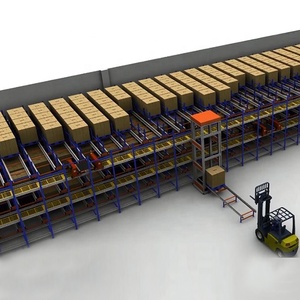
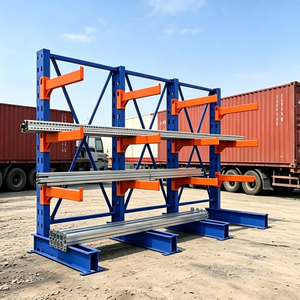
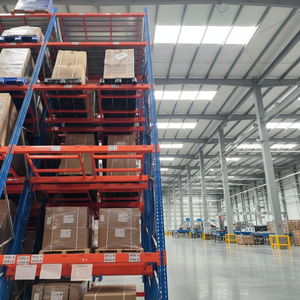
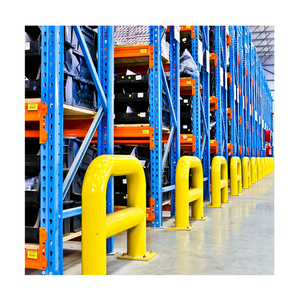
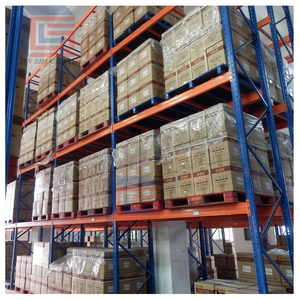
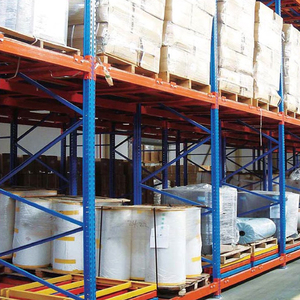
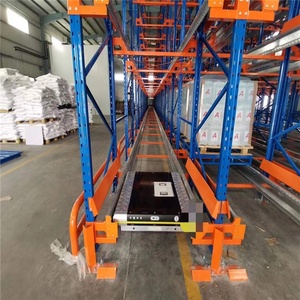
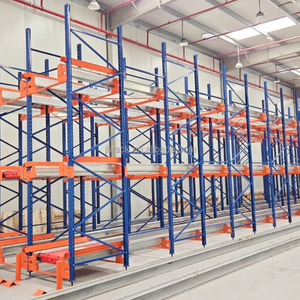
In global supply chain management, selecting a pallet racking supplier requires analyzing structural engineering specifications, raw material metallurgy, surface finishing durability, and compliance with international standards. Tier-1 manufacturing exporters differentiate themselves through precision cold-roll forming, automated robotic welding, and traceable quality control systems.
When conducting technical audits of racking manufacturing facilities, logistics engineers evaluate four critical manufacturing parameters:
Premium exporters utilize certified Q355B (equivalent to S355JR / ASTM A572 Grade 50) structural steel for upright columns, ensuring high yield stress margins under vertical axial loads and seismic forces.
Advanced 18 to 22-stage continuous automated cold-roll forming lines engineer multi-rib upright profiles (omega section) that maximize the moment of inertia and torsional resistance.
Electrostatic epoxy-polyester powder coating applied over a 7-stage phosphating pretreatment process guarantees salt-spray resistance exceeding 500 hours (ISO 9227 compliant).
To assist industrial procurement directors in making data-driven infrastructure decisions, the following matrix compares the dynamic characteristics, volume efficiency, handling requirements, and relative capital expenditure across major pallet racking configurations.
| Racking System Type | Storage Density | SKU Selectivity | Stock Handling Rotation | Forklift Aisle Width Required | Relative CAPEX Index |
|---|---|---|---|---|---|
| Selective Pallet Racking | Standard (40-50%) | 100% Direct Access | FIFO / LIFO Flexible | 3.0m - 3.5m (Standard Reach) | Baseline ($$) |
| Double Deep Racking | High (60-65%) | 50% Immediate Access | LIFO (Last-In, First-Out) | 3.0m - 3.3m (PANTOGRAPH Truck) | Moderate ($$$) |
| Drive-In / Drive-Thru | Very High (75-80%) | Low (Lane-Based) | Strict LIFO (Drive-In) / FIFO | 3.0m (Inside Rail Clearance) | Moderate-High ($$$$) |
| Radio Shuttle System | Ultra-High (85-90%) | Medium (Channel-Based) | Automated LIFO / FIFO | Standard Forklift (Front Access) | High Automation ($$$$$) |
| Push-Back Cart Racking | High (65-70%) | Medium (2-6 Pallets Deep) | LIFO (Gravity Cart Push) | 3.0m - 3.4m | High ($$$$) |
| Gravity Pallet Flow | Ultra-High (80-85%) | Medium (Lane Dedicated) | Strict Automatic FIFO | Dual Aisle (Loading vs Picking) | High ($$$$$) |
| Cantilever Racking | Variable (Item Dependent) | 100% Surface Access | Direct Handling | Depends on Load Length (Side Loader) | Moderate ($$$) |
As global supply chains transition toward micro-fulfillment centers, dark warehouses, and automated distribution networks, the physical pallet racking structure is evolving from static steel frame assemblies into integrated, sensor-enabled robotic infrastructure.
Traditional selective racking requires wide aisles designed around human forklift operators. Next-generation factory projects incorporate dynamic structural tolerances designed explicitly for Autonomous Mobile Robots (AMRs) and Automated Guided Vehicles (AGVs). These designs include laser-guided floor alignment channels, magnetic stripe recesses, and reinforced base plates capable of absorbing micro-vibrations from 24/7 continuous robotic traffic.
Information gain in rack operation centers around proactive risk prevention. Leading exporters are pre-fitting heavy-duty uprights with wireless piezoelectric strain gauges and MEMS accelerometers. These sensors stream real-time telemetry on structural deflection, localized mechanical impacts, frame tilt, and temperature variations directly to warehouse management software (WMS), alerting facility managers to critical overload or collision hazards before structural collapse occurs.
With the implementation of the EU Carbon Border Adjustment Mechanism (CBAM) and global ESG mandate mandates, international buyers are prioritizing pallet racking factories that utilize Green Steel produced via Electric Arc Furnaces (EAF) utilizing scrap metal and renewable power sources. Solvent-free VOC-neutral powder coatings and zero-wastewater phosphating lines are now prerequisites for tier-1 supplier qualification.
Due to soaring industrial real estate prices worldwide, modern warehouse footprints are expanding vertically rather than horizontally. Rack-supported buildings (where the structural racking frames support the wall cladding and roof trusses directly) are scaling up to clear heights of 40+ meters, achieving unprecedented volumetric density and eliminating structural column obstructions.
Partnering with certified pallet racking exporters ensures your facility benefits from complete project lifecycle management—from preliminary spatial CAD modeling to final structural sign-off and safety auditing under EN 15635 standards.
Every project undergoes Finite Element Analysis (FEA) testing under simulated load, wind, and seismic conditions to optimize member thickness without over-engineering.
Equipped with high-precision CNC punch presses, robotic laser welding cells, and automated powder coating lines delivering over 5,000 metric tons monthly output.
Certified field engineering teams manage on-site erection, plumb alignment, floor anchor torque verification, load safety signage installation, and commission readiness.
Tier-1 live pallet racking factories manufacture selective pallet racking, heavy-duty shelving, double deep racking, drive-in/drive-thru racking, automated radio shuttle racking, push-back racking, gravity flow racking, cantilever systems, and multi-tier mezzanine rack structures. Services typically include site survey analysis, structural CAD design, load rating certification, component supply, site installation, and EN 15635 compliance inspections.
Engineers calculate member sizes based on five critical parameters: maximum pallet weight (including pallet self-weight), pallet dimensions (depth, width, load overhang), clear vertical height under roof obstructions or fire sprinklers, forklift maximum fork height and turning radius, and localized seismic zone factors. Frame loading tables according to EN 15512 or RMI specifications dictate column wall thickness (e.g., 1.8mm to 2.5mm) and beam section heights.
EN 15512 is the official European standard governing steel static storage systems and structural pallet racking design. RMI (Rack Manufacturers Institute) is the primary American national standard (ANSI MH16.1). FEM 10.2.02 is the predecessor European recommendation code. All three standards enforce rigorous safety factors, beam deflection thresholds (typically L/200), and sway stability checks, but differ slightly in partial safety factor coefficients for material and live loads.
The warehouse concrete slab must support the concentrated point loads transmitted through the rack baseplates. High-bay racking structures exert point loads ranging from 30 kN to over 140 kN per leg. Concrete slabs must meet minimum thickness requirements (typically 150mm to 250mm reinforced concrete), compressive strength grade (C30/37 minimum), and floor flatness tolerances (such as FM2 or VDMA specs for narrow aisle operation) to prevent post-installation tilting or anchor pull-out failure.
Under EN 15635 standard guidelines, warehouse operators must conduct weekly visual checks by internal safety supervisors and schedule formal documented inspections by a qualified rack inspector at least once every 12 months. Damaged uprights or bent cross-beams exceeding deformation limits must be immediately unloaded, cordoned off, and replaced with original manufacturer replacement components.
In most cases, retrofitting requires replacing standard drive-in support rails with specialized high-precision shuttle guide rails. Because radio shuttles require tight side tolerances and specific rail profiles for sensor positioning, an engineering assessment must confirm frame spacing, structural plumbness, and battery charging station access prior to shuttle integration.
For sub-zero cold rooms (-25°C to -30°C) or high-humidity facilities, hot-dip galvanizing (HDG) per ISO 1461 is recommended. HDG applies a zinc coating thickness of 60 to 80 microns, delivering self-healing corrosion barrier protection. Alternatively, high-build outdoor-grade epoxy zinc-rich primer combined with polyester topcoat provides robust resistance against condensation and chemical atmospheric corrosion.
Consult with our senior structural storage engineers to analyze your pallet profile, optimize your volumetric storage density, and receive factory-direct FOB/CIF pricing.
Get a Quote