
No matching pages. Try "pallet", "mezzanine" or "cantilever".
No matching pages. Try "pallet", "mezzanine" or "cantilever".
Explore our custom-fabricated industrial racking units, engineered for high-density bar stock, steel coils, lumber bundles, and structural mezzanines conforming to ANSI MH16.1 and EN 15512 standards.
A deep-dive analysis into moment-arm mechanics, column section modulus, structural I-beams versus roll-formed cold steel, and deflection tolerances for long-load handling.
Modern warehouse logistics for non-standardized cargo—such as structural steel tubes, timber packs, aluminum extrusions, sheet metal plates, and energy wind-turbine components—require storage frameworks that eliminate unobstructed vertical column faces. Unlike conventional selective pallet racking where front uprights constrain pallet aperture widths, cantilever rack systems transfer loads entirely through moment-resisting arm connections into vertical central columns. As a premier Chinese manufacturer and global exporter, our engineering paradigm is built upon rigorous mathematical finite element modeling (FEA) compliant with ANSI MH16.1 (Specification for the Design, Testing and Utilization of Industrial Steel Storage Racks) and the European EN 15512 / FEM 10.2.02 regulatory frameworks.
The fundamental structural challenge of a cantilever column is combined axial compression and intense one-way or two-way bending stress (P-Delta interaction). Under full design payload, an eccentric load exerted at arm length L induces a critical overturning moment M = P × (L / 2) onto the upright profile. To mitigate flange buckling and torsional twist, our heavy-duty cantilever columns are fabricated from hot-rolled structural steel sections—predominantly Q355B (equivalent to ASTM A572 Grade 50 or S355JR) wide-flange I-beams (IPE, HEA, or HEB profiles). For lighter industrial profiles, high-yield cold-rolled roll-formed omega sections fabricated from Q235B high-tensile strip steel deliver an optimized strength-to-weight ratio, drastically lowering deadweight load on warehouse slab floors while reducing export freight tonnage.
Tapered arms are engineered with an intentional upward incline of 1° to 2° to offset beam deflection under sustained static load. This geometric compensation ensures items do not slide forward under dynamic loading.
Arms are locked into the upright via hardened grade 8.8 structural pins rather than rigid field welding. If struck by an errant forklift mast, the arm pivots upward harmlessly, absorbing shock and protecting the column flange.
Heavy base profiles are continuously welded to columns with full-penetration fillet welds, matched with massive gusset stiffeners. Grade 8.8 chemical or mechanical sleeve anchors transfer tensile uplift directly to the concrete foundation.
Another critical mechanical consideration is vertical arm deflection under safe working load (SWL). Under standard international warehouse safety codes, maximum cantilever arm tip deflection must not exceed L/200 (where L is the horizontal length of the arm) when loaded uniformly with static goods. For automated cantilever systems interfacing with stacker cranes or side-loading Narrow Aisle (VNA) automated guided vehicles, our tolerance envelope is engineered to L/300 or lower to eliminate mast interference. Columns are reinforced with vertical and horizontal structural X-bracing panels fabricated from heavy angle iron or cold-formed channels, creating a continuous diaphragm along the longitudinal warehouse axis that counteracts seismic accelerations and lateral sway.
| Evaluation Parameter | Structural I-Beam Cantilever (Hot-Rolled) | Roll-Formed Cantilever (Cold-Formed) | Hybrid Structural Configuration |
|---|---|---|---|
| Steel Grade Specification | Q355B / ASTM A572 Gr 50 / S355JR | Q235B / ASTM A36 / S235JR | Q355B Columns / Q235B Bracing |
| Single Arm Load Capacity | 1,000 kg to 5,000+ kg | 200 kg to 1,200 kg | 800 kg to 2,500 kg |
| Forklift Impact Resistance | Extreme (Resists heavy direct collisions) | Moderate (Requires sacrificial guards) | High (Heavy base plate & stiffeners) |
| Maximum Height Envelope | Up to 12 - 15+ Meters Free-standing | Up to 6 - 8 Meters | Up to 10 Meters |
| Corrosion Treatment Protocols | Hot-Dip Galvanized (ISO 1461) / Powder | Electrostatic Thermoset Polyester Powder | Duplex C5 Marine Coating System |
| Ideal Cargo Application | Steel pipes, plate bundles, mining dies | PVC conduit, lumber, furniture, textiles | Automotive chassis, sheet extrusions |
Macro shifts impacting international procurement heads, warehouse designers, logistics directors, and global supply chain executives.
Procurement of warehouse infrastructure has evolved beyond evaluating raw price-per-kilogram quotes. Modern global supply chains mandate comprehensive total-cost-of-ownership (TCO) metrics, seismic lifecycle compliance, export packaging durability, and modular expandability. The international procurement landscape for cantilever and heavy-duty steel racks through 2025–2030 is governed by four transformative operational trends:
Manual forklift operations are rapidly transitioning toward automated storage and retrieval systems (ASRS) featuring automated stacker cranes and 4-way multi-directional radio shuttles designed specifically for oversized 6-meter to 12-meter long structural packs.
Multinational buyers across the EU and North America increasingly enforce ESG mandates, requesting Environmental Product Declarations (EPDs), scrap-recycled EAF (Electric Arc Furnace) steel, and heavy-metal-free TGIC powder coatings.
Global logistics hubs situated along seismically active Pacific Rim and Mediterranean zones now demand certified dynamic response spectrum analyses, requiring ductile column base hinge designs and oversized anchor bolt pitch circles.
Rising international shipping rates necessitate smart knock-down (KD) pre-engineering. Structural components are modularized to achieve maximum cubic utilization in 40ft High Cube containers without exceeding 26 metric ton maritime payload limits.
Furthermore, raw material volatility requires procurement teams to forge strategic alliances with Chinese manufacturers maintaining direct mill-allocation agreements with top-tier steel producers such as Baosteel, Shougang, and HBIS Group. By locking in forward steel billet options and tracking real-time Shanghai metal exchange indices, international buyers insulate large-scale warehouse expansion projects from acute inflation spikes while securing guaranteed chemical and mechanical mill test certificates (MTCs under EN 10204 3.1).
How computer numerical control (CNC), automated laser profiling, and multi-stage surface passivations guarantee lifetime structural performance.
The superiority of top-tier Chinese racking exporters lies in factory automation and end-to-end quality assurance. Hand-cutting and manual stick welding have been superseded by 3D multi-axis fiber laser cutting systems that slice I-beams, box beams, and base plates with sub-millimeter tolerances. Beam-to-column locking pins and bolt holes are punched on automated continuous CNC lines, eliminating cumulative pitch errors across 12-meter tall upright assemblies.
Robotic gas metal arc welding (GMAW) workcells ensure continuous, defect-free root pass and cap welds across cantilever arm collars, gusset stiffeners, and heavy base flanges, verified through Non-Destructive Ultrasonic Testing (UT).
Before powder application, steel components pass through automated shot-blasting (Sa 2.5 standard) followed by nine chemical wash cycles, including hot alkaline degreasing, acid pickling, nano-ceramic silane passivation, and deionized rinses.
For outdoor lumber yards, steel service centers, and coastal chemical facilities, structural cantilever components receive a full molten zinc immersion coating exceeding 85 microns thickness, offering 30+ years of maintenance-free C4/C5 atmospheric protection.
Consolidated engineering, customized CAD layout modeling, turnkey international maritime logistics, and complete regulatory compliance.
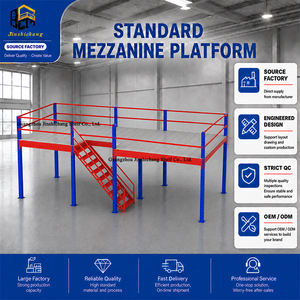
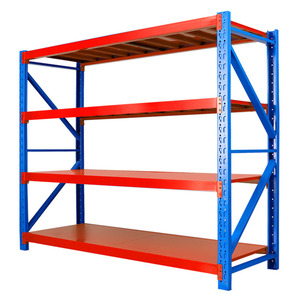
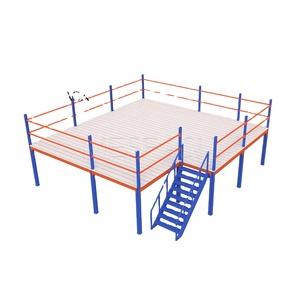
As documented across our enterprise portfolio—encompassing selective pallet racking, heavy-duty shelving, multi-tier mezzanine attic structures, cradle coil handling systems, and roll-formed warehouse storage—we operate as a single-point accountable engineering partner. Rather than forcing clients into rigid catalog SKUs, every cantilever storage bay is custom-calculated according to your unit load dimensions, forklift turning radii, overhead sprinkler clearances, and floor slab geotechnical reports.
Our in-house structural engineering department generates full 3D BIM/Revit models and detailed CAD shop drawings, providing structural calculation packages ready for local municipal building permit review and Civil Defence approvals.
Components are secured with heavy steel strapping, edge protectors, heavy-duty wooden dunnage, and moisture-barrier shrink wrap. Every sea container is strategically weight-balanced to streamline customs inspection and unloading at destination.
We supply standardized EN 15635 compliant load-notice plaques, column base shims, anchor hardware, torque verification tables, and complete digital installation manuals with English-speaking technical support for field crews.
Providing these critical technical inputs enables our engineering team to generate exact 3D models and structural quotations within 24 hours.
The maximum length of the stored material (pipes, profiles, lumber) and its tendency to sag between arm supports. This governs column center-to-center spacing.
Precise width, depth, and height of standard bundles, including pallet skids, dunnage, or cradle cradles to ensure adequate vertical arm clearance pitch.
Maximum static weight per storage tier and per arm, taking into account dynamic safety factors and asymmetric shock loading from lift truck forks.
Make, model, collapsed mast height, maximum reach height, and minimum working aisle width of counterbalance, multi-directional, or side-loader forklifts.
Clear internal height to the lowest architectural obstruction—including sprinkler piping, electrical trays, and HVAC ducts—ensuring code compliance.
Slab thickness (minimum 150mm–250mm recommended for heavy cantilever bases), concrete compressive rating (C25/30 or higher), and sub-base soil stability.
Direct, highly-detailed engineering answers to the most common questions raised by procurement directors and warehouse engineers.
Connect directly with our structural engineering and export division. Submit your preliminary building CAD files, material dimensions, and handling machinery specifications for a certified load calculation model, 3D warehouse layout, and comprehensive FOB/CIF pricing within 24 business hours.