
No matching pages. Try "pallet", "mezzanine" or "cantilever".
No matching pages. Try "pallet", "mezzanine" or "cantilever".
From seismic-rated structural channels to high-density 4-way automated shuttle racks, our systems conform rigorously to RMI ANSI MH16.1 specifications and Seattle Department of Construction and Inspections (SDCI) compliance codes.
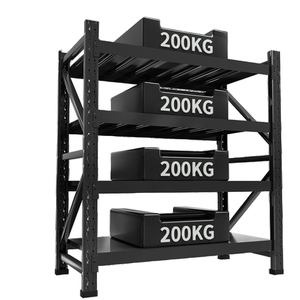
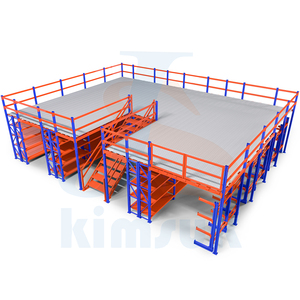
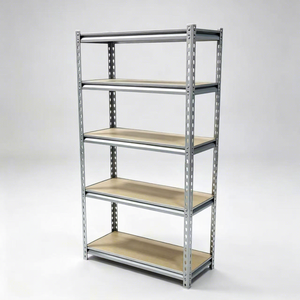
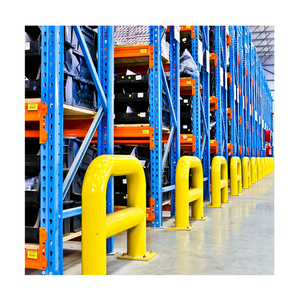
Industrial warehousing across King, Pierce, and Snohomish counties requires a fundamentally different engineering strategy than inland US markets. Our factory directly designs, calculates, and manufactures structural C-channel racking systems specifically tailored to the geomechanical and commercial challenges of the Pacific Northwest.
The Kent Valley (Kent, Auburn, Sumner) forms the economic backbone of Seattle's logistics footprint. However, its alluvial soil conditions and high water tables create severe challenges during seismic events, often leading to soil liquefaction hazards.
Standard roll-formed uprights frequently buckle under cyclic baseplate rotation. Our structural C-channel uprights utilize oversize 3/8" (9.5mm) to 1/2" (12.7mm) baseplates with dual 3/4" heavy-duty Hilti seismic wedge anchors, engineered to transfer extreme shear and uplift moment forces safely into the 6"–8" slab-on-grade without cracking the concrete.
Handling millions of TEUs annually, the Northwest Seaport Alliance facilities in Seattle and Tacoma serve as the primary gateway for seafood originating in Alaska and agricultural exports from Central Washington.
Sub-zero cold storage facilities cannot risk the brittle structural failures common with thin-gauge sheet metal. We manufacture our structural pallet racks using low-temperature impact-tested structural channel steel (Charpy V-Notch certified at -20°C / -4°F) combined with hot-dip galvanizing to resist extreme condensation, thermal contraction, and aggressive wash-down chemicals.
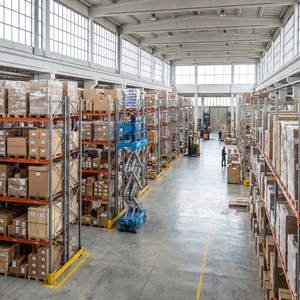
With industrial vacancy hovering below historical averages and lease rates in Tukwila, Fife, and SeaTac reaching premium levels, operations cannot expand horizontally. Modern Puget Sound warehouses are maximizing vertical clear heights up to 40–45 feet.
High-bay structural pallet racks demand uncompromising torsional stiffness and minimal beam deflection. Our bolted beam-to-frame connections feature structural Grade 5 or Grade 8 bolts, providing rigid moment resistance that eliminates the dislodgement risks associated with roll-formed teardrop safety pins during forklift nudges or minor seismic ground motion.
A rigorous metallurgical and mechanical evaluation for warehouse directors, facility engineers, and general contractors operating under the Seattle Building Code (SBC) and ASCE 7-22 seismic provisions.
| Engineering Metric | Hot-Rolled Structural C-Channel (Our Factory) | Cold-Rolled Sheet Steel (Standard Roll-Formed) | Pacific Northwest Warehouse Impact |
|---|---|---|---|
| Raw Material & Steel Grade | Q235B / Q355B (Equivalent to ASTM A36 / A572 Gr. 50) hot-rolled structural steel channels. | Thin-gauge cold-coiled sheet strip (12-gauge to 16-gauge / 1.5mm–2.5mm thickness). | Structural steel exhibits higher elongation, uniform grain structure, and vastly superior post-yield ductility. |
| Forklift Impact Resistance | Extremely High: Rigid C-channel webs resist crushing from 10,000+ lb counterbalanced lifts. | Low to Moderate: Tubular open shapes easily kink, buckle, or tear upon low-speed mast impact. | Seattle distribution centers see rapid turnover; structural steel prevents catastrophic collapse and costly rack downtime. |
| Beam Connection Mechanism | Heavy-duty structural Grade 5 / Grade 8 bolts with lock washers through heavy structural end-plates. | Tab/pin teardrop friction clips held in place by stamped wire safety locks. | Bolted connections do not pop out under vertical dynamic seismic wave uplift (P-Delta effects). |
| Seismic Performance (SDC D, E, F) | Engineered for high ground acceleration ($S_s \ge 1.25g$); massive ductility allows energy dissipation without brittle shear. | Requires complex external vertical x-bracing networks that often obstruct picking access lanes. | Fully compliant with SDCI plan review, ASCE 7 Chapter 15, and RMI MH16.1 specifications without bulky add-on braces. |
| Low-Temperature Toughness | High Charpy V-notch energy absorbs thermal shock at sub-zero temperatures down to -25°F. | Cold-worked bend radii become brittle at sub-zero temperatures, causing micro-cracking risks. | Essential for Alaska-bound maritime seafood, frozen meat, and ice cream cold-storage hubs along Puget Sound. |
| Total Cost of Ownership (10-Yr) | Minimal: Virtually zero structural repairs; components can be unbolted and re-certified easily. | High: Regular upright replacements, post protectors required at every bay, frequent OSHA citations. | Our direct-from-factory pricing bridges the initial cost gap, delivering 300% greater ROI over a 10-year facility lifespan. |
Unlike light commercial suppliers that rely on manual jig welding, our state-of-the-art facility integrates 6-axis robotic welding cells and computerized CNC punching stations. Every C-channel upright (ranging from C3 x 4.1# to C5 x 6.7#) is cut, punched, and welded with millimeter-level geometric tolerance.
Structural bracing angles (L1.5" x 1.5" to L2" x 2") are continuously welded to the channel flanges, eliminating weld spatter and micro-fissures that act as stress concentration points during seismic cyclical loading. Our in-house testing laboratory conducts routine ultrasonic weld inspections, magnetic particle flaw detection, and tensile verification adhering to ISO 3834-2 and AWS D1.1 structural welding codes.
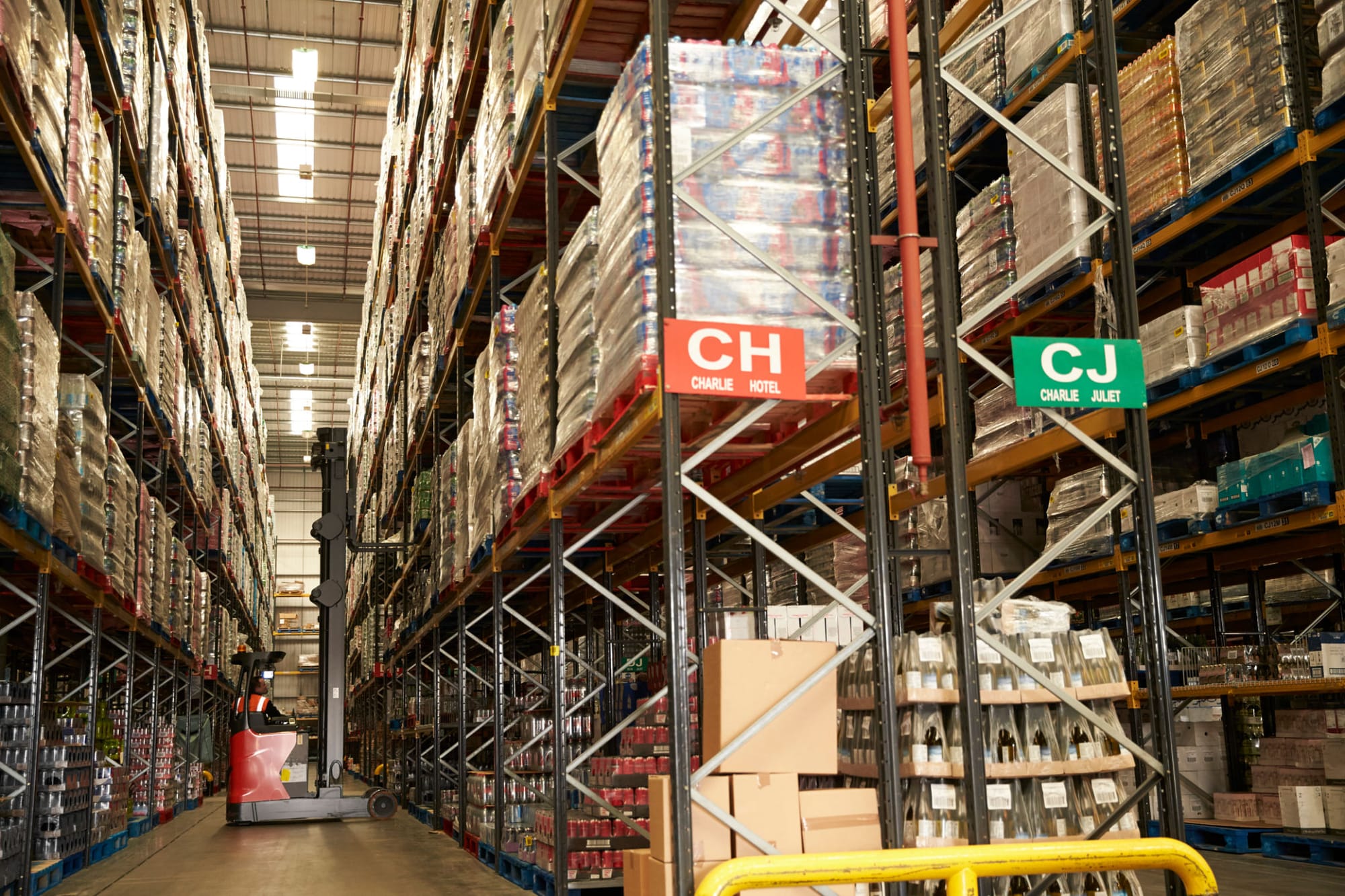
Strategic modernization trends observed across the Puget Sound industrial corridor, from SeaTac to the Kent-Auburn warehousing valley.
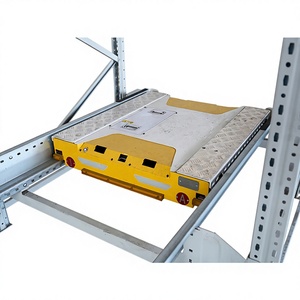
With high warehouse labor costs in King County, 3PLs and distribution hubs are migrating away from traditional deep-reach drive-in systems. The integration of 4-Way Radio Pallet Shuttles inside heavy-duty structural C-channel frames is becoming the regional gold standard.
Structural frames provide the zero-deflection rail tolerance necessary for automated carriers running at 1.2 m/s, eliminating track binding issues while maximizing cubic storage density by up to 75%.
The Seattle Department of Construction and Inspections (SDCI) and regional fire marshals enforce some of the strictest racking permit criteria in North America. Racks over 8 feet tall require full building permit reviews, including Special Inspections for post-installed concrete anchors.
Our direct engineering department partners with US-registered Professional Engineers (PE) to deliver customized calculation packets, anchor pull-out test reports, and load signage directly tailored to local city municipal codes.
Snohomish and South King counties are major manufacturing centers for aerospace assemblies, composite tooling, and heavy commercial machinery. These items frequently impart point loads exceeding 6,000 lbs per pallet position.
We supply extra-heavy structural channel beams with dual internal stiffeners and 4-bolt moment end-plates, engineered to handle extreme concentrated loads without the flange buckling common to conventional roll-formed step beams.
By eliminating domestic distributors and broker markups, we deliver bespoke, heavy structural steel pallet racking systems directly to Seattle, Tacoma, and Everett job sites. We provide complete factory CAD layouts, verified bill-of-materials (BOM), ocean container optimization (40ft High Cube loading up to 26 metric tons), and comprehensive logistics support through the Port of Seattle Terminal 18 and Terminal 46.
In-depth responses covering permitting, seismic criteria, steel quality, freight logistics, and long-term compliance under Washington State statutes.
Under the Seattle Building Code (SBC) and King County municipal guidelines, any storage rack exceeding 8 feet in top-shelf height is categorized as a structural building addition and requires a formal Non-Structural Building Permit issued by the Seattle Department of Construction and Inspections (SDCI).
Submittal requirements include a comprehensive architectural layout plan, life safety egress review, sprinkler head clearance calculations (minimum 18 inches below deflectors for standard ESFR heads), and a structural calculation packet stamped by a licensed Washington State Professional Engineer (PE). Our factory engineering department provides all required component section properties ($I_x, I_y, S_x$), steel yield documentation, and load tables directly to your local PE or permits expeditor, expediting plan review approvals.
Seattle sits within active tectonic fault systems (including the Seattle Fault and the Cascadia Subduction Zone), resulting in mapped spectral response accelerations ($S_s$) routinely exceeding 1.25g to 1.50g. Racks installed here must be designed in accordance with RMI ANSI MH16.1-2021 and ASCE 7-22 Chapter 15.
We configure our upright frames using solid C-channel structural steel (C3, C4, or C5 profiles) rather than thin-gauge roll-formed sections. Our engineers compute base shear forces using the Equivalent Lateral Force (ELF) procedure or Modal Response Spectrum Analysis. Baseplates are thickened to 3/8" or 1/2" with wide bolt spreads to distribute seismic overturning moments across the floor slab. In addition, we design heavy-duty back-to-back row spacers and rigid bolted top-ties to prevent out-of-plane frame buckling during cyclical seismic events.
Chinese standard steel grades Q235B and Q355B (governed by GB/T 1591 and GB/T 700) possess mechanical and chemical properties directly equivalent or superior to ASTM specifications commonly used in North American rack manufacturing:
Q235B corresponds directly to ASTM A36, with a minimum yield strength of 235 MPa (~34,000 PSI) and ultimate tensile strength of 370–500 MPa. It delivers exceptional formability and weldability for cross beams, decking, and standard bracing.
Q355B is the direct equivalent of ASTM A572 Grade 50, offering a guaranteed minimum yield strength of 355 MPa (~51,500 PSI) and high impact notch toughness. We utilize Q355B for all heavy upright channels, seismic moment baseplates, and high-load crossbeams. Every export batch is accompanied by genuine Mill Test Certificates (MTC EN 10204 3.1) showing verified heat numbers, chemical ladle analysis, elongation percentages, and Charpy V-notch values.
Standard fabrication turnaround for a custom-engineered structural pallet rack order (e.g., 5 to 20 container loads) typically spans 20 to 30 business days at our manufacturing facility. Transpacific ocean shipping from major Chinese container ports (Ningbo/Shanghai/Shenzhen) to the Northwest Seaport Alliance terminals (Port of Seattle T-18/T-46 or Port of Tacoma Husky/Washington United Terminals) is among the fastest routes to the US mainland, taking approximately 14 to 18 days on the water.
We pack all components inside 40-foot High Cube (40'HQ) containers using custom steel dunnage, anti-scratch strapping, and moisture-absorbing desiccant poles. Components are sequenced and palletized by frame height and beam level to allow fast, direct unloading via yard forklifts at your Kent, Sumner, or Seattle warehouse jobsite.
Yes. While our in-house engineering team completes the preliminary 3D modeling, finite element analysis (FEA), and structural component calculations, we partner with independent, licensed Professional Structural Engineers registered in Washington State.
For projects requiring municipal building permits in Seattle, Kent, Renton, or Bellevue, we provide complete sealed calculation packages, seismic anchor pull-out verifications, and stamped layout drawings ready for direct submission to the building department.
While electrostatic polyester powder coating provides an attractive, durable finish for standard dry ambient warehouses, the Pacific Northwest maritime climate and coastal proximity present distinct challenges. In sub-zero cold-storage facilities, blast freezers, seafood processing plants, or open cross-dock loading bays along Puget Sound, high humidity and temperature cycling generate intense surface condensation.
Hot-Dip Galvanizing (compliant with ASTM A123) metallurgically bonds zinc to the structural steel, providing a multi-layer barrier with a minimum thickness of 65–85 microns. If scratched by a forklift fork, the surrounding zinc sacrifices itself galvanically to heal the breach, preventing under-film rust creep and flaking paint, which are unacceptable in sanitary and cold-chain operations.
Typical high-bay structural pallet rack installations carrying heavy pallet loads (e.g., 2,500 to 4,000 lbs per position) in high seismic zones require a minimum slab thickness of 6 inches (152 mm), with 7 to 8 inches preferred for heavy installations. The concrete compressive strength ($f'_c$) should be at least 3,000 to 4,000 PSI at 28 days.
During seismic analysis, we evaluate the effective embedment depth ($h_{ef}$) of post-installed heavy-duty wedge or epoxy anchors. If your slab has control joints or lower compressive strength, our engineering team can increase the baseplate footprint and use multiple anchor locations per upright, distributing loads across a broader concrete area to satisfy ACI 318 Chapter 17 concrete breakout resistance requirements.