Brazilian Industrial Logistics Standard

Double Deep Pallet Racking Supplier & Exporters for Brazil

Engineered for ABNT NBR 15524 Compliance, PBR-1 Pallet Integration, and High-Throughput Intralogistics across São Paulo, Santa Catarina, and the Southern Agricultural Corridors.

Enterprise Portfolio

Featured Industrial Racking & Material Handling Equipment

Engineered to integrate seamlessly with double-deep configurations, narrow-aisle environments, and high-density industrial warehousing in Brazil.
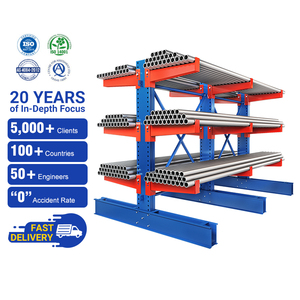
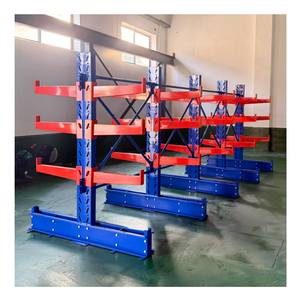
Cantilever System Durable Heavy-Duty Industrial Cantilever Arm Racks

Durable Heavy-Duty Industrial Shelving Unit Durable Adjustable Cantilever Arm Racks Racking System for Warehouse Storage

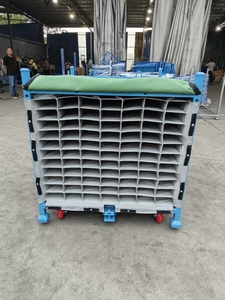
Automotive Logistics Reinforced Reusable Automotive Parts Turnover Storage Rack

Premium Industrial Auto Parts Logistics Storage Reinforced Reusable Automotive Parts Turnover Storage Rack

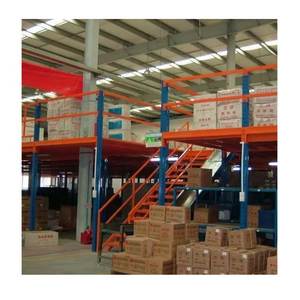
Multi-Tier Mezzanine Industrial Mezzanine Floor Warehouse System

OEM/ODM Industrial Mezzanine Floors Heavy Duty Steel Platform Racking Floor Mezzanine Floor Warehouse System Mezzanine Rack

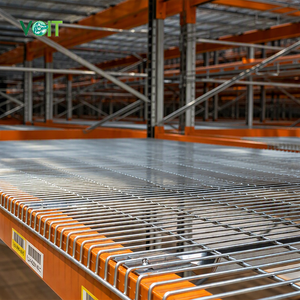
Safety Components Galvanized Steel Wire Mesh Decking

High-Strength Galvanized Steel Heavy Duty Industrial Warehouse Corrosion Protection Wire Mesh Decking

Heavy-Duty Steel 5-Layer Steel Shelf Cantilever Rack

DJ Heavy-Duty 5-Layer Steel Shelf Corrosion-Protected Cantilever Rack for Warehouse Storage

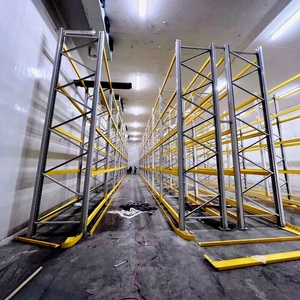
Adjustable VNA Adjustable Metal VNA Storage Racks

Low Price Racking Heavy Duty VNA Rack Adjustable Metal Boltless Shelf and Racks Warehouse Warehouse Storage Racks Metal Shelf

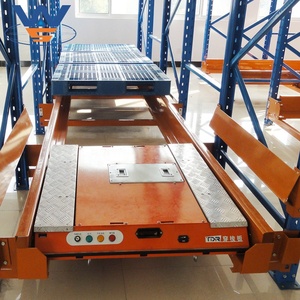
Robotic Automation Automated Radio Pallet Shuttle Car

Automated Radio Shuttle Car Logistics Industrial Shuttle Car Radio-Controlled Pallet Shuttle

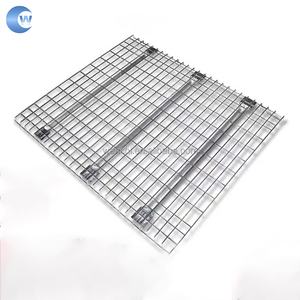
Decking & Safety Warehouse Storage Pallet Rack Wire Mesh Decking

Warehouse Storage Heavy Duty Pallet Rack Wire Mesh Decking

+40%
Volumetric Storage Gain
100%
ABNT NBR 15524 Compliant
PBR-1
Standard 1000x1200mm Optimized
500+
Global Logistics Installations
Engineering Whitepaper

Structural Architecture of Double Deep Pallet Racking in Brazil

Navigating real estate premiums in Greater São Paulo and Campinas through kinematic reach engineering, dual-depth bay profiles, and strict finite-element load rating.

Optimized Footprint vs. Selectivity

Double deep pallet racking eliminates 50% of the working aisles required by standard selective pallet racking (Porta-Paletes Convencional). By storing pallets two-deep in a back-to-back configuration, warehouse operators achieve a volumetric space utilization rate of up to 60-65% without transitioning to the complex capital investment of fully automated crane-based AS/RS systems.

PBR-1 Pallet Dimensional Geometry

Unlike European facilities standardized on EUR-EPAL (800x1200mm), Brazilian logistics infrastructure is fundamentally calibrated around the PBR-1 pallet (1000mm width x 1200mm depth, normalized by ABRAS). Our upright frames are engineered with custom 1050mm to 1100mm frame depths and heavy-duty front-to-back cross ties to ensure continuous bottom-deck board support and eradicate deflection under 1,200 kg dynamic unit loads.

ABNT NBR 15524 Structural Rigor

All cold-formed thin-walled structural members exported to Brazilian industrial sites undergo stringent elastic-plastic analysis per ABNT NBR 15524-1 (Principles for Structural Design) and NBR 15524-2 (Operation and Maintenance). Uprights are stamped from certified high-yield structural steel (yield strength up to 355-420 MPa), incorporating teardrop or omega perforations with safety locking pins certified against dynamic 5kN dislodgement forces.

Strategic Decision Matrix

Comparative Intralogistics Engineering: Systems Evaluation

Quantifying structural performance, capital expenditure, handling machinery requirements, and floor utilization ratios for warehouse directors across Brazil.

Storage System Architecture Storage Density Index Direct Pallet Accessibility Stock Rotation Protocol Forklift Equipment Compatibility CapEx / Pallet Position Brazil Market Fit Score
Selective Pallet Racking (Porta-Paletes) Baseline (100%) 100% Immediate FIFO / LIFO Direct Counterbalance, Reach Truck R$ 180 - R$ 260 High SKU Variety Hubs
Double Deep Pallet Racking High (+35-40%) 50% Immediate (2-deep batch) LIFO (per dual lane) Pantograph Reach / Telescopic Forks R$ 240 - R$ 340 Ideal for Fast-Moving FMCG & 3PL
Drive-In / Drive-Through Very High (+60-75%) Lane-based accessibility Strict LIFO (Drive-In) Standard Counterbalance R$ 380 - R$ 520 Cold Storage & Homogeneous Agro
Radio Shuttle Automation Ultra-High (+80-90%) Automated lane cycling Programmable FIFO/LIFO Standard Forklift + Shuttle Car R$ 650 - R$ 950 Frozen Protein & Beverage Plants
VNA (Very Narrow Aisle) Racking High (+45-50%) 100% Immediate FIFO / LIFO Direct Man-up / Man-down Turret Truck R$ 420 - R$ 600 High-Bay E-Commerce Hubs (Cajamar)
Handling Machinery Synergy

Material Handling Coordination: Pantograph Reach & Telescopic Forks

A double-deep storage matrix is only as capable as its handling equipment interface. Brazilian warehouse developers must evaluate whether to deploy pantograph-type reach trucks (extending scissor mast mechanisms) or hydraulic telescopic forks based on dynamic pallet weights and mast deflection limits at heights exceeding 8.5 meters.
  • Aisle Clearance: Pantograph reach trucks demand 2.9m - 3.2m working aisles, maximizing clear cube efficiency compared to counterbalance equipment.
  • Deflection Compensation: Our structural beams incorporate engineered upward pre-cambering to counteract dynamic point loads during deep-reach insertion.
  • Visual Camera Guidance: Laser alignment aids and mast-mounted digital cameras installed on reaching equipment safeguard rear-lane positioning accuracy.
Industrial warehouse racking and shelving installation
Certified Mechanical Integrity High-strength Q355B structural steel box-beams with automated 5-point locking connectors resisting heavy torsion and vertical deflection.
Local Ecosystems

Deployment Across Brazil’s Key Industrial & Logistics Corridors

Tailoring structural depth, seismic load factors, and environmental coatings to the distinct climatic and regulatory conditions of Brazil's regional markets.

Southeast Corridor

Greater SP & Campinas Logistics

With Class-A warehouse lease prices in Cajamar, Barueri, Louveira, and Guarulhos crossing R$ 35 - R$ 45 per square meter, double deep systems deliver the density required for mega-distribution hubs supporting Amazon Brasil, Mercado Livre, and multinational 3PL operators.

Southern Export Cluster

Cold Chain in SC & Paraná

Refrigerated and blast-freeze warehouses across Itajaí, Joinville, and Curitiba face extreme energy footprints. Installing double deep racking in cold chambers (-25°C) maximizes thermal cube density, utilizing epoxy-polyester coatings formulated against cold embrittlement.

Midwest Agricultural Belt

Agrochemicals in MT & Goiás

In agricultural logistics epicenters like Rondonópolis and Rio Verde, double deep racks store palletized agrochemicals, fertilizers, and seed stock. Systems feature hot-dip galvanized wire decking and bunded drip catchers compliant with strict environmental licensing (IBAMA).

Free Trade Zone

Manaus Industrial Hub (ZFM)

Electronics, motorcycle assembly, and consumer goods manufacturers inside the Polo Industrial de Manaus leverage our export-grade double deep components to withstand high ambient tropical humidity, optimizing buffer inventory between long-distance cabotage shipping routes.

Macro-Economic Drivers

Brazilian Warehousing Trends: What is Accelerating Double Deep Adoption?

Macroeconomic forces, land constraints, and logistical shifts transforming Brazilian supply chain strategies over the next five years.

E-Commerce Omnichannel Pressure

The rapid rise of same-day and next-day delivery promises in São Paulo, Rio de Janeiro, and Belo Horizonte requires regional fulfilment centres to store 2-4 identical pallets per high-velocity SKU. Double deep layouts provide the optimal balance: rapid bulk replenishment into picking slots with minimal travel distance for order selectors.

Industrial Real Estate Inflation

With prime industrial vacancy rates remaining below 8% along the Castelo Branco, Anhanguera, and Bandeirantes logistics axes, companies cannot easily lease adjacent real estate. Modernizing existing facilities with double deep racking increases storage capacity by 35% within the same structural envelope without civil construction capex.

Corpo de Bombeiros Fire Safety Compliance

Brazilian fire safety technical instructions (Instruções Técnicas do Corpo de Bombeiros, such as IT-25 in SP) mandate specific longitudinal and transverse flue spaces for fire sprinkler operation. Double deep designs engineered by GENEX ensure verified 150mm clear flue gaps between double rows, satisfying ESFR ceiling-level and in-rack sprinkler hydraulic criteria.
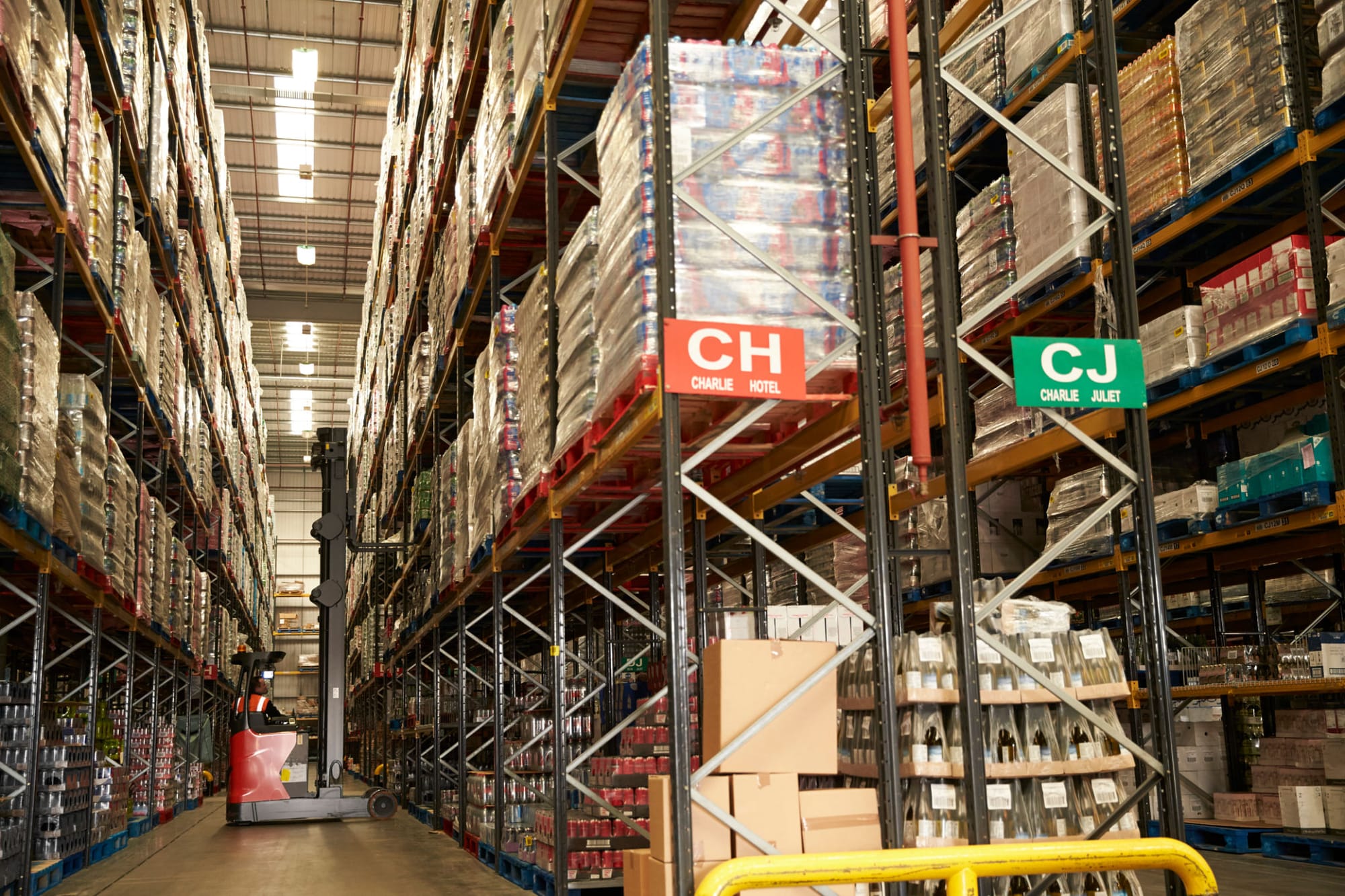
High-bay warehouse pallet racking system supplied by GENEX
Direct Sea Freight Logistics Regular breakbulk & 40ft HC containerized shipping lanes to Port of Santos (SP), Paranaguá (PR), and Itajaí (SC) with full customs documentation support.
International Trade Mastery

Navigating Brazilian Import Logistics, SISCOMEX & Fiscal Compliance

Importing capital equipment and steel storage systems into Brazil requires rigorous navigation of the federal SISCOMEX single portal, customs taxation frameworks, and technical certification. GENEX provides complete turnkey export packaging and transparent documentation for hassle-free clearance.

  • Accurate NCM Classification: Structural racking assemblies are cleared under Mercosul Common Nomenclature (NCM 7308.90.10), avoiding misdeclaration fines from Receita Federal.
  • Fiscal Optimization (Ex-Tarifário): For automated sub-systems (such as our Radio Shuttle car), we support buyers in applying for temporary zero-import-duty regimes under current CAMEX regulations.
  • Ocean Maritime Packaging: Uprights, beams, and diagonal bracing bundles are sealed in anti-corrosive VCI plastic wraps with heavy steel strapping designed for intermodal transport.
Enterprise Strengths

Why Procurement Leaders Partner with GENEX

Direct manufacturing control, automated roll-forming lines, structural engineering verification, and single-source accountability from CAD concept to final delivery.

Precision Roll-Forming

Fully automated continuous roll-forming lines with inline optical profiling ensure hole-pitch accuracy of ±0.5mm over 12-meter single-piece upright columns, eliminating installation drift on site.

Certified Metallurgy

High-tensile raw steel coils sourced from Tier-1 mills with complete 3.1 chemical and mechanical mill test certificates. All structural beams undergo ultrasonic weld inspection.

Electrostatic Powder Coat

Multi-stage automated surface pre-treatment (iron phosphating) followed by 80-120 micron electrostatic polyester powder curing, delivering superior resistance against scratches and corrosive tropical exposure.

CREA / ART Coordination

We provide comprehensive engineering calculation books (Memoriais de Cálculo Estrutural) and 3D CAD/DWG layouts to support local Brazilian civil engineers in issuing the required Anotação de Responsabilidade Técnica (ART).

Procurement Knowledge Base

Frequently Asked Questions by Brazilian Warehouse Buyers

Clear, expert engineering answers on dimensional standards, handling dynamics, fire safety regulations, and import procedures for Brazilian logistics facilities.

How does double deep racking accommodate standard Brazilian PBR-1 pallets compared to Euro pallets?
The standardized Brazilian pallet (PBR-1) measures 1000mm in width by 1200mm in depth, with a bottom deck board arrangement distinct from European EUR-EPAL (800x1200mm) and American GMA (40x48 inches) specifications. In double deep racking, pallets are stored with their 1200mm depth facing into the rack bay. To securely support the bottom boards of two consecutive PBR pallets, upright frames are fabricated with custom structural cross-ties, and bay beam lengths are generally configured at 2300mm (for two pallets side-by-side) or 3400mm (for three pallets side-by-side), ensuring minimum 75mm side clearances per ABNT NBR 15524 regulations.
What specific reach truck equipment is needed to operate double deep racking effectively?
Standard counterbalance forklifts cannot service double deep configurations. Warehouses must deploy pantograph-type reach trucks (equipped with a hydraulic scissor extension mechanism) or reach trucks fitted with telescopic forks (forks that hydraulically extend into the second pallet depth). Pantograph trucks are the most prevalent in Brazil (supplied by manufacturers like Hyster, Yale, Crown, and Toyota), generally operating in aisle widths between 2.9 and 3.2 meters, with mast lift capacities up to 9.5 meters while maintaining residual stability.
How do Brazilian Fire Department regulations (Corpo de Bombeiros / IT-25) affect double deep layouts?
In Brazil, state fire safety instructions (such as Instrução Técnica nº 25 in the State of São Paulo) mandate unobstructed vertical flue spaces to allow early sprinkler activation (ESFR - Early Suppression Fast Response) and heat venting. Double deep racks place four pallets back-to-back across two double runs. Our engineering drawings provide verified minimum 150mm longitudinal flue spaces and 100mm transverse flue spaces, complete with heavy-duty pallet back-stops, guaranteeing that pallet placement cannot encroach into the sprinkler penetration zone.
Can wire mesh decking be used in double deep racks, and what are the benefits for ANVISA compliance?
Yes, high-strength galvanized wire mesh decking is strongly recommended for double deep systems, especially on higher beam tiers. In pharmaceutical, cosmetic, and food distribution centers regulated by ANVISA (Agência Nacional de Vigilância Sanitária), wire decking prevents dust and debris accumulation, improves ambient lighting in deep bays, prevents loose boxes from falling between beams, and satisfies sanitary requirements that prohibit solid wood shelving prone to biological contamination.
What floor slab specifications and concrete tolerances are required for high-bay double deep installations?
Because double deep reaching operations generate elevated dynamic mast oscillations and eccentric foot loads through upright baseplates, the industrial concrete floor slab should have a minimum thickness of 180mm to 200mm, with a compressive strength of fck ≥ 30 MPa (reinforced with welded wire mesh or steel fibers). Floor flatness should conform to ASTM E1155 F-numbers (FF ≥ 45 / FL ≥ 35) or DIN 18202 Table 3 Line 4 to avoid mast sway when positioning pallets on upper levels (above 7.5 meters).
What are the lead times and shipping routes from the factory to Brazilian sea ports?
Production lead times for custom-engineered double deep projects typically range from 25 to 35 business days depending on tonnage. Ocean transit times to major Brazilian ports—principally the Port of Santos (São Paulo), Port of Paranaguá (Paraná), Port of Itajaí/Navegantes (Santa Catarina), and Port of Suape (Pernambuco)—span approximately 32 to 40 days. We provide advance container packing lists, fumigation certificates (ISPM 15 compliant for timber dunnage), and Bill of Lading documentation for pre-clearance with Brazilian customs brokers.
How is structural inspection and maintenance handled in accordance with ABNT NBR 15524-2?
ABNT NBR 15524-2 dictates visual and documented inspection procedures for steel racking systems in Brazil. We provide localized bilingual (English/Portuguese) load rating plaques (Placas de Capacidade de Carga) to be affixed to each aisle end. We recommend daily visual checks by warehouse operators, weekly supervisor inspections, and an annual formal structural survey by a qualified structural engineer to assess beam deflection limits (L/200) and identify column upright damage classified under Green, Amber, or Red risk zones.
Is double deep pallet racking compatible with cold storage and blast-freeze chambers?
Absolutely. Double deep is one of the most cost-effective structural systems for cold storage warehouses operating between 0°C and -28°C across Brazil's meat, poultry, and dairy export regions. Cold storage buildings incur immense refrigeration energy costs per cubic meter. By reducing the number of operating aisles, double deep optimizes refrigerated airspace. For extreme humidity or sub-zero environments, we provide hot-dip galvanized components or special low-temperature epoxy powder formulations that maintain impact ductility and resist flaking.
Can double deep racking be converted to selective racking or radio shuttle racking in the future?
Yes, our systems are designed on modular European and ABNT-compliant hole matrices. If your SKU profile shifts in the future toward higher selectivity (demanding 100% direct access), double deep runs can be disassembled and re-spaced as single selective runs by adjusting aisle widths. Alternatively, if volumes demand full automation, the upright frames can be retrofitted with galvanized support rails and guide channels to accommodate Automated Radio Shuttle cars, protecting your long-term capital investment.
What information is needed to obtain a complete CAD layout and engineering quote?
To produce an optimized structural layout and export commercial proposal, our engineering team requires: (1) Warehouse architectural CAD/PDF drawing showing column grid spacing, dock positions, and clear ceiling height under roof trusses; (2) Pallet specifications including overall dimensions (W x D x H including cargo overhang) and maximum loaded weight; (3) Forklift model, maximum lifting height, and minimum aisle turning radius; and (4) Facility operating temperature and city/state location in Brazil for seismic/wind calculation adjustments.

Request an Engineered Double Deep Layout for Your Brazilian Facility

Consult directly with our industrial storage engineering team. Receive customized 3D CAD layout proposals, ABNT NBR 15524 structural load calculations, and competitive CIF Santos/Paranaguá export quotes within 48 hours.