
No matching pages. Try "pallet", "mezzanine" or "cantilever".
No matching pages. Try "pallet", "mezzanine" or "cantilever".
Manufactured with mill-certified heavy structural steel and high-molecular polymer impact dampers, our column guards and industrial pallet systems prevent catastrophic frame collapse across automated material handling environments.
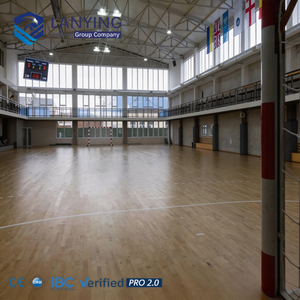
Heavy-duty structural mezzanine platform engineered for dual-level capacity, featuring wide-flange primary columns pre-drilled for perimeter wrap-around impact column guards.
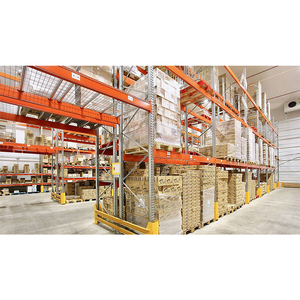
Standard high-density selective racking outfitted with reinforced omega-profile upright posts and floor-bolted bullnose column protectors for continuous forklift mitigation.
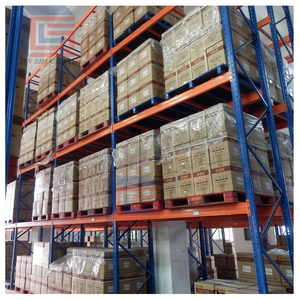
Engineered for high-throughput distribution hubs, utilizing 90mm-120mm column faces shielded with heavy 8mm steel frame deflectors to dissipate corner aisle shear forces.
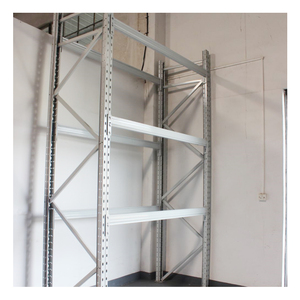
Flexible manual picking shelving system for order consolidation zones, compatible with clip-on polyurethane column impact shields to safeguard against order-picker impacts.
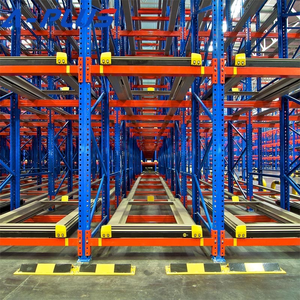
Multi-lane inclined nested cart system where entry front posts face elevated forklift interaction; protected via integral heavy weld-on post reinforcers up to 48 inches high.
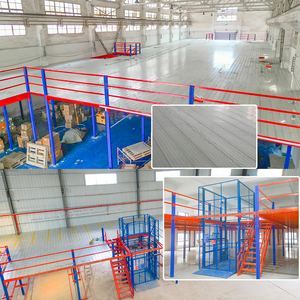
Engineered factory mezzanine floor systems with heavy square-tube columns, paired with floor-anchored steel perimeter barriers and corner column impact deflectors.
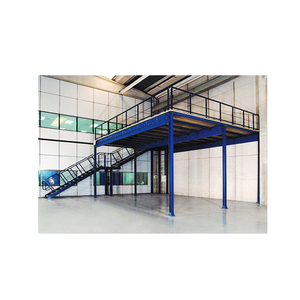
Custom vertical multi-tier picking structures utilizing rack uprights as structural load columns; incorporates steel-jacketed base column guards at main forklift crossover lanes.
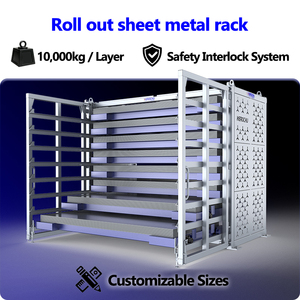
European EN 15512 and CE certified high-bay heavy cargo racking equipped with floor-anchored steel column boots and yellow safety powder coatings to meet OSHA §1910.176.
Industrial storage racks are slender, cold-formed vertical columns subjected to immense axial gravity loads ($P$) and cyclic torsional vibration. In high-density California warehouses, upright columns are engineered with minimal cross-sectional thickness to maximize cost-efficiency, operating under the structural framework of AISI S100.
A pallet rack upright behaves as an axially loaded column governed by Euler's buckling theory: $P_{cr} = \frac{\pi^2 E I}{(K L)^2}$. A dent as shallow as 0.125 inches (3.175 mm) caused by an errant counterbalanced forklift outrigger alters the radius of gyration ($r$), instantly introducing an eccentric moment ($M = P \cdot e$). This eccentricity reduces overall column ultimate axial capacity by up to 40%, creating an acute risk of progressive progressive warehouse collapse under standard operational dead and live loads.
Forklifts operating in warehouse aisles possess tremendous kinetic momentum. Consider a standard Class I electric sit-down lift with an unladen weight of 9,000 lbs (4,082 kg) carrying a 3,000 lb (1,360 kg) pallet at 6.0 mph (2.68 m/s). The kinetic energy generated is governed by $E_k = \frac{1}{2} m v^2$. This yields an energy envelope of approximately 19,530 Joules. Without a certified floor-anchored steel column guard or high-strain energy-absorbing polymer buffer, this unmitigated force transfers straight into the column base plate anchors, shearing anchor studs.
Our San Francisco manufacturing specifications leverage structural ASTM A36 plate steel (yielding 36,000 psi) cold-formed into heavy U-channel or curved profiles, coupled with internal vulcanized synthetic elastomers. In cold-room environments (-20°F), we utilize modified impact-grade High-Density Polyethylene (HDPE) blends that avoid cryogenic ductile-to-brittle transitions, ensuring that repetitive forklift strikes undergo mechanical elastic rebound rather than brittle fracture.
The San Francisco Bay Area industrial landscape is defined by exceptionally high land values ($/sq.ft.), seismic fault line proximity, and specialized industry clusters ranging from South San Francisco biotechnology to East Bay port intermodal distribution.
Operating within the "Birthplace of Biotechnology," life science warehousing at Oyster Point and along the Highway 101 corridor demands temperature-controlled storage at -20°C to -80°C. Floor-bolted 304/316 stainless steel column protectors prevent chemical pitting from wash-down caustic sterilizers, ensuring cleanroom compliance while maintaining post integrity.
High-cube intermodal logistics terminals in Hayward, San Leandro, and Richmond experience non-stop Class IV & V heavy forklift traffic moving maritime TEU container freight. Heavy-duty 1/2-inch structural floor-anchored bullnose post deflectors are essential to withstand 12,000 lb laden vehicle strikes at rapid crossover intersections.
Within San Francisco proper—such as the Bayview-Hunters Point and Mission Bay urban zones—tight square-footage drives narrow aisles (VNA) and articulated reach trucks. Low-profile snap-on elastomeric column protectors conserve aisle clearances while mitigating side-swipe risks during dense vertical pallet staging.
High-value robotics and semiconductor distribution facilities in San Jose and Fremont deploy automated guided vehicles (AGVs) requiring specialized column defense with anti-static (ESD) polymer finishes and high-contrast photometric striping for optical guidance and LiDAR avoidance sensors.
A granular evaluation of protective mechanisms based on impact dissipation, floor slab anchorage loading, maintenance downtime, and total lifecycle expenditure in heavy warehouse operations.
| Protection Category | Material Core Specification | Energy Absorption | Slab Stress Distribution | Seismic Title 24 Suitability | Installation Downtime |
|---|---|---|---|---|---|
| Floor-Anchored Heavy Steel Bullnose | ASTM A36 Heavy 3/8" (9.5mm) Carbon Plate | 16,000 - 24,000 Joules (High Deflection) | Direct shear load transferred to 3/4" concrete anchors | Mandatory in Seismic Categories D, E, F | Requires concrete drilling (approx. 20 min/post) |
| Clip-On Multi-Rib High-Impact Polymer | HDPE Thermoplastic with Honeycomb Internal Baffles | 8,500 - 14,000 Joules (Elastic Rebound) | Zero anchor strain; dissipates force along upright profile | Excellent for VNA narrow aisle bays | Tool-free snap-on (under 30 seconds/post) |
| Structural End-of-Aisle Double Guard Rail | Schedule 40 Structural Tube / C-Channel Rail | 35,000+ Joules (Perimeter Barrier) | Distributed across multi-foot base plates (4 anchors/shoe) | Protects outer frames from turning forklift tail-swing | Heavy bolt-down layout (45 min/run) |
| Direct Column Bolt-On Steel Reinforcer | Q235B Cold-Formed Channel welded to Column Face | 12,000 - 18,000 Joules (Composite Stiffness) | Shared load along upright column length | Strengthens frame slenderness ratio ($K L / r$) | Factory pre-installed or field-bolted |
The San Francisco Bay Area is governed by some of the most rigorous structural and seismic compliance standards worldwide. Column protectors are not merely optional safety add-ons; they are indispensable engineering assets that maintain certified structural calculations.
Mandates that all industrial storage racks be systematically maintained in a sound, uncompromised structural condition. Inspectors routinely issue severe Title 8 citations for unshielded columns bearing impact dents exceeding 3mm in depth, categorizing them as immediate tipping hazards that require immediate rack unloading.
Specifies that rack column protection devices must either be integrated directly into the structural frame or securely anchored to the floor slab to deflect horizontal vehicular impact forces. Protection must extend a minimum of 12 inches (305 mm) upward from the floor surface, where 92% of forklift strikes occur.
Due to the Hayward and San Andreas active fault networks, Bay Area warehouse slabs experience intense ground acceleration during seismic events. Rack posts compromised by previous forklift impacts suffer premature buckling when subjected to lateral dynamic drift forces ($V = C_s \cdot W$).
As San Francisco and Silicon Valley distribution centers aggressively transition to dark automation, AMR fleets, and high-density vertical cubes, upright defense is evolving from passive steel buffers to intelligent kinetic telemetry.
Autonomous Mobile Robots (AMRs) operating with LiDAR and SLAM vision sensors require column guards designed with matte, non-glare safety yellow coatings and micro-prismatic retro-reflective perimeter bands. This geometry prevents sensor blinding while shielding posts from sudden path deviations and pallet wheel-drag.
Next-generation Bay Area facilities are adopting smart polymer guards equipped with tri-axial accelerometers and Bluetooth mesh beacons. When a 5G-enabled protector experiences an impact exceeding 2,500 Joules, it instantly transmits timestamped incident telemetry to warehouse management software (WMS) for rapid inspection.
With California's aggressive ESG and carbon transparency mandates, warehouse procurement teams favor closed-loop column guards fabricated from 100% post-industrial recycled polyolefins. These composite systems deliver equivalent mechanical damping capacity while generating a 68% lower cradle-to-gate carbon footprint.
Backed by over two decades of heavy industrial fabrication experience, we maintain end-to-end quality control—from certified raw steel plate processing to laser profiling, precision robotic welding, and localized seismic layout verification.
Every steel protector is fabricated from prime Q235B and ASTM A36 plate, backed by metallurgical mill test reports verifying tensile yields of 36,000–51,000 psi for impact resilience.
All guard geometries undergo non-linear dynamic impact FEA simulation to guarantee load deflection envelopes that prevent local buckling of rack upright flanges.
Our engineering team performs laser distance surveys, floor slab thickness validation, and turning radius reviews to specify customized protection footprints for each aisle.
Finished with multi-stage degreasing and thermoset TGIC polyester powder coating, yielding salt-spray resistance over 500 hours and high visibility in dimly lit high-bay aisles.
We custom-manufacture protective boots and barriers matching proprietary upright profiles (Teardrop, Keystone, Slotted, T-Bolt) with zero distributor markup.
Upon installation, we furnish certified stamped capacity signboards, anchor torque logs, and annual inspection checklists to satisfy Cal/OSHA workplace safety compliance.
Essential guidance on slab anchoring, seismic compliance, cold-storage materials, and Cal/OSHA inspection mandates for Bay Area warehouse engineers.
In modern Bay Area logistics facilities (especially reclaimed waterfront industrial parks in South San Francisco and the East Bay), warehouses are frequently constructed over post-tensioned (PT) structural slabs. Striking a tension cable during mechanical anchor drilling can cause catastrophic structural failure. Our installation protocols mandate ground-penetrating radar (GPR) scanning before anchor hole coring. Where slab drilling is restricted, we specify snap-on high-strain polymer column protectors or integrated weld-on steel upright reinforcements that attach directly to the rack frame without penetrating the concrete slab.
Under RMI ANSI MH16.1 guidelines, rack column guards must protect a minimum of the bottom 12 inches (305 mm) of the upright, where forklift outrigger and pallet impacts are concentrated. However, based on extensive Bay Area high-capacity operations involving reach trucks and sit-down counterbalance forklifts, our engineering team strongly recommends specifying protectors with a minimum height of 18 to 24 inches (450 mm to 600 mm). For high-risk terminal end-of-aisle frames, dual-rail barriers reaching 42 inches in height are installed to safeguard entire frame depths against vehicular tail-swing.
Standard commodity plastics undergo cold-temperature embrittlement at temperatures below 32°F (0°C). For food logistics and cold chain facilities operating at -10°F to -25°F (-23°C to -31°C), we engineer our protective sleeves from proprietary high-impact HDPE modified with elastomeric rubber polymers. These specialized compounds preserve molecular chain flexibility under severe freezing conditions, preventing cracking and ensuring full elastic shape-recovery during repeated low-temperature pallet impacts.
Under California Building Code (CBC) Title 24, mechanical expansion anchors must hold an ICC-ES evaluation report confirming their seismic cracked-concrete approval under ACI 355.2. We specify heavy-duty seismic wedge anchors (such as Hilti KB-TZ2 or Simpson Strong-Tie Strong-Bolt 2) with a minimum 1/2-inch to 3/4-inch diameter and embedment depths exceeding 4.25 inches. This ensures that horizontal shear forces transferred from high-speed vehicular strikes do not spall or blow out the surrounding concrete cone.
Bulky floor-anchored steel column boots can protrude 2 to 4 inches into the usable aisle space, reducing clearances required for VNA turret trucks or narrow-aisle wire-guided reach lifts. For tight aisle widths (under 9 feet), we specify slim-fit polymer sleeves or form-fitting steel wrap guards that contour directly to the 3-inch or 4-inch column face, adding less than 0.75 inches (19 mm) to the post width, preserving essential vehicle track clearances.
Standard dimensions (12", 18", and 24" heights in Safety Yellow powder-coat for standard 3"x3" and 4"x3" teardrop columns) are stocked for rapid dispatch across San Francisco, Oakland, Hayward, and San Jose within 48 to 72 hours. Custom-engineered protective profiles, including oversized baseplate wrap-arounds and seismic heavy bullnoses, typically carry a fabrication cycle of 2 to 3 weeks from structural drawing sign-off to direct site delivery.