No matching pages. Try "pallet", "mezzanine" or "cantilever".
No matching pages. Try "pallet", "mezzanine" or "cantilever".
Engineered to withstand heavy forklift impacts, high pallet cycles, and rigorous seismic dynamics. Explore our certified product lineup suited for Tier-1 automotive warehouses, high-throughput 3PL facilities, and sub-zero cold chains.
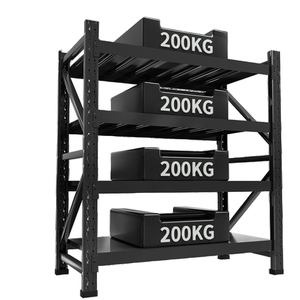
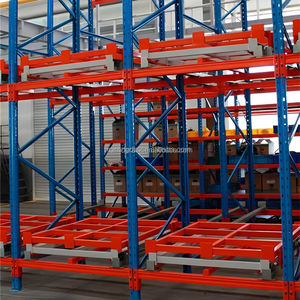
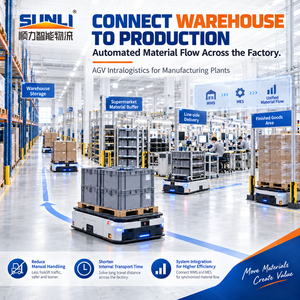
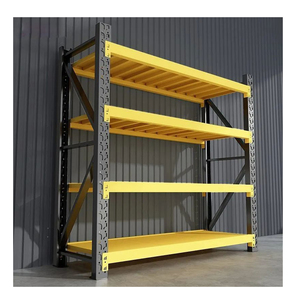
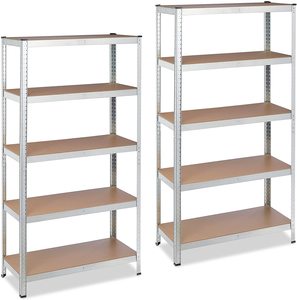
Industrial warehousing across Mexican northern border hubs and Bajío automotive corridors operates at an exceptional duty cycle. Heavy counterbalance forklifts moving 1,200 kg to 1,500 kg loads within fast-turnaround environments inevitably encounter racking frames. While conventional roll-formed rack systems offer economical lighter storage, hot-rolled structural steel (ASTM A36 C-channel) provides an order-of-magnitude increase in torsional rigidity and physical impact resistance.
Our structural pallet racking systems utilize heavy structural channel upright columns with thick welded diagonal bracing and bolt-in structural beams. This structural rigidity eliminates catastrophic buckling risks, significantly decreases downtime from forklift column strikes, and drastically slashes recurring annual repair expenditures for Mexican distribution centers.
| Performance Parameter | Hot-Rolled Structural | Standard Roll-Formed |
|---|---|---|
| Steel Profile Type | C-Channel Structural (ASTM A36) | Open-Back Formed Sheet Steel |
| Forklift Impact Resistance | Exceptional (300% Higher) | Moderate (Vulnerable) |
| Beam Connection Security | Heavy Bolted End-Plates | Teardrop / Clip Hooks with Pins |
| Damage Maintenance Cost | Extremely Low Lifetime | High (Frequent Column Guards Replacement) |
| Seismic Plastic Hinge Capacity | Superior Ductility (R > 4.0) | Limited Plastic Deformation Range |
| Best Fit Application in Mexico | Automotive, Metalworking, Cold Chain | E-commerce FMCG & Light Warehousing |
From the export-intensive maquiladoras bordering the United States to the central consumer logistics belt around Mexico City, structural pallet racks fulfill critical engineering requirements driven by local supply chains and topography.
In Nuevo León and Coahuila, Tier-1 automotive stampers, battery plants, and assembly suppliers utilize heavy structural selective and push-back racking. These facilities store heavy steel coils, die tooling, engine blocks, and injection molds weighing up to 3,000 kg per pallet position, requiring ultra-thick baseplates anchored deep into fiber-reinforced concrete slabs.
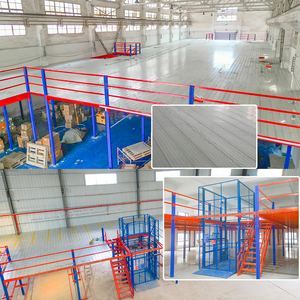
Covering Querétaro, Guanajuato, and San Luis Potosí, clean manufacturing operations require mezzanine-supported multi-tier platforms and cantilever structural systems. These support aviation fuselage components, precision CNC tooling, and high-density electronics picking with direct compliance under the Mexican labor safety standard NOM-006-STPS-2014.
In logistics micro-clusters like Cuautitlán Izcalli, Tultitlán, and Tepotzotlán (State of Mexico), land costs demand building heights up to 14 meters. The soft lacustrine clay soils require sophisticated structural calculation models governed by the CDMX Building Code (NTC-RCDF) and CFE seismic guidelines, utilizing oversized cross-bracing towers and anchor embedment depths.
Mexican supply chains are navigating historic expansion driven by global reshoring, international trade pacts, and regulatory modernization. Discover the four macro factors steering procurement decisions.
Foreign direct investment into Mexican industrial parks has pushed occupancy above 97% across Ciudad Juárez, Reynosa, and Tijuana. Modern plants demand durable structural racking systems compatible with USMCA/T-MEC trade flows and immediate cross-docking staging.
Secretaría del Trabajo y Previsión Social (STPS) is strictly auditing warehouse ergonomics, mechanical handling, and structural load plaques. Non-certified racking risks punitive shutdowns, placing verified engineered load capacities at the top of procurement priorities.
With major seismic active faults across Guerrero, Oaxaca, and Jalisco affecting central-west logistics facilities, rack purchasers require dynamic finite element calculations complying with the Manual de Diseño de Obras Civiles (MDOC-CFE) and RMI/ANSI MH16.1 specifications.
Faced with skilled forklift operator shortages, Mexican operations are transitioning toward hybrid structural pallet racks that integrate pallet runners, radio shuttles, and stacker cranes, maximizing vertical cube utility up to 30 meters high.
Combining world-scale steel production, precision European & American manufacturing standards, and dedicated cross-border delivery logistics for turnkey warehousing projects across Mexico.
We provide end-to-end documentation ensuring rapid permitting with municipal authorities (Protección Civil) and compliance with Mexican building norms:
Direct technical and commercial answers addressing customs regulations, seismic design compliance, installation timelines, and operational requirements for Mexican industrial facilities.
The primary differentiation lies in geotechnical soil classification and seismic design acceleration. Monterrey is located in Seismic Zone A (low seismic hazard), characterized by firm limestone bedrock, enabling standard baseplates and standard structural anchor bolt configurations. Conversely, the Mexico City Metropolitan Area (Cuautitlán, Tultitlán, Toluca) is situated in Seismic Zones C and D with highly compressible lacustrine clay deposits. Racks in CDMX require dynamic seismic analysis in accordance with the NTC-RCDF (Normas Técnicas Complementarias) and MDOC-CFE standards, featuring oversized baseplates, heavy back-to-back row spacers, diagonal vertical seismic towers, and deep embedment chemical anchors (such as Hilti HIT-RE 500 V4) to resist severe soil liquefaction and shear accelerations.
Enterprises operating under the IMMEX (Manufacture, Maquila, and Export Services Industry) program or holding VAT/IEPS certifications (Certificación IVA/IEPS) can import capital equipment—such as structural warehouse racking and mezzanine platforms—with substantial tax efficiencies. We facilitate direct containerized shipments with clear HS Codes (Tariff Heading 7308.90 for structures and parts of structures of iron or steel), comprehensive commercial invoices, detailed packing lists, and mill test certificates. These documents allow your Mexican customs broker (Agente Aduanal) to generate a compliant virtual or definitive import pedimento, ensuring seamless entry through Manzanillo, Altamira, or Laredo without unexpected tariff penalties.
Mexican standard NOM-006-STPS-2014 outlines strict occupational safety protocols for materials handling and storage. We support full compliance by providing: (1) Certified structural calculations proving structural beam safety factors exceeding 1.67 and column safety factors exceeding 1.92 under full rated loads; (2) Permanent metallic capacity plates (placas de carga) in Spanish indicating permissible bay loads, beam level limits, and manufacturer information; (3) Heavy-duty structural column protectors (defensas estructurales) and aisle-end bullnose barriers built from thick steel channel to absorb bottom forklift impacts; and (4) Documented annual inspection and maintenance manuals aligned with international ANSI/RMI MH16.1 and European EN 15635 frameworks.
Yes. Our structural racking frames and beam lengths are custom-engineered around standard Mexican logistics unit loads. This includes the ubiquitous standard GMA / US pallet (48″ x 40″ or 1,219 mm x 1,016 mm), the standard European pallet (1,200 mm x 800 mm), and universal industrial plastic pallets (1,200 mm x 1,000 mm). Bay widths are typically designed at 96″ (2,438 mm) or 108″ (2,743 mm) for dual-pallet bays, with frame depths of 42″ (1,067 mm) to guarantee an optimal 3-inch pallet overhang front and back. Welded structural pallet support bars or heavy drop-in wire decking can also be integrated to support irregular or skidded unit loads securely.
Manufacturing lead times typically range from 3 to 5 weeks depending on project tonnage and custom structural channel requirements. For maritime transit, direct oceanic services land containers at the Port of Manzanillo (Pacific route, 18–22 days transit, ideal for Guadalajara, Bajío, and CDMX) or the Port of Altamira/Veracruz (Gulf route, ideal for central and southeastern states). For northern maquiladora hubs (Monterrey, Saltillo, Reynosa, Juárez), containers or flat-rack rail cars can be routed directly to the border at Laredo, Texas, followed by rapid transfer via bonded carrier. We provide dedicated container packing plans using steel banding and protective dunnage to prevent transport friction and paint abrasions.
In high-humidity agricultural and cold-storage operations—such as berry packing in Michoacán, tomato exports in Sinaloa, and protein freezing facilities in Sonora—temperature variations between loading docks and blast freezers (-25°C) create continuous condensation and aggressive surface oxidation. While standard powder-coated steel is vulnerable to creeping under-film rust if scratched by forklift forks, hot-dip galvanization (conforming to ASTM A123) creates a metallurgically bonded zinc-iron alloy layer inside and outside the structural C-channel. This provides self-healing galvanic cathodic protection that withstands decades of sub-zero moisture, caustic washdowns, and sanitary chemical cleanings without delaminating.
Submit your warehouse CAD layout, pallet weight profiles, and clear building heights below sprinklers. Our senior structural engineering team will deliver a comprehensive seismic-compliant racking proposal, static analysis calculations, and factory-direct pricing within 48 hours.