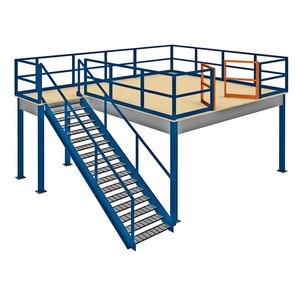
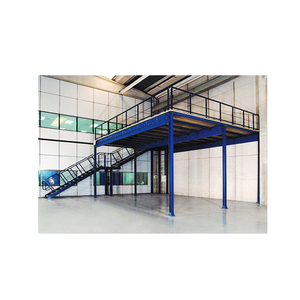
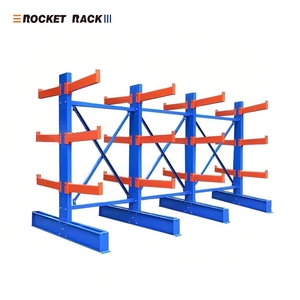
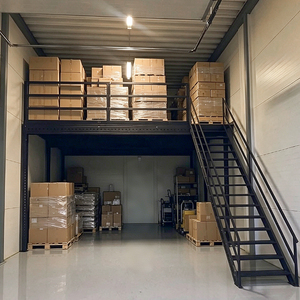
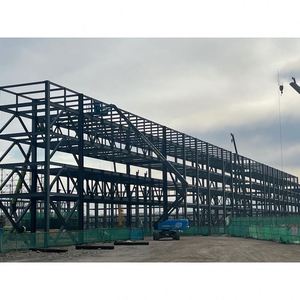
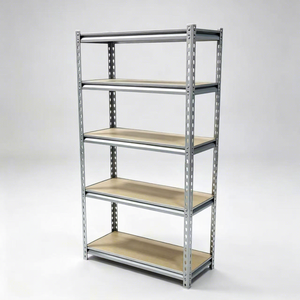
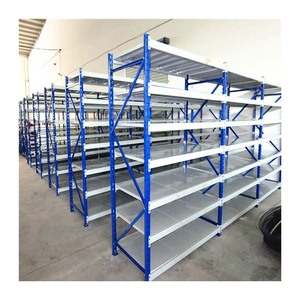
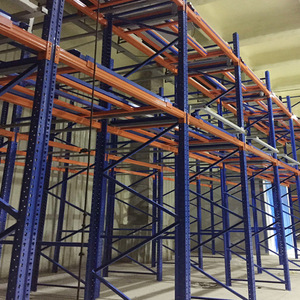
Modular Mezzanine Platform Powder Coated Steel Loft Shelving
- Application: Chilled Staging / Packing
- Working Temp: 0°C to +15°C
- Surface Finish: Anti-Rust Epoxy Powder
- Floor Load: 300 – 1,000 kg/m²
No matching pages. Try "pallet", "mezzanine" or "cantilever".
Each storage configuration is purpose-designed to operate reliably in harsh sub-zero temperatures (-30°C to +5°C), engineered for maximum cubic volumetric efficiency and long-term structural integrity.
Indonesia's cold storage infrastructure is undergoing a fundamental structural transition. Driven by the rapid growth of modern e-grocery platforms, stringent pharmaceutical mandates enforced by the Indonesian Food and Drug Authority (BPOM - Badan Pengawas Obat dan Makanan), and the government-backed National Fish Logistics System (Sistem Logistik Ikan Nasional / SLIN), demand for cold storage capacity has surged beyond 4.2 million metric tons.
However, industrial cold storage operators across Java, Sumatra, and Sulawesi face a brutal economic reality: refrigeration electricity tariffs and compressor maintenance consume 60% to 70% of total warehouse operational expenditures (OPEX). In a tropical climate where external ambient temperatures routinely exceed 33°C with relative humidity above 85%, cooling an unoptimized cubic meter of air represents permanent financial burn. Every cubic meter of wasted vertical space or redundant aisle represents directly lost operating margins.
A detailed technical evaluation of leading domestic fabricators, international turnkey EPC suppliers, and specialized engineering partners serving Indonesia's cold chain network.
GENEX stands at the forefront of international cold storage engineering, delivering tailor-made high-density radio shuttle systems, drive-in systems, and seismic-certified heavy duty pallet racking directly into Indonesian logistics hubs. Leveraging high-grade Q355B low-temperature steel tested for ductile impact resilience at -30°C, GENEX provides full layout CAD modeling, structural finite element analysis (FEA), and certified installation teams tailored for tropical coastal ports and inland logistics corridors.
One of Indonesia's oldest publicly listed metal fabricators, Lion Metal Works produces heavy-duty industrial shelving and standard selective pallet racking systems. Operating extensive roll-forming plants in Jakarta and Purwakarta, they cater primarily to dry warehouses and light commercial chillers, offering strong domestic brand recognition and TKDN local content credentials.
SSI Schaefer provides high-end automated storage and retrieval systems (ASRS) and mobile pallet racking for mission-critical pharmaceutical and mega-chiller distribution centers in Indonesia. While their capital investment levels represent top-of-market pricing, their automated sub-zero cranes and pallet channel systems provide unmatched warehouse volume utilization for top-tier multinationals.
Operating under the global Gonvarri Material Handling umbrella, Dexion offers trusted selective, drive-in, and pallet live storage racking across Indonesian distribution facilities. Dexion's systems are known for robust keyhole beam locks and conservative load margins, often deployed in regional FMCG central distribution warehouses in West Java.
Specializing in custom material handling installations across the Greater Jakarta area, Tangguh Logistik manufactures and erects selective racking, drive-in cold storage bays, and multi-tier mezzanine floors. They emphasize rapid installation lead times for mid-sized cold stores and logistics providers expanding throughout Jabodetabek.
Interack is a well-established racking manufacturer focusing on medium and heavy-duty industrial storage racks. They support cold storage operators in Cikarang and Karawang with double-deep and push-back rack systems designed to handle standard Indonesian 1200x1000 mm wooden and plastic pallets.
Perkasa Multindo supplies warehouse racking and display shelving throughout western and eastern Indonesia. Their cold-chain line includes drive-in racking and light boltless shelving units suitable for food processing cold rooms, catering facilities, and maritime fish storage facilities in coastal ports.
Positioned close to the Port of Tanjung Perak, Megah Steel specializes in heavy-duty pallet racking and cantilever racks for marine cargo, reefer transshipment consolidation, and agricultural cold hubs across East Java and Eastern Indonesia islands.
Super Racking supplies retail hypermarket cold stores, supermarket backrooms, and industrial selective racking. Their product range focuses on rapid modular installations and cost-competitive selective beam layouts for cold room operators seeking fast commissioning.
While widely recognized for forklift and reach truck distribution, Berca offers integrated warehouse storage and racking packages. By pairing cold-store-specified reach trucks with matched aisle-width selective and drive-in racks, they assist clients in achieving coordinated material handling compatibility.
How cold storage racking systems perform within specific industrial, geographical, and climatic operational realities throughout Indonesia.
At Pelabuhan Perikanan Samudera Nizam Zachman in Jakarta and the tuna processing hubs of Bitung, blast freezing (-35°C) and cold holding (-25°C) demand Hot-Dip Galvanized Radio Shuttle or Drive-In Racking. High ambient humidity combined with oceanic saline air causes rapid rust on standard painted steel. Galvanized uprights resist moisture corrosion during frequent door-opening cycles.
Distribution centers serving the greater Jabodetabek megalopolis require ultra-dense Multi-Tier Mezzanines coupled with Selective Pallet Racking. Operating between +2°C and +8°C for dairy, fresh produce, and chilled beverages, these facilities utilize mezzanine platforms for manual split-case picking while preserving high-bay overhead cube space for bulk reserve pallet inventory.
Bio-pharma facilities complying with BPOM CDOB (Cara Distribusi Obat yang Baik) require 100% selective pallet racking fitted with electro-galvanized wire mesh decking. Wire decks ensure laminar evaporator airflow circulates evenly around all palletized medicines, eliminating thermal pockets and condensation zones while supporting NFPA 13 cold-room sprinkler discharge.
Understanding ductile-to-brittle transitions, tropical condensation dynamics, and SNI 1726:2019 seismic anchor design in sub-zero environments.
Standard carbon steel (such as Q235) undergoes a ductile-to-brittle transition below -15°C. Under sub-zero impact, brittle steel snaps rather than deforms. We utilize low-temp certified Q355B/D structural steel with verified Charpy V-notch impact toughness >27 Joules at -20°C, ensuring frames absorb dynamic forklift knocks without catastrophic fracture.
Indonesia's 85%+ relative humidity creates severe condensation when loading dock air infiltrates refrigerated rooms. Water freezes on cold steel, forming microscopic rust micro-environments beneath ordinary paint. Dual-coat electrostatic zinc-rich powder coating or 70µm hot-dip galvanization (EN ISO 1461) is required to guarantee a 20+ year service life.
Indonesia lies on the Pacific Ring of Fire. Racking structures must satisfy SNI 1726:2019 seismic coefficients (Design Spectral Acceleration Parameters $S_{DS}$ and $S_{D1}$). Cold room slabs feature sub-floor insulation (XPS) and vapor barriers; anchor bolts must be engineered with extended embedment depths to prevent puncturing the thermal insulation envelope.
A poorly planned racking layout chokes cold airflow, causing compressor short-cycling and localized thermal pockets. Cold storage layouts must maintain a minimum 100mm back-to-back transverse flue space, 75mm lateral pallet gaps, and 500mm clear headroom below evaporator discharge jets to maintain homogeneous temperatures.
| Racking Topology | Storage Density | Pallet Selectivity | Stock Rotation | Refrigerated OPEX Impact | Ideal Application in Indonesia |
|---|---|---|---|---|---|
| Radio Shuttle System | Extreme (85%+) | Lane-Based (100% per lane) | FIFO / LIFO Dynamic | Lowest (Maximum energy savings) | Frozen Seafood, Poultry, Ice Cream Bulk |
| Drive-In Racking | High (70–75%) | Low (Last pallet out first) | LIFO Strict | Low (Dense cube fill) | Homogeneous seasonal food crops, bulk dairy |
| Double-Deep Pallet Rack | Medium-High (60%) | 50% Direct Access | LIFO per pair | Medium | FMCG Central Distribution, Chilled Meats |
| Selective Pallet Racking | Standard (40–45%) | 100% Direct Access | Any / Flexible | High (Large cooled aisle volume) | Multi-SKU Pharma (BPOM), General Cold 3PL |
| Multi-Tier Mezzanine | High Vertical Cube | Manual Case Pick Direct | Batch / Order Pick | Medium-Optimized | E-Grocery sorting, packing hubs (+5°C to +15°C) |
We do not supply generic off-the-shelf shelving; our certified structural engineers design, calculate, supply, and inspect every cold storage installation across the region.
We review your exact pallet footprints, reach truck turning radii, and cold evaporator blast patterns to produce layouts that eliminate dead zones and maximize structural efficiency.
Every upright frame, box beam, and base connector is engineered in strict compliance with European EN 15512 and Australian AS 4084 standards, verified under full static and dynamic cold-room loads.
Our installation teams understand the complexities of cold environments: anchoring into heated sub-slabs without breaking vapor barriers, torque-checking in sub-zero PPE, and laser leveling.
Cold room forklift collisions are costly. We provide heavy structural column guards, wrap-around corner protectors, beam safety locks, and high-visibility load capacity signage as standard.
Annual independent rack safety inspections, plumb and level audits, and fast spare part turnaround to maintain structural safety certification throughout your cold facility's lifespan.
One accountable engineering partner from concept drawings, port customs clearance, and inland transport to installation, final load testing, and operational handover.
Straightforward engineering and commercial answers to the common challenges facing warehouse operators across Indonesia.
For temperatures between 0°C and +15°C (chilled and staging rooms), high-grade structural carbon steel such as Q235B is sufficient. However, for deep freezer applications operating between -18°C and -30°C (such as frozen seafood, meat, and ice cream), you must specify low-temperature fine-grain alloy steel such as Q355B or Q355D (equivalent to European EN 10025-2 S355JR / S355J2) with verified Charpy V-notch impact toughness of at least 27 Joules at -20°C. Standard commercial steel becomes brittle below -15°C and can fail catastrophically under sudden forklift impact loads.
Cold storage floor slabs are multi-layered structures consisting of a concrete wearing slab (typically 150–200mm thick), an impermeable vapor barrier, rigid extruded polystyrene (XPS) insulation boards, and an underfloor heating grid or ventilation pipes to prevent frost heave. Racking baseplate anchors (chemical epoxy or mechanical undercut anchors) must be strictly sized with an embedment depth calculated to stay within the upper structural wearing slab, maintaining a safety clearance of at least 40–50mm above the vapor barrier to prevent puncture leaks.
For standard dry freezers (-20°C) with dehumidified airlocks and minimal moisture intrusion, high-quality electrostatic powder coating with a zinc-rich epoxy primer provides excellent durability. However, in Indonesian coastal port environments (e.g., Muara Baru, Tanjung Perak, Bitung) or blast freezers with high humidity exchange, hot-dip galvanizing (HDG) conforming to ISO 1461 is strongly recommended. HDG provides sacrificial zinc metallurgical protection that prevents rust creep even if columns suffer mechanical scrapes from material handling equipment.
Indonesia is classified into various seismic design categories depending on local soil conditions and seismic acceleration maps. Under SNI 1726:2019 (harmonized with ASCE 7 and FEMA 460 guidelines for industrial steel storage racks), high-bay racks in high-risk zones (such as West Java, Padang, or Central Sulawesi) require enlarged baseplates, double anchor configurations, thicker upright cross-sections, and heavy vertical diagonal spine bracing to resist seismic base shear forces while fully loaded at maximum cold weight capacities.
Standard fabrication of customized radio shuttle or drive-in racking takes approximately 3 to 4 weeks. Ocean freight from major regional manufacturing hubs to Tanjung Priok (Jakarta) or Tanjung Perak (Surabaya) typically takes 7 to 14 days. Customs clearance requires standard HS code documentation under Indonesian import regulations (Persetujuan Impor/Lartas verification where applicable). Our turnkey logistics coordination handles full shipping container staging, port drayage, and on-site delivery seamlessly.
Yes, though it requires specific engineering protocols. Installing inside a live -20°C chamber necessitates rotation shifts for installation personnel (maximum 45–60 minute continuous sub-zero exposure), specialized cold-cure epoxy chemical anchors rated to cure below -10°C, and pneumatic/battery tools equipped with low-temperature oil lubricants. If feasible, warming the room to +5°C during installation reduces anchor curing time and improves overall installation pace.
Provide your warehouse dimensions, ceiling clear height, pallet dimensions, and target operating temperature. Our structural engineering team will prepare an optimized CAD layout and budgetary quotation within 24 hours.