
No matching pages. Try "pallet", "mezzanine" or "cantilever".
No matching pages. Try "pallet", "mezzanine" or "cantilever".
Engineered to accommodate heavy unit loads, high ambient desert temperatures, and rigorous Kuwait Fire and Civil Protection standards. Select an engineered system below to inspect exact load characteristics.
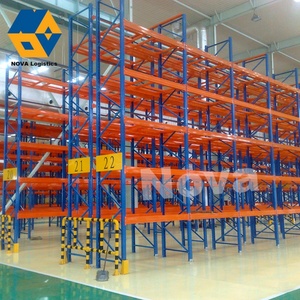
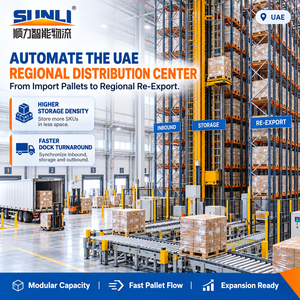
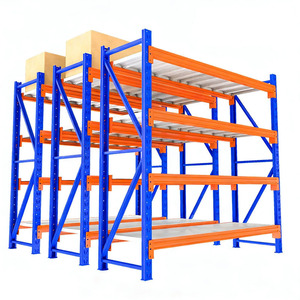
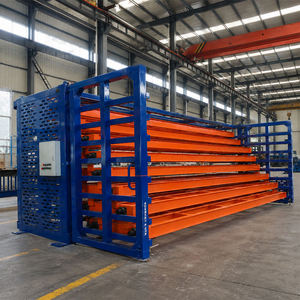
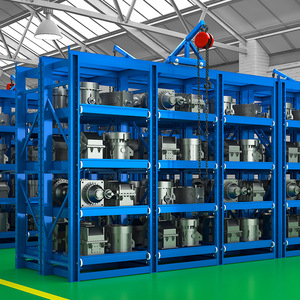
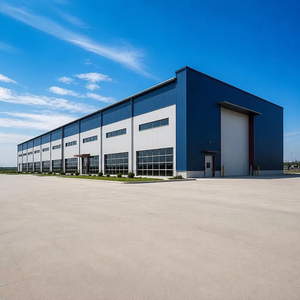
The State of Kuwait represents one of the highest-density supply chain markets across the Gulf Cooperation Council (GCC). Driven by the strategic goals of the Kuwait National Development Plan (New Kuwait 2035), the northern transport corridors, Mubarak Al Kabeer Port development, and inland intermodal networks are accelerating demand for institutional-grade distribution center (DC) infrastructure. However, logistics directors operating in primary industrial estates—including Shuwaikh Industrial Area, Al Rai, Sulaibiya Logistics Zone, Sabhan, and Mina Abdulla—face exceptional operational challenges that generic storage catalogue equipment fails to resolve.
Industrial warehousing in Kuwait is characterized by finite land availability within urban commercial zones, triggering a structural requirement for maximum cubic volume utilization. Facilities must leverage clear vertical heights exceeding 11 to 14 meters. Simultaneously, storage systems must sustain extreme structural reliability in the presence of continuous thermal cycles and fine desert silica dust intrusion, demanding exact metallurgical certifications and precision cold-roll manufacturing.
Kuwait Regulatory Insight: Warehouse installations across Kuwait must strictly align with the engineering guidelines stipulated by the Kuwait Fire and Disaster Management (KFD), formerly the Kuwait Fire Service Directorate. This includes mandatory verification of longitudinal and transverse flue spaces (minimum 75mm to 150mm clear) to allow vertical fire plume penetration toward early suppression fast response (ESFR) sprinkler heads.
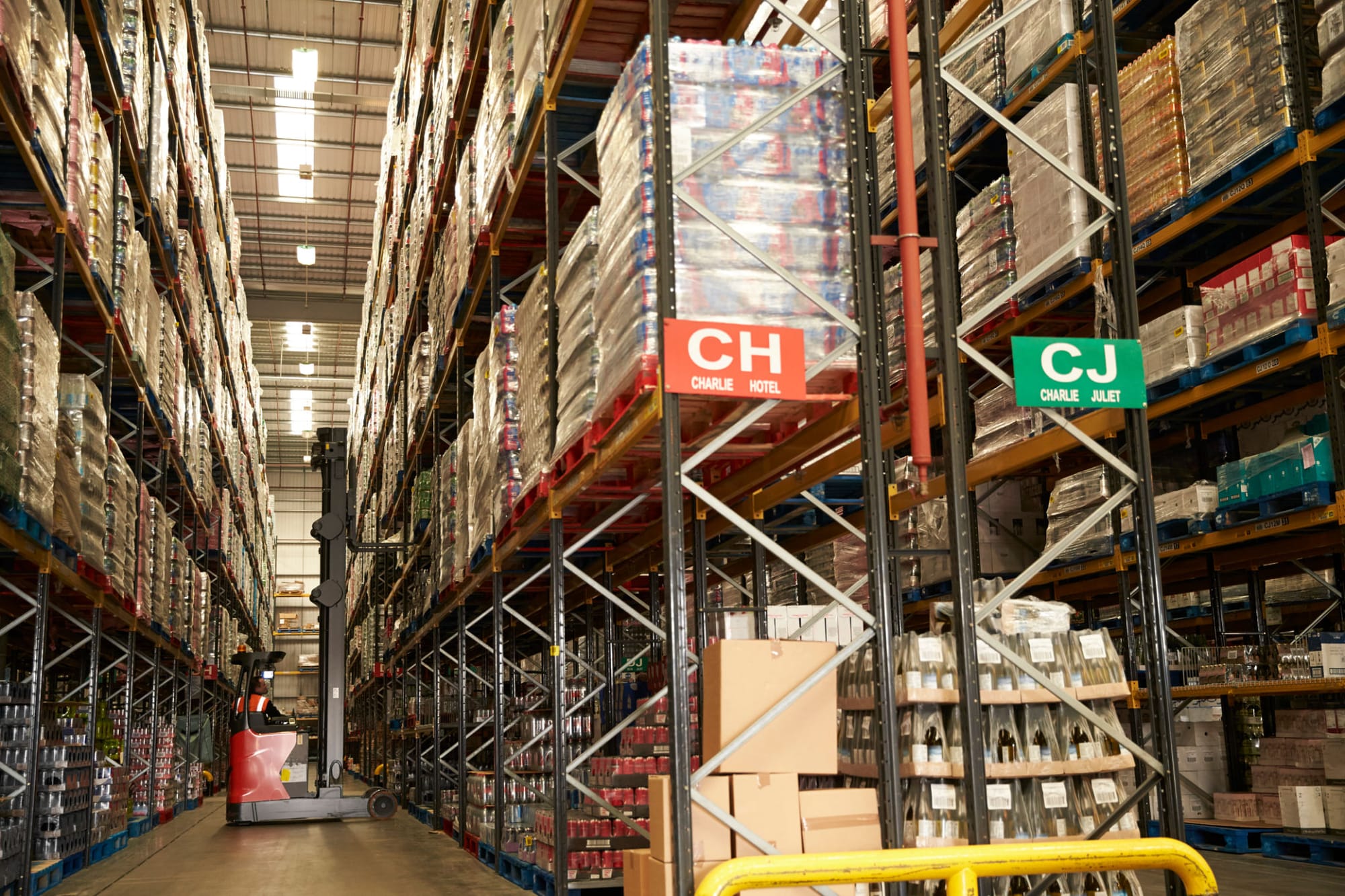
Summer surface temperatures exceeding 52°C coupled with airborne sandstorm particulates cause thermal expansion stress and micro-abrasion. We specify thermoset polyester powder coatings baked at 200°C with an average dry film thickness (DFT) exceeding 80–100 microns.
Structural validation compliant with EN 15512:2020, FEM 10.2.02, and RMI (Rack Manufacturers Institute) standards. We perform seismic hazard analysis corresponding to the Kuwait Institute for Scientific Research (KISR) local seismic microzonation maps.
Kuwait imports upwards of 85% of food supplies, concentrating cold-storage operations in Sulaibiya. Our low-temperature structural steels retain full impact notch toughness (Charpy V-Notch >27J at -30°C), eliminating low-temperature embrittlement risks.
A comparative evaluation of pallet storage methodologies calculated for typical clear building heights in Kuwait industrial zones (10m - 12m clear height baseline).
| Racking Architecture | Pallet Selectivity | Volumetric Efficiency | Stock Rotation Rule | Handling Equipment Required | Suitability in Kuwait DC Hubs |
|---|---|---|---|---|---|
| Adjustable Selective Pallet Racking | 100% Direct (Immediate) | Baseline (40% - 50%) | FIFO or LIFO | Standard Counterbalance / Reach | High: 3PL & Shuwaikh Retail |
| Double Deep Pallet Racking | 50% Immediate Access | High (+30% vs Selective) | LIFO | Pantograph Double-Reach Truck | Medium: Automotive & Spares |
| Drive-In / Drive-Through Systems | Lane Based (~15%) | Very High (Up to 75%) | LIFO (Drive-In) / FIFO (Drive-Thru) | Counterbalance / Spec Reach | Optimal: Sulaibiya Cold Storage |
| Push-Back Trolley / Roller Racks | Per Lane Selectivity | High (65% - 70%) | LIFO (Gravity Assisted) | Standard Forklift | High: FMCG Buffer Zones |
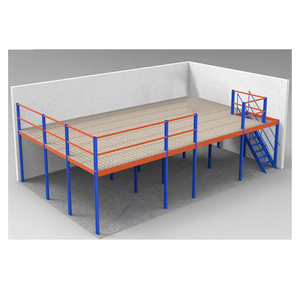
| Multi-Tier Mezzanine Platforms | 100% Bin / Tote Access | Maximum Vertical Footprint | Continuous Batch / Wave | Conveyors, Vertical Lifts, Manual | Optimal: E-Commerce & Al Rai |
| Heavy Duty Cantilever Systems | 100% Direct (Unobstructed) | Linear Density Focus | Free Access | Side Loader / Four-Way Truck | Specialized: Mina Abdulla Steel & Pipes |
A primary cause of structural racking degradation in the Arabian Gulf stems from miscalculations regarding slab interaction and dynamic anchoring. Warehouse floor slabs constructed across industrial sectors like Sabhan and Shuwaikh often feature varied compressive strengths (commonly C25/30 or C30/37). When upright frames support unit bay loads exceeding 15 to 24 metric tons, the concentrated point loads exerted via column baseplates require rigorous engineering.
We perform finite element analysis (FEA) modeling on every column footing, sizing the heavy-duty spreader footplates to distribute vertical loads without exceeding the concrete allowable punching shear limits. Our engineering calculations incorporate:
How leading organizations in retail, food security, oilfield services, and fast-moving consumer goods optimize their operations using our specialized structural configurations.
High inventory density selective pallet racking combined with carton live flow for rapid replenishment of metropolitan retail stores and consumer electronics hubs.
Drive-in and high-density push-back configurations fabricated from low-temperature alloy steels designed to support national food security buffer inventory down to -28°C.
Heavy-duty structural cantilever systems and reinforced mold storage racks catering to oil & gas drilling components, valves, raw tubing, and fabrication tooling.
Multi-tier picking mezzanines integrated with fire-rated open steel grating decking, maximizing vertical cubic space for high-SKU fashion and grocery e-commerce.
Anti-static, bolt-free modular powder-coated industrial shelving compliant with Ministry of Health (MOH) sanitary clean-room and medical distribution standards.
Turnkey pre-engineered steel warehouse buildings equipped with overhead crane runaways and integrated high-bay logistics staging zones for cross-border transit.
Sourcing institutional-grade racking systems requires total visibility from raw coil decoiling to final on-site erection. As an established direct manufacturing exporter serving Kuwait, our supply chain is engineered to eliminate the intermediary markups and technical communication gaps typical of local trading brokers.
Every manufacturing campaign initiates with certified structural steel mother coils (Q235B and Q355B), subjected to chemical spectrographic analysis and tensile yield verification before roll-forming. Upright frames are roll-formed through continuous multi-stage cold-rolling lines featuring automated high-speed hydraulic CNC punching to maintain precise 50mm or 75mm connection pitches. Beams utilize dual-C interlocked box sections with continuous automated submerged arc robot welding on all connector endplates.
For Kuwait shipments, logistics packaging protocols are specifically engineered to withstand deep-sea transit conditions. Structural components undergo specialized timber crating, heavy steel strapping, and moisture-barrier shrink wrapping to protect powder-coated finishes against maritime salt fog before docking at Shuwaikh Port (KWI). Full export documentation packages—including Certificate of Origin (CO), commercial invoices attested by the Chamber of Commerce, packing lists, and KUCAS/TIR conformity certificates—are supplied directly to ensure seamless customs clearance without demurrage delays.
Authoritative engineering answers addressing local fire codes, port customs compliance, environmental tolerance, and structural design standards.
Under Kuwait Fire and Disaster Management (KFD) engineering codes for industrial storage, warehouse racking arrays must preserve uninterrupted vertical water paths to ensure ceiling-mounted ESFR (Early Suppression Fast Response) sprinklers can penetrate high-bay configurations. This requires a certified minimum transverse flue space of 75mm (3 inches) between back-to-back rows and longitudinal flue spaces of at least 150mm (6 inches) between pallets.
Furthermore, when storage heights exceed 7.5 meters, or when storing high heat-release commodity classes (plastics, oils, rubber tires), KFD frequently mandates in-rack sprinkler systems or open wire mesh decking with at least 70% open aperture to avoid pooling water on solid decking levels. Our engineering team supplies AutoCAD fire-safety overlays directly verified for KFD inspection approval.
In Kuwait, ambient temperatures frequently surpass 50°C in warehouse loading areas, combined with abrasive particulate storms (Shamal winds) and high relative coastal humidity around Kuwait Bay and Mina Abdulla. Standard liquid paint finishes degrade rapidly through chalking, flaking, and sand-grit micro-abrasion.
To eliminate these risks, our systems undergo an automated seven-stage chemical washing and zinc-phosphating pretreatment process, followed by an electrostatically applied epoxy-polyester hybrid powder coating cured at 200°C. This generates an impact-resistant, high-density shell of 80 to 110 microns dry film thickness (DFT) with 1,000-hour salt spray resistance (ASTM B117) and superior UV stability for dockside semi-exposed operations.
Importing industrial racking into Kuwait through Shuwaikh or Shuaiba Port requires strict adherence to Kuwait General Administration of Customs and Public Authority for Industry (PAI) regulations. The essential documentation suite includes:
1. Original Commercial Invoice attested by the local Chamber of Commerce and legalized by the Kuwait Embassy.
2. Attested Certificate of Origin (COO) indicating genuine country of origin and HS codes (typically under 7308.90 for structural steel racking).
3. Detailed Packing List categorizing packages by beam lengths, upright frame heights, and small hardware cartons.
4. Bill of Lading (B/L) issued cleanly.
5. KUCAS / TIR Conformity Assessment documentation or third-party laboratory verification verifying steel composition and structural integrity.
We manage the export documentation preparation directly, synchronizing with your clearing agent in Kuwait to prevent customs holds.
Calculating slab capacity requires assessing three independent structural variables: the subgrade modulus (k-value in MN/m³), the slab thickness and reinforcement layout, and the concrete compressive strength (fck). Pallet racking imposes concentrated point loads rather than uniform distributed loads (UDL).
Our structural engineers calculate the maximum dual-leg column point load (which can exceed 80–120 kN per upright column in high-density installations) and compare it against Westergaard’s or Hetenyi’s elastic foundation theory. If point loading exceeds slab shear capacity, we engineer oversized, laser-cut spreader baseplates (up to 300x300x12mm or continuous base channels) to distribute forces across a wider slab area, mitigating structural punch-through failure without requiring expensive civil re-concreting.
Yes. Temperature-controlled environments ranging from +4°C chill rooms to -25°C blast freezers demand specialized steel metallurgy. Standard carbon steel experiences a ductile-to-brittle transition at sub-zero temperatures, which drastically increases the risk of catastrophic fracture under dynamic forklift impact.
For cold-storage installations across Sulaibiya and Sabhan, we supply racking components manufactured from fully killed, fine-grain structural steels (such as Q355D or low-temperature grades) with verified Charpy V-notch impact test values exceeding 27 Joules at -20°C and -40°C. Fasteners are upgraded to Class 8.8 hot-dip galvanized or zinc-flake coated bolts to prevent stress corrosion cracking caused by condensation cycles.