
No matching pages. Try "pallet", "mezzanine" or "cantilever".
No matching pages. Try "pallet", "mezzanine" or "cantilever".
Manufactured to strict structural tolerances, supporting international standard GMA pallets as well as Japan's domestic JIS T11 (1,100 × 1,100 mm) standard with superior seismic and fire-suppression ratings.
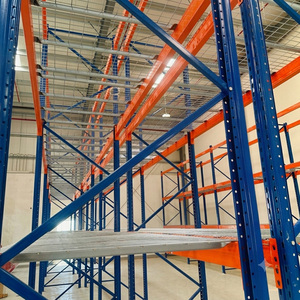
Standard step-channel mesh decking engineered for universal 1-5/8" step beams. Built with high-tensile cold-drawn steel wire and welded support channels to prevent beam deflection under heavy static loading.
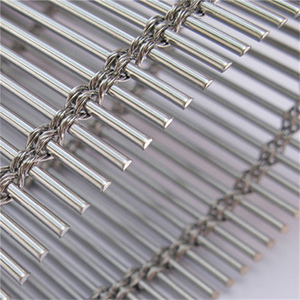
High-grade AISI 304/316 woven stainless steel cable net offering zero-maintenance fall protection across elevated warehouse mezzanines, logistics catwalks, and multi-tier picking towers throughout Aichi logistics parks.
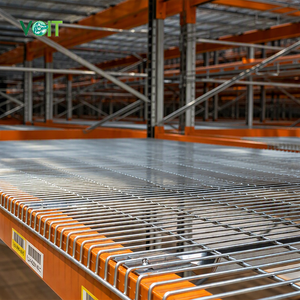
Specifically developed for heavy automotive dies, cast tooling, and powertrain component storage around Toyota City. Features reinforced U-channels and hot-dip galvanized finish resistant to cutting fluids and machine oils.
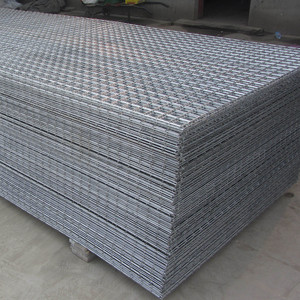
Rigid resistance-welded wire mesh sheets for anti-collapse rack backstops, warehouse security perimeter fencing, robotic cell partitioning, and heavy-duty slab reinforcement in modern logistics distribution construction.
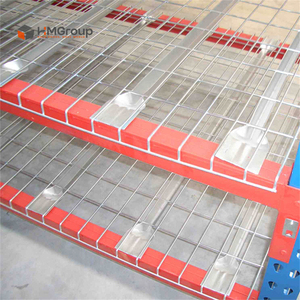
Electro-galvanized plus polyester powder-coated dual finish providing ultra-smooth snag-free shelf surfaces. Preferred by pharmaceutical, biomedical, and consumer electronics distribution centers requiring zero zinc flake shed.
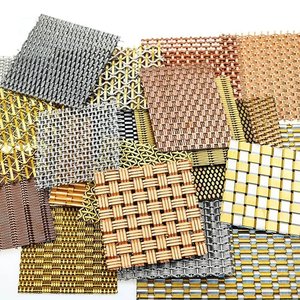
CNC bent and laser-profiled stainless mesh grilles for secure tool management cribs, high-value aerospace avionics lockers, and ventilated micro-parts inventory shelving in precision aerospace machining complexes.
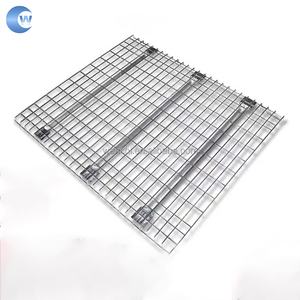
Heavy-gauge flanged waterfall decking designed specifically for high-bay automated storage and retrieval systems (ASRS). Features inverted channel reinforcement that eliminates dust traps and ensures clear optical sensor paths.
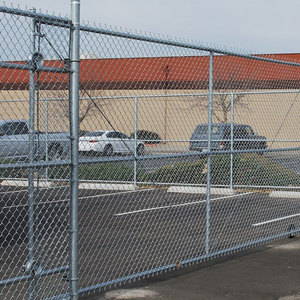
High-security perimeter fencing and bonded warehouse enclosure systems engineered for Port of Nagoya container staging yards, bonded customs enclosures, and exterior heavy equipment holding terminals.
In high-density industrial warehousing, the wire mesh deck is not merely a passive shelf drop-in; it functions as an essential structural diaphragm and primary life-safety component. Within the seismic zone of Greater Nagoya and the broader Chubu logistics corridor, racking infrastructure faces severe dynamic forces during peak seismic events (such as projected Nankai Trough displacements). Our wire mesh decking integrates three-dimensional cold-drawn cold-rolled steel wires with continuous automated resistance-welding technology, maintaining structural integrity without catastrophic brittle shear failures.
Unlike solid timber or steel panel decking, open wire mesh design directly resolves the hydraulic flow challenges governed by the Fire Service Act of Japan (消防法 - Shōbōhō). When ceiling-level automatic fire sprinkler heads trigger, solid shelves act as umbrellas, blocking downward water propagation and necessitating costly secondary in-rack sprinkler pipework. By maintaining open surface ratios rigorously calibrated above 70%, our mesh decks permit unobstructed water penetration to the lowest rack tiers while simultaneously eliminating combustible fire loads associated with wooden pallet boards.
| Deck Configuration | Channel Flange Design | Wire Gauge & Grid | Target Rack Beam Style | Rated UDL (Safety Factor 1.67) | Recommended Application |
|---|---|---|---|---|---|
| Standard Step Waterfall | External Standard U-Channel (3-4 pcs) | 5.0 mm @ 50 × 100 mm | Standard Step Beam (1-5/8" step) | 1,000 kg – 1,250 kg | General Distribution & 3PL Warehousing |
| Heavy Automotive Inverted | Inverted Clean-Sweep Channel (4-5 pcs) | 5.5 mm – 6.0 mm @ 50 × 50 mm | Box Beam / Structural C-Beam | 1,500 kg – 2,200 kg | Toyota Supply Chain Stamping & Heavy Dies |
| JIS T11 Flush Fit | Recessed Flat Flange with Tek-Locks | 4.8 mm @ 50 × 100 mm | Structural Step / Lip Beam | 1,200 kg | Automated Shuttle & Multi-Tier Pick Towers |
| Anti-Corrosion Maritime HDG | Hot-Dipped Galvanized Heavy Channel | 5.0 mm @ 25 × 100 mm | Universal Step / Roll-Formed | 1,350 kg | Port of Nagoya Intermodal Cold Stores (-30°C) |
The deflection criteria of all decking profiles comply rigorously with the international standard ANSI MH26.2 and European racking code EN 15512, ensuring that maximum deflection under full uniformly distributed load (UDL) does not exceed 1/200th of the clear beam span ($L/200$). Every welded wire junction exhibits a minimum shear resistance exceeding 75% of the ultimate tensile strength of the parent steel wire, ensuring predictable ductile behavior during localized point-load impacts from pallet bottom skids.
From the high-throughput automotive assembly clusters of Toyota City and Kariya to the coastal cold-storage parks of Nagoya Port and the aerospace plants of Komaki, our decking solutions adapt to distinct regional operational demands.
High-turnover Kanban staging buffers demand decking that eliminates hang-ups during rapid forklift insertion. Inverted-channel decks ensure no sharp lip impedes steel tote boxes, plastic returnable containers, or wooden skids holding precision automotive components.
In aerospace manufacturing hubs neighboring Chubu Centrair and Komaki Airport, foreign object debris (FOD) mitigation is mission-critical. Open wire mesh surfaces prevent dust, metal shavings, and chemical mists from settling around high-precision composite panels and turbine tooling.
Maritime food logistics around Ise Bay experience aggressive humidity transitions and sub-zero storage cycles. Heavy hot-dip galvanized wire decks prevent zinc embrittlement, resisting condensation corrosion and allowing uninhibited cryogenic cold airflow across stacked seafood cargo.
High-bay distribution networks serving the Tokyo-Nagoya-Osaka golden logistics trunk require multi-tier picking levels. Our wire decks incorporate rear backstops and side dividers, safeguarding pedestrian picking lanes below against loose product drops.
Industrial facility operators across Aichi Prefecture face evolving structural demands driven by demographic shifts, warehouse automation, seismic safety mandates, and sustainability standards.
With Japan's statutory overtime caps on truck drivers (the "2024 Problem"), Nagoya's logistics nodes have accelerated the deployment of Automated Guided Vehicles (AGV), Autonomous Mobile Robots (AMR), and Automated Storage and Retrieval Systems (ASRS). Traditional warped plywood decks cause sensor misreadings and jamming. High-precision, zero-sag wire mesh decks deliver the millimeter-level planar accuracy required by optical pallet scanning systems.
Nagoya Municipal Disaster Prevention guidelines mandate elevated safety factors against violent horizontal acceleration. Forward-thinking facility managers are replacing unfixed drop-in boards with engineered waterfall wire decks featuring positive beam clasping. Under intense lateral sway, waterfall flanges physically bind the rack beam pairs together, preventing beam spread that triggers catastrophic pallet drops.
Modern logistics real estate developers in Chubu (including GLP, Prologis, and Mitsui Fudosan) actively pursue comprehensive CASBEE and LEED certifications. Transitioning to 100% recyclable, circular low-carbon steel wire mesh decking drastically reduces embodied carbon compared to chemically-treated fire-retardant timber, while eliminating timber pest treatment protocols (ISPM-15).
Direct technical answers addressing Japanese industrial regulations, JIS pallet compatibility, and warehouse fire inspection compliance.
Under Fire Service Act Article 12, storage racks exceeding statutory heights must either install dedicated in-rack sprinkler lines for every level or maintain rack shelf porosity allowing at least 70% water flow penetration. Our wire mesh decking achieves open-area ratios ranging from 72% to 78%, fully satisfying municipal Fire Department inspectors across Nagoya and eliminating millions of yen in supplementary piping expenditures.
Yes. While international logistics operations standardly utilize GMA 48"×40" (1,219 × 1,016 mm) or Euro pallets (1,200 × 800 mm), Japan's domestic automotive and food industries operate predominantly on the square JIS T11 (1,100 × 1,100 mm) pallet. We engineer custom beam depth decks (e.g., 1,000 mm, 1,050 mm, and 1,100 mm frame depths) with reinforced channel spacing to support both 2-way and 4-way entry JIS T11 pallets without structural sagging.
Our decks feature precision-formed 1.5" (38 mm) waterfall edges that wrap securely over both the front and rear face of the rack beams. Furthermore, for zones designated with extreme seismic coefficients, we supply pre-punched fastener holes along the support channel wings, allowing direct self-tapping Tek-screw anchoring into the rack beams to eliminate dynamic dislodgement during longitudinal or lateral vibrations.
For standard ambient warehouses in inland Aichi (e.g., Kasugai or Inazawa), electro-galvanized (zinc electroplated) finish provides cost-effective corrosion defense. For coastal distribution near Nagoya Port or unheated cold-storage facilities, Hot-Dip Galvanizing (HDG) per ISO 1461 is mandatory to resist salt air and moisture. For cleanroom or electronics storage, polyester powder coating over zinc ensures zero zinc whiskering.
Capacities are calculated and verified through physical static destructive testing and finite element analysis (FEA) compliant with ANSI MH26.2 and European racking codes (EN 15512). The stated UDL capacity incorporates a minimum safety factor of 1.67 against ultimate structural yield. For concentrated point loads (such as four-legged plastic containers or wire bins), we engineer custom heavier-gauge reinforcing wire channels.
Absolutely. Beyond standard catalog dimensions, we provide complete engineering survey and custom design capabilities. Whether your automated facility utilizes box beams, structural C-channels, or step beams with proprietary step depths, our robotic production lines manufacture tailored width, depth, wire gauge, and channel configurations with brief lead times delivered directly to your job site.
Building upon decades of structural racking fabrication, we provide end-to-end assurance from initial laser survey through site delivery and compliance documentation.
We analyze your specific pallet dimensions, forklift mast heights, building column grids, and floor slab load limits. Our engineering team supplies verified CAD drawings and beam layout models before fabrication commences.
Every wire junction is resistance-welded under computerized current and hydraulic pressure control, eliminating weak cold welds. Channels are roll-formed from certified Q235B/Q355B structural steel for maximum yield resistance.
Certified in-house load testing jigs verify batch performance under simulated continuous static loading and dynamic drop tests. Handover documentation includes load plaques and technical calculation reports for local audits.
Containerized sea freight delivery directly through Nagoya Port with coordinated container destuffing and palletized staging ensures zero project delays for warehouse commissioning teams and general contractors across Japan.
Connect directly with our structural engineering team. Submit your pallet footprints, rack beam specifications, and fire safety requirements for a prompt engineering assessment, custom layout drawing, and competitive manufacturer-direct pricing.