
No matching pages. Try "pallet", "mezzanine" or "cantilever".
No matching pages. Try "pallet", "mezzanine" or "cantilever".
Manufactured according to EN 15512, FEM 10.2.02, and AS 4084-2012 structural standards. Engineered to perform in tropical Malaysian industrial climates, providing extreme moment-resisting stability and optimized bay load distribution.
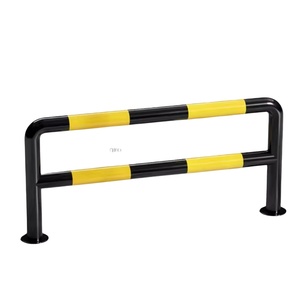
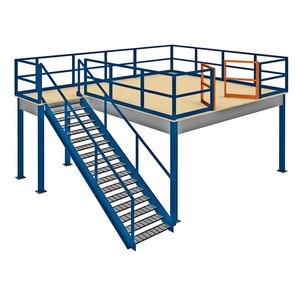
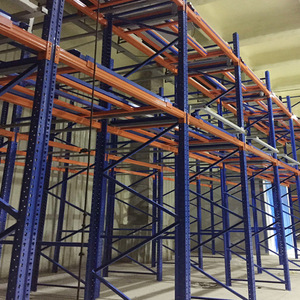
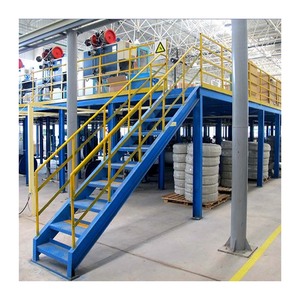
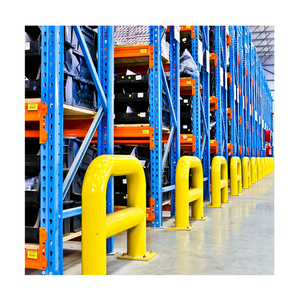
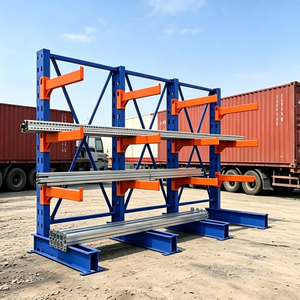
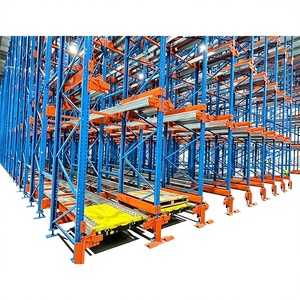
Pallet rack upright frames are the primary vertical load-bearing columns within modern intralogistics ecosystems. Unlike standard hot-rolled structural H-beams, racking uprights utilize precision cold-formed steel engineering. The integrity of an entire logistics facility—holding tens of thousands of loaded pallet positions—depends entirely on the cross-sectional geometry, perforation precision, residual internal stresses, and buckling resistance of these upright members. In Malaysia's surging logistics sectors across Selangor, Johor, and Penang, industrial warehouses demand upright assemblies that balance ultra-high load-bearing capacity with micro-climatic longevity.
Modern pallet rack upright manufacturing involves continuous multi-stage roll-forming lines. High-grade structural coil strips (predominantly Q235B and modified high-strength Q355B with minimum yield strengths reaching up to 355–420 MPa) are uncoiled, precision-slit, and fed into high-speed mechanical or hydraulic CNC punching presses. Here, perforation slots—typically configured in 50mm, 75mm, or 76.2mm teardrop or butterfly pitches—are punched with micron-level centerline tolerance before forming. Subsequent forming passes gradually shape the steel through 18 to 26 hardened roller tooling stations into an intricate Omega (Ω) cross-sectional profile. This Omega shape is mathematically optimized to shift the shear center and maximize the torsional radius of gyration, counteracting both distortional buckling and local flexural-torsional failure modes under heavy static and dynamic loads.
Manufacturing facilities producing for the Malaysian market categorize upright columns into standardized web widths, ranging from 80mm, 90mm, 100mm, 120mm, up to 140mm, with material thicknesses extending from 1.5mm to 3.0mm. The choice of profile is governed by unbraced length (the vertical distance between horizontal beam levels), total bay load, and seismic or material handling equipment impact margins:
The warehousing landscape in Malaysia is characterized by distinct industrial regional clusters, each posing unique operational, environmental, and physical floor slab challenges. Understanding these regional parameters ensures that warehouse operators, procurement specialists, and structural engineers specify upright frames that mitigate operational bottlenecks and avoid catastrophic floor failure.
As ASEAN’s premier e-commerce and 3PL gateway (Shah Alam, Bukit Jelutong, Pulau Indah), facilities prioritize vertical density. Clear heights exceed 12 to 16 meters. Upright columns require ultra-strict plumb tolerances (EN 15620 Class 300) to support narrow-aisle (VNA) and articulated reach trucks, alongside robust column baseplates engineered for dynamic slab loading over alluvial coastal soil conditions.
Positioned along the Singapore cross-border supply chain (Tanjung Pelepas, Senai, Pasir Gudang), this zone is dominated by cold-chain logistics, pharmaceutical hubs, and rapid FMCG cross-docking. Uprights must feature specialized thermosetting epoxy powder coatings or continuous hot-dip galvanizing to withstand extreme condensation cycles without structural pitting or sub-surface oxidation.
Serving advanced semiconductor foundries, medical technology manufacturers, and automated automotive lines (Batu Kawan, Bayan Lepas, Kulim). Storage frameworks must integrate conductive ESD powder coatings, anti-vibration baseplates, and high-selectivity frame configurations designed for cleanroom staging and precise automated guided vehicle (AGV) interfacing.
A critical technical risk factor often overlooked by international racking distributors is the accelerated corrosion rate caused by Malaysia's equatorial marine-tropical environment. With relative humidity levels regularly fluctuating between 75% and 95%, combined with ambient temperatures of 28°C to 34°C, unconditioned warehouses experience persistent moisture films on structural steelwork. In coastal facilities near Port Klang or Tanjung Pelepas, airborne sodium chloride particles dramatically exacerbate electrolytic rust reactions.
To ensure a 15- to 25-year structural service life without integrity loss, pallet rack upright factories must employ a rigorous multi-stage surface preparation and protection regimen:
Prior to powder application, upright profiles must pass through hot alkaline degreasing, twin continuous water rinses, zinc-iron chemical phosphating, passivating demineralized rinses, and a controlled dry-off oven at 140°C. This chemical conversion process creates an amorphous micro-crystalline phosphate layer (1.5–2.5 g/m²) that locks the steel surface against under-film rust migration.
Following pretreatment, an automated multi-gun electrostatic booth applies architectural-grade TGIC-free epoxy-polyester hybrid powder coating. The uprights cure in a convection tunnel furnace at 190°C–200°C for 20 minutes, yielding an uninterrupted polymer shell of 70μm to 100μm thickness. The resulting surface passes 500+ hours of continuous neutral salt spray testing (ASTM B117) and cross-hatch adhesion ratings of 0 (ISO 2409).
For sub-zero cold-storage facilities (operating down to -30°C in food logistics parks) where repeated defrost cycles cause severe condensation, powder coating is replaced by Continuous Hot-Dip Galvanizing (HDG) in compliance with ISO 1461. The structural steel undergoes acid pickling and immersion in a 450°C molten zinc bath, forming a metallurgical alloy bonded to the steel with a minimum zinc coating weight of 500 g/m² (approx. 70μm thickness). This provides cathodic sacrificial protection that self-heals minor scratch damages inflicted by forklift masts.
The following engineering data table reflects standard roll-formed Omega upright profiles produced in heavy-capacity factories, detailing structural geometries, steel grades, and allowable capacities designed under FEM 10.2.02 and EN 15512 criteria.
| Profile Designation | Web Width × Flange | Material Thickness | Steel Grade | Effective Sectional Area | Typical Max Bay Load | Recommended Application |
|---|---|---|---|---|---|---|
| UP-80/18 | 80 × 68 mm | 1.8 mm | Q235B (235 MPa) | 382 mm² | 8,500 kg | Light Warehousing / Retail |
| UP-90/20 | 90 × 70 mm | 2.0 mm | Q235B / Q355B | 494 mm² | 12,500 kg | Standard Selective Systems |
| UP-100/20 | 100 × 70 mm | 2.0 mm | Q355B (355 MPa) | 552 mm² | 16,000 kg | Medium 3PL Distribution |
| UP-100/25 | 100 × 70 mm | 2.5 mm | Q355B (355 MPa) | 682 mm² | 20,500 kg | High-Bay Selective Racks |
| UP-120/25 | 120 × 95 mm | 2.5 mm | Q355B (355 MPa) | 845 mm² | 26,000 kg | Drive-In & Radio Shuttle |
| UP-140/30 | 140 × 100 mm | 3.0 mm | Q355B / High Yield | 1,120 mm² | 32,500+ kg | ASRS & Rack-Clad Silos |
* Note: Stated maximum frame bay capacities assume an unbraced beam level height of 1,500mm with four interior levels. Capacities must be recalculated per individual warehouse CAD slab survey, taking soil bearing value and forklift dynamic braking forces into account.
Procuring pallet rack uprights directly from qualified manufacturing factories provides distinct capital expenditure advantages, technical transparency, and bespoke layout engineering. High-capacity manufacturing operations deploy comprehensive QA/QC inspection plans across raw material intake, continuous roll-forming, automated robotic welding, and coating line exits.
Every batch of cold-rolled steel coils is accompanied by EN 10204 Type 3.1 chemical and mechanical inspection documents. In-house metallurgical laboratories perform universal tensile testing, Charpy V-notch impact tests, and bend testing to ensure yield thresholds adhere precisely to guaranteed specifications.
In adherence to EN 15512 Appendix A testing protocols, factory engineers routinely conduct physical compression tests on perforated stub upright sections. This empirical verification confirms the reduction factor (α) and effective buckling curve under actual axial compression loading.
Upright frame footplates are laser-cut from 6.0mm–10.0mm steel plates, precision welded to upright columns with twin-pulse MIG technology. Anchor holes are calibrated for mechanical wedge or chemical capsule anchors, transferring overturning moments safely into concrete warehouse floor slabs.
Direct technical answers addressing local building regulations, Fire Department (Bomba) approvals, DOSH certifications, and engineering compatibility.
Request comprehensive CAD layout design, static load calculations compliant with EN 15512, and factory-direct volume supply quotations tailored to your Malaysian warehouse operations.